
Immigration
Meet the Canadian immigrant doctor whose test was used on Donald Trump

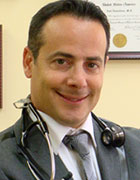
Canadian doctor Ziad Nasreddine’s phone has been ringing off the hook since it emerged this week that a test he pioneered was used to screen U.S. President Donald Trump for cognitive issues. (Photo: CIC News)
Canadian doctor Ziad Nasreddine’s phone has been ringing off the hook since it emerged this week that a test he pioneered was used to screen U.S. President Donald Trump for cognitive issues.
Much of the coverage has focused on the irony that a test devised by an immigrant was used to screen Trump, whose administration has portrayed immigration as a threat to American jobs and the country’s national security.
Nasreddine, however, says he’s honoured that the White House medical staff used his Montreal Cognitive Assessment, or MoCA, which he devised at his memory clinic in Montreal back in 1996.
“It’s really been exciting to see that the interest is so huge,” he told CIC News. “It gives MoCA another level of credibility and more recognition.”
Refuge from civil war
Nasreddine came to Montreal from Lebanon in 1983 for what was supposed to be a summer-long visit with uncles there. When it came time return for the new school year in Lebanon, a flare-up in the civil war there closed the airport in Beirut, forcing Nasreddine and his family to stay put in Canada.
“We came only with our summer clothes and didn’t expect to stay for the winter and the years after,” he told CIC News. “After one year of extending our visit, we decided to apply for immigration and we became Canadian citizens in 1989.”
Nasreddine was eventually admitted into medical school at the Université de Sherbrooke, located 150 kilometres east of Montreal, where he says he quickly took an interest in the human brain.
“I found neurology interesting because the brain is so complex and I was interested in learning how the brain functions — how we think and how we memorize,” he said. “It’s involved in so many levels of our daily life.”
After completing his medical degree, Nasreddine undertook further studies in cognition at the University of California in Los Angeles (UCLA) before returning to Montreal, where he established his memory clinic in 1996.
Montreal Cognitive Assessment
It was there that Nasreddine devised the test for signs of Alzheimer’s disease and 20 other conditions that would put him, and Montreal, on the cognitive science map.
He says the test was really a product of that mother of all inventions – necessity.
“When I arrived, I had no help at the clinic, so I had to do all the memory testing myself,” he said. “There was no short test, so it was either a few hours of testing or two short tests that were not sensitive enough to pick up early memory impairment.”
Limited to only assessing only two or three patients a day as a result, Nasreddine resolved to create a test that was both quick and sensitive enough to detect even mild impairment in memory.
“With this new tool, I could see 10 to 15 patients a day,” he said. “And because it was so much more sensitive compared to the other tests, there was huge improvement in terms of picking up subtle cognitive impairment.”
Among other elements, the test assigns patients simple tasks like drawing a clock and a three dimensional cube and asks them to identify certain animals.
President Trump is said to have scored a perfect 30 out of 30.
International recognition for test – and immigrants
MoCA gained international prominence in 2005, when it was first published and validated through multiple international studies.
Nasreddine says 6,000 studies now cite the test and there at least 500 studies on the test itself that show its superiority in terms of detecting cognitive impairment connected specifically to Alheimer’s disease and 20 other medical conditions, such as Parkinson’s Disease, vascular dementia and cognitive impairment connected to Multiple Sclerosis.
As to mental health concerns MoCA doesn’t screen for, Nasreddine said it’s not intended to detect psychiatric problems like schizophrenia or issues related to judgment.
As professionally satisfying as the newfound international prominence of the Montreal Cognitive Assessment is for Nasreddine, he says it’s also a good reminder of the positive impact immigrants have on the societies that accept them.
“When immigrants come here they really want to do the best they can and prove to the society that welcomed them that they can be a positive element to the society,” he said.
“I’m proud of the contribution that immigrants are making.”




















