
Lifestyle
Gardeners have a vested interest in the long term health of bees, other pollinators

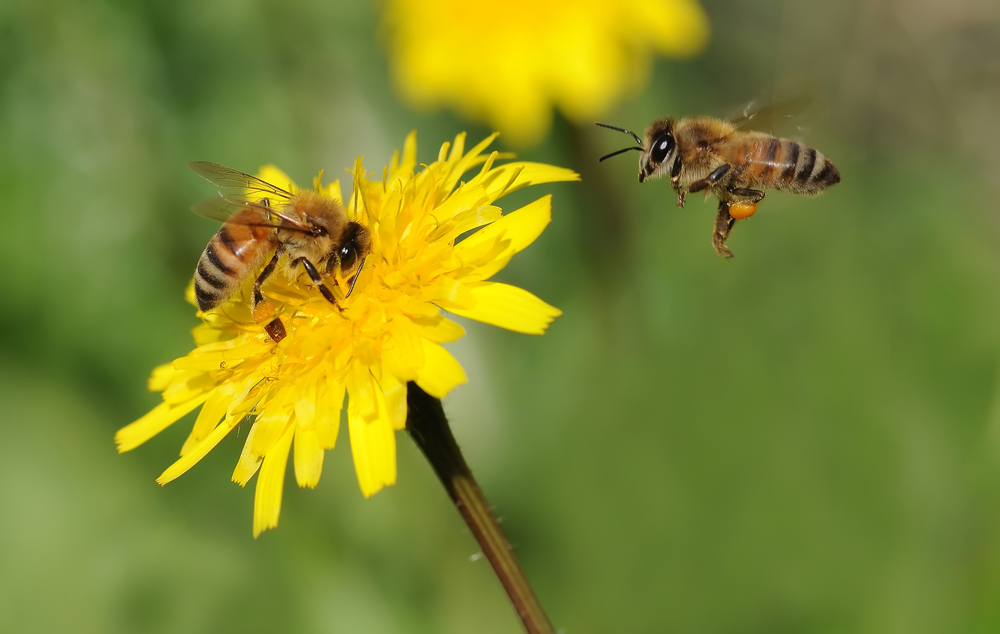
(ShutterStock Image)
Want to become a better gardener? Then learn something about beekeeping. Become a matchmaker who ensures that flowering plants and honeybees enjoy a beneficial relationship.
Keeping bees increases one’s interest in botany, says Jim Tunnell, a master beekeeper and owner of Beez Neez Apiary Supply in Snohomish, Washington.
“I can’t help but look at the world more from the bees’ perspective,” he said. “Whenever I see them show an interest in a particular plant, I have to know what it is and whether it is a nectar source or a pollen source or both.”
Bees gather pollen, nectar and water to make honey, reproduce and survive. Pollen is used primarily to feed new generations of brood. Water cools the hives and dilutes the honey on which the bees feed. The sugary nectar is stockpiled for overwintering when flowering plants are dormant.
Pollen and nectar-rich plants, meanwhile, need the kind of cross-pollination provided by bees and other insects.
“Bees tend to confine their attention to one flower species during a single foraging trip, but they move from plant to plant, favouring cross-pollination,” a Missouri Botanical Garden fact sheet says. “Cross-pollination results in greater genetic variation, which can mean stronger, more vigorous plants.”
Honeybees seem partial to white, blue, yellow and violet flowers. Flowers with saucer-shaped blooms, like dahlias, cosmos, coneflowers and sunflowers are more open than tube-shaped types, making pollen and syrup easier to collect.
Provide flowering plants and the pollinators will come. But it takes more than several suburban yards to support a honeybee colony.
“A hive’s foraging area extends several miles in every direction,” Tunnell said. “If you define ‘surrounded by pollinator-friendly perennials’ as a yard filled with such plants, that is woefully inadequate for a single beehive.
”
Rather than emphasizing planting in quantity then, plant for availability. Practice succession planting with species that bloom from early spring through late autumn. Food supplies for pollinators are particularly scarce early and late in the year.
“This is critically important,” said Mace Vaughan, a spokesman for The Xerces Society for Invertebrate Conservation in Portland, Oregon. “We know that honeybee hives that bring in a diversity of pollens are healthier and better able to cope with diseases, pests and even pesticide exposure.”
“Also, bees are active year-round,” he said. “There are times when the natural supply of nectar or pollen is low during the year.
By working to have blooms available consistently throughout the growing season, honeybee hives are better able to thrive.”
In many cases, native plants are best because they produce an abundance of pollen and nectar and are easier to maintain, Vaughan said. But that doesn’t mean there isn’t a role for non-native plants.
“Lawns full of clover or crop fields full of buckwheat or phacelia can be very valuable and inexpensive to establish,” he said.
Not every gardener is cut out to be a beekeeper, but all have a vested interest in the long-term health of bees and other pollinators, Tunnell said.
“I think it’s always a good thing to keep the pollinators in mind when we plant our gardens,” he said.