
Business and Economy
In new move to ease currency controls, China will allow banks to set exchange rates

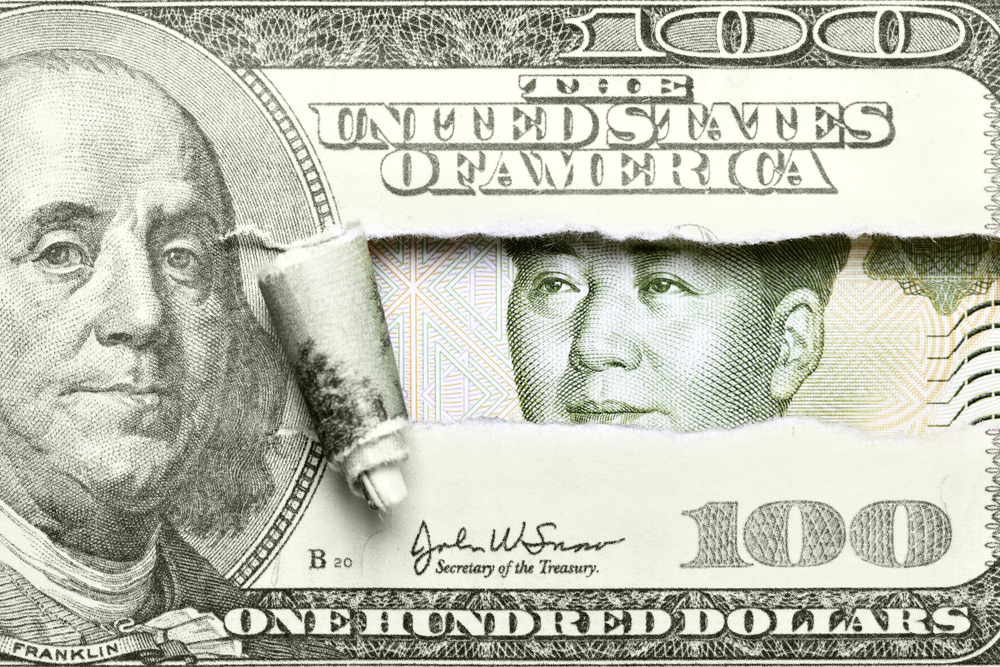
BEIJING—China announced another modest easing Thursday of its currency controls, saying banks will be allowed to set their own exchange rates in dealings with customers.
The change adds to a series of moves aimed at making China’s government-controlled financial system more market-oriented and efficient.
The United States and other countries have criticized Beijing’s controls on the yuan, also called the renminbi. They say the government-set exchange rate is too low, giving Chinese exporters an unfair price advantage and hurting foreign competitors.
Under the rule change, banks allowed to handle foreign currency “can set exchange rates for the renminbi by themselves for customers based on market demand and price-setting ability,” the Chinese foreign currency regulator said in a statement.
Until now, Beijing has set an exchange rate for the yuan each day and then allowed it to fluctuate in a narrow band against the U.
S. dollar and other currencies in tightly controlled trading. In March, that band was widened, though to only 2 per cent.
Under the latest change, banks that make a profit by buying foreign currencies at one price and selling at another could offer some customers a better deal by narrowing the margin between those two levels. The regulator’s statement gave no indication whether they would be allowed to go outside the state-set trading band or by how much.
The country’s top economic official, Premier Li Keqiang, promised in an annual policy speech in March to give market forces a “decisive role” in allocating credit and other resources in the state-dominated economy.
The modest scale of recent changes has failed to satisfy critics who are pressing Beijing to allow the yuan to trade more freely.
During a visit in May, U.S. Treasury Secretary Jacob Lew appealed to Li to show a “renewed commitment” to move to a “market-determined exchange rate.”
Beijing reported a $260 billion global trade surplus last year, a $30 billion increase over 2012 and among the largest ever recorded by any country. Some U.S. lawmakers have demanded punitive tariffs on Chinese goods if Beijing failed to ease controls, but the White House has resisted imposing sanctions.
Chinese leaders say they plan eventually to let the yuan float freely, but analysts say that might be decades away.
Beijing is reluctant to allow big changes in the currency for fear of hurting exporters that employ millions of workers.
But analysts say they might have gained confidence from recent strong trade performance.
Allowing the yuan to rise in value would increase the buying power of Chinese households, helping to achieve the ruling party’s goal of nurturing more sustainable economic growth based on domestic consumption instead of trade and investment.
A stronger yuan also could help to suppress pressure for politically sensitive consumer prices to rise by making imports cheaper.
Reform advocates say that by suppressing the yuan’s value, Beijing has been forcing even poor households to subsidize exporters.
Beijing allowed the yuan to gain about 20 per cent against the dollar beginning in 2005 but movement stopped after the 2008 global crisis as the government tried to protect struggling exporters.
This year, though, the central bank guided the yuan’s exchange lower against the dollar in what analysts said was an effort to discourage speculators who moved money into China to profit from the currency’s rise.




















