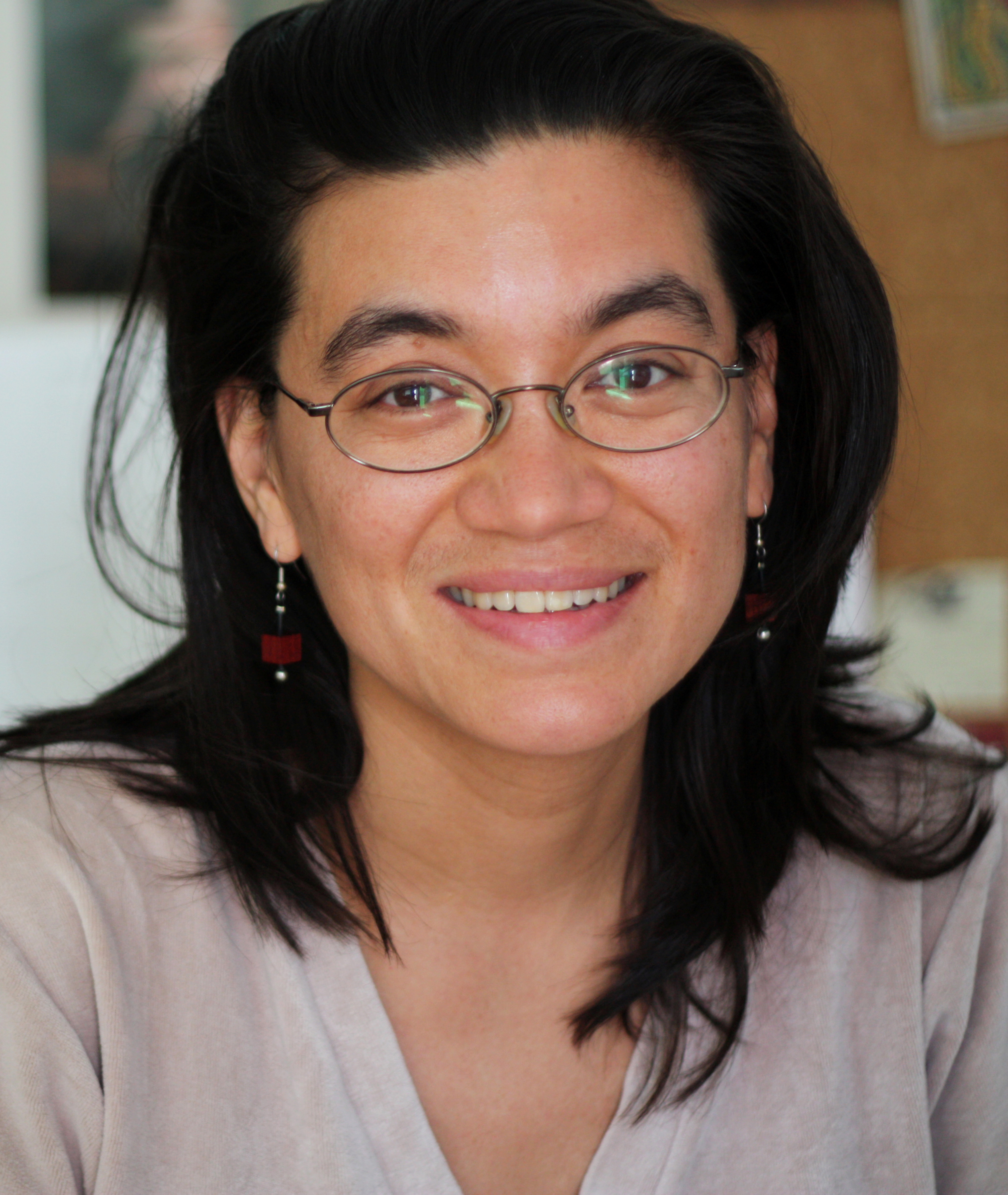
For Lisa Valencia-Svensson, after the surprise and shock of winning an Emmy award wore off, something was still bugging her about the whole affair. After some reflection, she came to understand just what that thing was.
“There’s such an imbalance in the number of people of color or indigenous first nations who are not directing, producing, acting, writing, funding, broadcasting, commissioning, winning awards at film festivals, winning the grants. The list is endless,” she said.
She recalled looking out at the applauding crowd that night and seeing a sea of mostly white people. To Lisa, that was something that needed to change.
“To me that Emmy was a real sign that it is now time for me to focus my efforts on that. It’s not just about me and my career anymore. It’s about me helping more people of color get into the industry, and also me trying to shine a light on this tremendous imbalance,” she said.
It’s a viewpoint that reflects the experiences Lisa had growing up and living in Canada as a person of color, and ultimately helped her find her passion in life for producing stories to help shine light on the injustices people face, in order to bring about societal change.
Lisa’s story begins in late 60’s Toronto where she was born as the only child to a Filipino mother and a white father. She stayed and grew up in the area, and said that the environment was unforgiving for non-white people.
“Back in the 70s and 80s, because there was no discussion of race or racism issues, it just happened. And you just thought ‘That’s life! People are racist, and what can you do?’ You just figured out how to protect yourself,” she said.
After attending university at the University of Toronto, she found herself becoming more involved in the progressive scene, and eventually found herself at the Ryerson University radio station, CKLN. It was a beacon that attracted many people like Lisa, and for over two-and-a-half years she was involved with the news programming at the station.
In particular, Lisa and a few fellow 20-somethings worked on a weekly news broadcast called “Frequency Feminist”. The program eventually focused down into one that gave coverage almost exclusively to issues facing women of color and first nations women.
And it was during this time, when Lisa would record interviews and performances and readings and play them back to transcribe them, that she came upon her most important discovery for how to effect change in this world.
“If you want to effect change, social change, on an issue, you need to change people’s minds. And the way to change their mind on an issue is not to bombard them with statistics or information or make them feel bad or make them feel guilty. The way to change someone’s mind is to change their heart, and the way to change their heart is for them to hear a story about how that issue might be affecting one person or a few people or a family or a community, and for them to just naturally, as a human being, start caring about the people being affected,” she said.
After the radio station, Lisa moved out to Vancouver for a while where she said she “wasn’t doing all that much.” She did however find herself constantly attending the numerous film festivals, and in particular found herself being drawn to documentaries.
Realizing that this was what she wanted to get involved with, Lisa eventually moved back to Toronto in 2004, where the environment for getting involved in documentary film producing was better. She joined the board of the Planet In Focus Environmental Film Festival in order to get her foot in the door and test the waters. After a year, she decided to make it a career.
Lisa approached a Toronto Film Maker named Min Sook Lee. They knew each other from before, and Lisa asked if she could be involved with some of Min’s projects. Min accepted, and Lisa helped produce the documentary “Borderless” about undocumented workers in Canada. The project was a success, and in 2007 Min put Lisa in touch with Ed Barreveld, the CEO of Storyline Entertainment, a one-off documentary production company that specialized in “well-told stories”.
Throughout all this time, Lisa had been doing financial work on the side such as book keeping and financial management. It was a skill that she found would set her up nicely for a career as a documentary film producer.
“Once you get into films, suddenly financial management skills are extremely useful, so suddenly I found I was able to take on additional responsibility fairly quickly because I had already developed financial management skills, budgeting, cashflowing, cost reporting . . . budgets are so tight and you have to max them out, so every single thing you do, the daily juggle with how much money you have to spend to make it happen is non-stop,” she said.
Lisa’s first project with Storyline where she was the lead producer was “Resilience: Stories of Single Black Mothers”. That experience, combined with just being around Ed at Storyline every day and assisting on his other projects, really helped Lisa hone her skills even more.
In 2009, an editor at Storyline brought a project in for Lisa, claiming that her activist producer nature would be a perfect fit for the job.
The project would eventually become Herman’s House, a documentary about New Orleans native Herman Wallace, who was serving a 25-year sentence for bank robbery when he was accused of murdering a prison guard and thrown into solitary confinement. As Herman toiled for decades in solitary, a young art student named Jackie Sumell came into contact with him and asked him “what kind of house does a man who has lived in a six-foot-by-nine-foot cell for over 30 years dream of?”.
“I really didn’t know anything much, I had zero profile myself, and zero reputation in the big league. But I just wanted to produce, and here’s a good opportunity, and it’s a story that really interests me. And this editor, I really trust his creative instinct, and he’s really excited about this story,” said Lisa.
As the project took shape, it started to gather attention within the established circle of documentary film festivals, tv stations, and industry insiders. Lisa and Storyline pitched the project everywhere they could, and in return got some funding, some mentorships, and some buzz.
All of that work paid off, as on July 2013, POV, the acclaimed documentary series on PBS, purchased Herman’s House for broadcast.
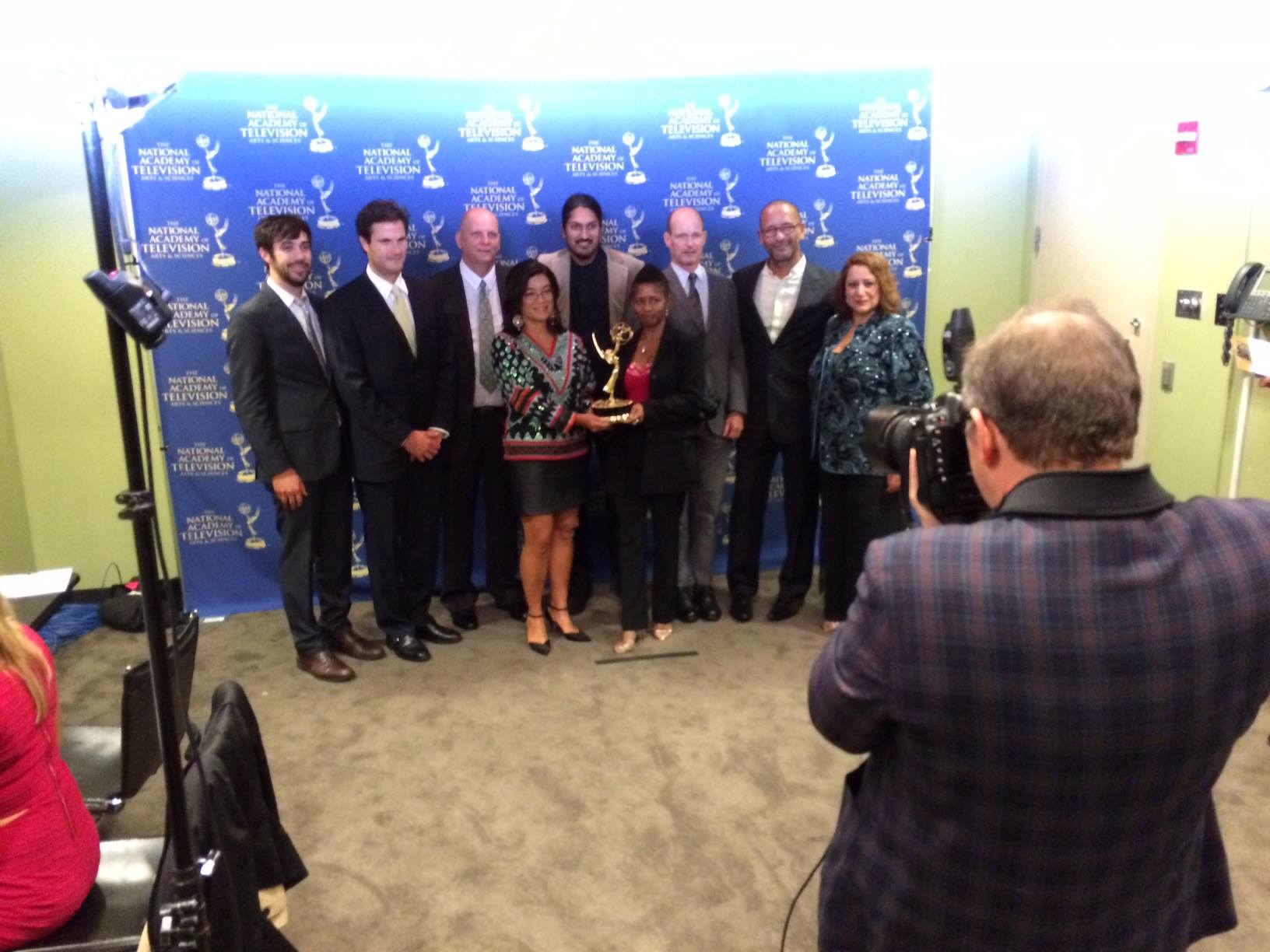
Once under the POV umbrella, PBS submitted Herman’s House for several awards. The Storyline team moved on, but in July 2014, a full year after broadcast, they got a message: Herman’s House had been nominated for an Emmy in the category of Outstanding Arts and Culture. The team went down to New York in October that year for the awards ceremony, and to bask in the glow of the accomplishment of simply getting a nomination.
“Of course we go. How do you not go to that? So we went and we were completely certain we wouldn’t win because we were up against a couple of films that certainly had a high profile, higher than ours in some ways,” she said.
“So we just figured oh it’s okay we got a nomination. That’s huge. So we were truly shocked when the film’s name was called out. We were truly shocked. Did someone make a mistake? We were celebrating the nomination, but we forgot that someone would win,” she added.
And so, on October 1 2014, when Herman’s House won the 2014 News & Documentary Emmy Award for Outstanding Arts and Culture Programming, Lisa officially became an Emmy Award-Winning documentary film producer.
“We were just very lucky to have access to this extraordinary story. A great film is made because the subject matter is so extraordinary. We didn’t make that, we just recounted it,” she said.
Shortly after the broadcast of Herman’s House on POV on July 2013, Lisa moved on to a more part-time role with Storyline, and into a full-time role doing financial work for a TV series production company in Toronto, which she has been doing since. She also became involved again with Min Sook Lee, helping her out with another side project.
The Emmy win is something that Lisa hopes will help her in the future as she uses her talent for producing extraordinary stories to shine light on the injustices facing many people out there today.
“Definitely to have Emmy award-winning in my bio is news that I can use so people will take me seriously much more quickly now,” she said.
“It pisses me off when people are treated unjustly, and I think we should all be speaking about it, whether it’s happening to us or others, and we should not be afraid to take a deep look at what’s wrong with our lives and how we structure everything in society,” she said.
“I think we should all be consciously working for justice, but I know most people aren’t. I don’t feel happy if I’m not somehow doing that in some way in my life, and what I’ve come to realize is that my strength is in being involved somehow in storytelling. It so happens that it’s been documentary film making,” she added.