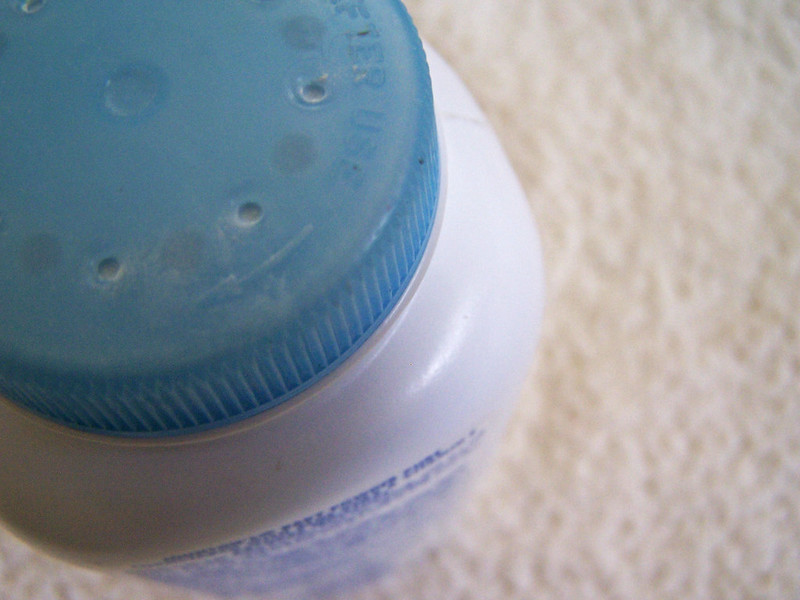
MANILA — A workers’ organization on Wednesday urged the Food and Drug Administration (FDA) to conduct testing on a Johnson and Johnson (J&J) baby powder product in the country to protect consumers from possible asbestos contamination.
The Associated Labor Unions-Trade Union Congress of the Philippines (ALU-TUCP) made the call following the recall last week of 33,000 bottles in the United States after its food and drug authority found a type of asbestos in a sample product.
“We are calling upon the FDA authority to proactively take steps to mitigate the undue anxiety felt by consumers caused by this serious discovery of asbestos contamination in a baby product commonly used by so many Filipinos across our growing population,” said Gerard Seno, ALU-TUCP national executive vice president, in a statement.
“We are urging them to conduct product evaluation test to assure the quality and safety of the product poses to the health of consumers,” he added.
On October 18, the US Food and Drug Administration announced that it has found the deadly chrysotile asbestos fibers in one batch of the product and advised consumers to stop using J&J baby powder with Lot # 22318RB.
The US FDA discovery was made for the first time among bottles sold online as part of a survey of around 50 cosmetic products for asbestos fibers that cosmetic products sold by retailer Claire’s and Justice contain carcinogenic asbestos in 2017.
“The FDA must guarantee to all of us the safety, purity and efficacy of this product in order to protect the health and welfare of the general public. It is better for FDA to err on the side of caution than to realize too late that many people’s health and safety have already been compromised simply because they didn’t check the product,” Seno said.
The ALU-TUCP through TUCP Party-List Rep. Raymond Mendoza’s House Bill 2636 is pushing to ban the import, manufacture, use, process, distribution of asbestos for commercial purposes.
“Workers involved in the manufacture of asbestos-containing materials, construction workers, electricians, plumbers, pipe fitters, carpenters, power plant workers, boilermakers, shipyard workers, firefighters, and teachers are the type of workers who are highly risked to exposure to cancer-causing asbestos in the country,” the ALU-TUCP official added.
In the Philippines, blue and brown asbestos is banned. However, white or chrysotile asbestos is regulated on a few existing products by Chemical Control Order 02 series of 2000 by the Department of Environment and Natural Resources (DENR).
The World Health Organization (WHO), International Agency for Research on Cancer (IARC), and the American Cancer Society maintains all types of asbestos including chrysotile asbestos causes a variety of cancer diseases including malignant mesothelioma—a type of cancer that develops from the thin layer of tissue that covers many of the internal organs such as the lungs and chest wall.