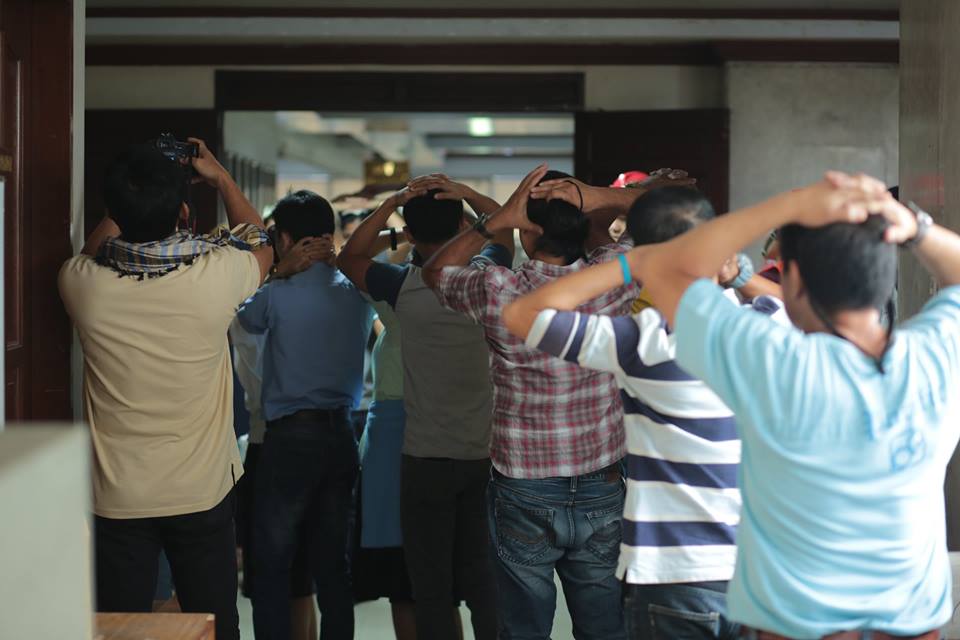
The chief of the Philippine Institute of Volcanology and Seismology (PHIVOLCS) on Wednesday, April 24, reminded the public again the importance of being prepared and knowing what to do before, during, and even after an earthquake.
“The key to the problem of earthquake preparedness would be within us. We have to prepare ourselves, know what to do before, during and after the earthquake. Make sure that our families also know what to do,” PHIVOLCS Executive Director Renato Solidum said in an interview with ANC.
“The most important thing is, do you have your own family preparedness plan? Is your house safe? Have you prepared for an evacuation [plan], where will you go? Do you have an emergency bag enough for your family members, do you participate in drills, do you understand what the problem is, do you listen to proper authorities?” he asked.
Solidum said the public should not just believe what is posted on social media, but they should confirm first whether the information is true or not. PHILVOCS, on Tuesday, reshared its 2017 Facebook post, urging everyone not to be persuaded or forward any information about earthquakes that may cause more confusion and fear to those who might read it. It advises the Filipinos instead to check their website — www.phivolcs.dost.gov.ph. — for accurate information.
“Most importantly, please do not panic. Be calm during an event. What is important is to understand the scenario. Earthquakes will happen,” he said, adding that if the public is prepared, then they “will be okay.”
Solidum’s remark came after a magnitude of 6.1 earthquake hit parts of Luzon on Monday, while a 6.5-magnitude earthquake struck Eastern Samar on Tuesday.
As of writing, the National Disaster Risk Reduction and Management Council (NDRRMC) said the magnitude 6.1 earthquake has left 16 dead, while 10 people were injured following the magnitude 6.5 quake.
On Wednesday, PHILVOCS reported that a magnitude 4.7 earthquake with a depth of 11 kilometers struck Baganga, Davao Oriental, and a magnitude of 4.5 tremor with a depth of 270 kilometers hit Sarangani, Davao Occidental.
Malacañang earlier assured that the government is ready to respond to the needs of the Filipino people who are affected by these events.
“We assure our people that the government is on top of the situation and we are ready to respond anywhere and anytime,” Presidential Spokesperson Salvador Panelo said.
“Concerned disaster agencies of the government, including those involved in the provision of basic and health services, are now working round the clock to ensure government service delivery remains unhampered,” he added.