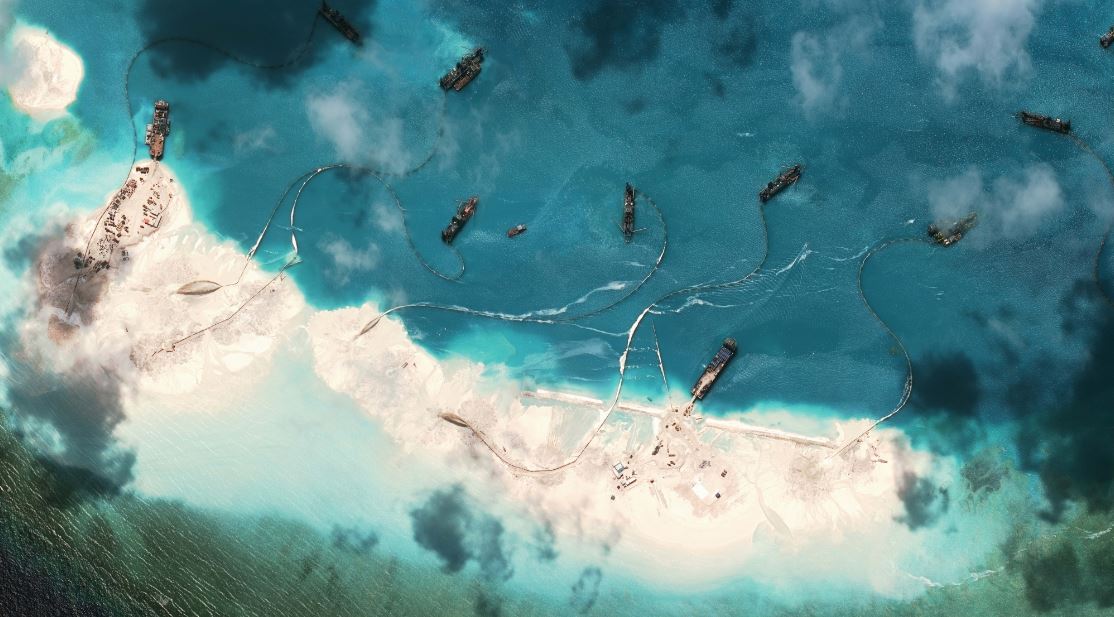
MANILA — The Philippines will support the United States in calling for a stop to China’s reclamation activities in the South China Sea and West Philippine Sea.
“As a means of de-escalating tensions in the region, the Philippines fully supports and will pro-actively promote the call of the United States on the ‘three halts’ – a halt in reclamation, halt in construction and a halt in aggressive actions that could further heighten tensions,” Foreign Affairs Secretary Albert del Rosario said in a statement.
“We have to emphasize, however, that this should not in any way legitimize the status of the features reclaimed by China,” Del Rosario added.
The secretary was referring to the massive artificial islands that China has been building in a number of areas in the disputed territories.
“The COC should be our priority now if it is still to be relevant, practical and usable in the context of what is happening on the ground,” Del Rosario said referring to the Code of Conduct that the Philippines is expecting from the ASEAN.
“The situation of uncertainty in the South China Sea also behooves us to reach a common understanding on the practical meaning of the principles of non-use of force or threat of force and self-restraint in the DOC,” he added.
Del Rosario also noted how the country is affected by the massive activities conducted by China in the disputed territories.
“As we speak, we see no letup on the unilateral and aggressive activities of our northern neighbor in the South China Sea,” Del Rosario said.
“Our northern neighbor has stated that these facilities will also meet its ‘necessary military defense’ so its statements that it has completed the land reclamations offer no comfort,” Del Rosario said. “In fact, they generate new uncertainties.
These activities cannot lawfully change the character, status and maritime entitlements of the affected features under UNCLOS.”
UNCLOS stands for the United Nations Convention on the Law of the Sea.
“The Philippines has been directly affected by harassment of fishing vessels, destructive fishing activities, unilateral fishing ban and audio challenges against aircraft flying over the South China Sea,” Del Rosario said.