
Art and Culture
Winterthur exhibit offers insight into detecting art fraud

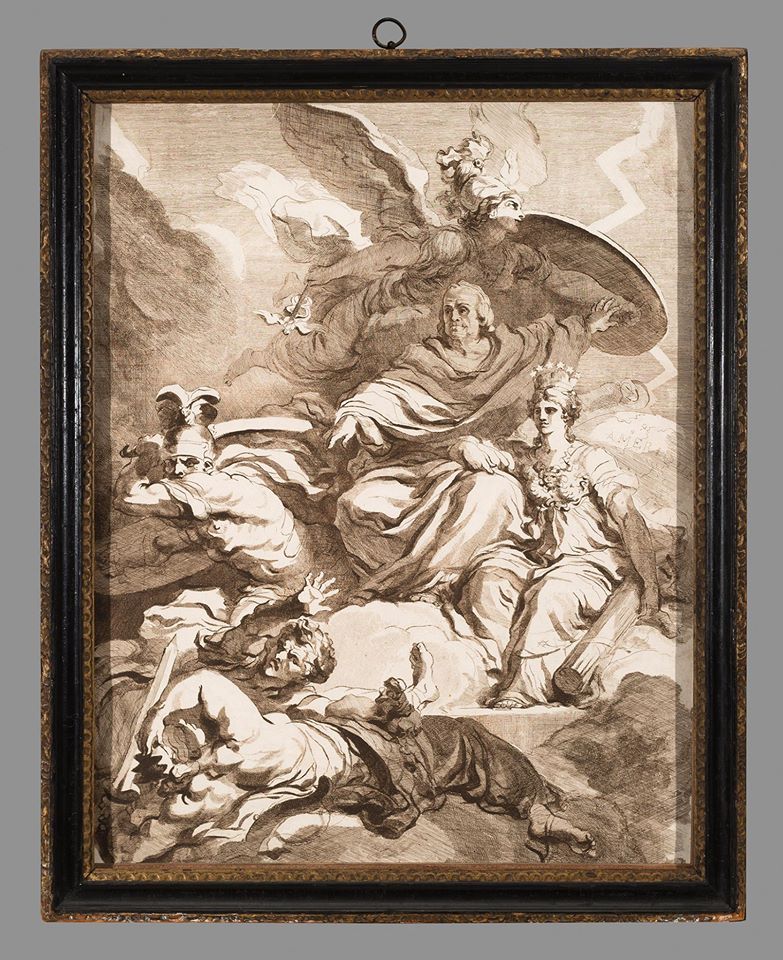
They’re all part of a new exhibit at Delaware’s Winterthur Museum that offers would-be sleuths a firsthand look at how experts detect the high-priced fakes and forgeries that rock the rarified world of fine arts. (Photo: Winterthur Museum, Garden & Library/ Facebook)
GREENVILLE, Del. –A painting with problematic pigment. A Chanel suit dressed up with acetate trim instead of silk. A Stradivarius violin that, well, just doesn’t sound right.
They’re all part of a new exhibit at Delaware’s Winterthur Museum that offers would-be sleuths a firsthand look at how experts detect the high-priced fakes and forgeries that rock the rarified world of fine arts.
“Treasures on Trial: The Art and Science of Detecting Fakes,” illustrates the ongoing battle that pits clever forgers and con men against equally determined art conservationists and historians.
The exhibition, which includes documentary film and a lecture series, opens Saturday and runs through Jan. 7.
The weapons used by art gallery gumshoes who dedicate themselves to uncovering fraud include historical documentation of ownership, or provenance; scientific analysis; and “connoisseurship,” a systematic but nonetheless subjective examination of an object for perceived consistencies or inconsistencies with one known to be genuine.
In a small gallery at Winterthur, best known for its collection of American decorative arts, the abstract expressionist painting by Mark Rothko that greets visitors might seem out of place.
Until you discover it’s a forgery that was part of the largest art fraud in American history, in which New York art dealer Glafira Rosales admitted participating in a 15-year scam that fooled art collectors into buying more than $60 million of counterfeit paintings attributed to the likes of Rothko, Jackson Pollock and Willem de Kooning.
“They had a mysterious provenance … they came out of nowhere,” said art sleuth and exhibit co-curator Colette Loll, founder and director of Art Fraud Insights, a Washington, D.C.-based consulting firm.
The scandal, which resulted in the closing of New York’s Knoedler & Co. art gallery, should serve as a cautionary tale, Loll suggested.
Rosales was sentenced earlier this year to nine months of house arrest and three years’ probation, but Loll noted that no one was ever prosecuted for actually creating the forgeries.
“In the U.S., we don’t have anti-forgery laws, unlike many other European countries,” Loll said, explaining that the crime is in representing a forgery or fake as the genuine item.
“It’s the intent to deceive,” she said.
While intent is a key element, the motivations behind art fraud can vary, including financial gain, an artist’s frustration about not being appreciated, a desire for attention, or simply the challenge of trying to fool the experts.
The exhibit, in which fakes and forgeries can be seen alongside authentic objects, offers a rare look into the tools and techniques used by Winterthur’s Scientific Research and Analysis Lab. They include a variety of spectrometers that use infrared light, ultraviolet light and x-rays to analyze the chemical composition of materials and help determine, for example, that the solder used in a lampshade long thought to be a genuine Tiffany creation contained zinc instead of lead, confirming that it was a fake.
“A very, very good fake,” acknowledged exhibit co-curator Linda Eaton, director of collections and senior curator of textiles at Winterthur.
Not surprisingly, even experienced collectors can be fooled by fakes, including furniture purchased by Winterthur founder Henry Francis du Pont, and millions of dollars of counterfeit fine wine, including bottles that purportedly belonged to Thomas Jefferson, bought by billionaire Bill Koch.
“I think one of the takeaways that we want to make sure people have is how all of us need to be humbled and need to keep an open mind,” Eaton said.
In other words, we may never know whether vampires are real, but a little sleuthing might help determine the authenticity of a 19th-century “vampire killing kit.”




















