Connect with us

Lifestyle

More than 13-M people access clean water in 15 years in Mozambique

Published

on

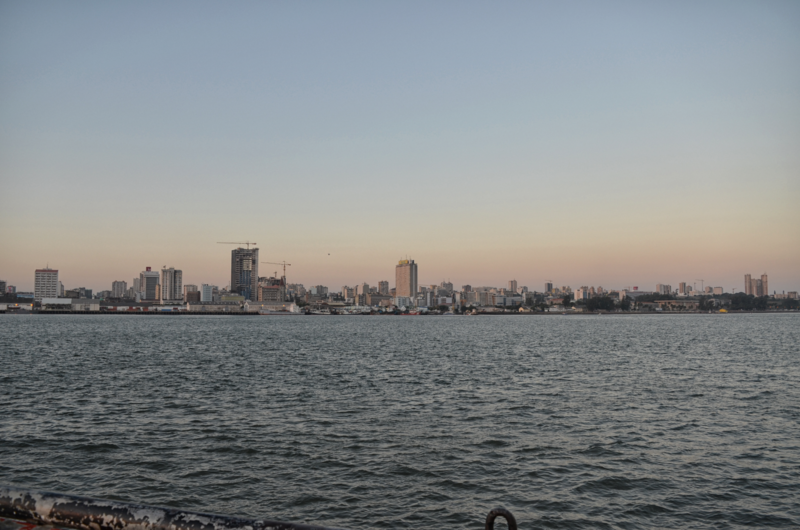
Government authorities have announced in Maputo that between 1990 and 2015, more than 13 million Mozambicans accessed clean drinking water and 7 million accessed proper sanitation. (Photo by AP1MZ (Own work) [CC BY-SA 4.0)

Government authorities have announced in Maputo that between 1990 and 2015, more than 13 million Mozambicans accessed clean drinking water and 7 million accessed proper sanitation. (Photo by AP1MZ (Own work) [CC BY-SA 4.0)

MAPUTO—Government authorities have announced in Maputo that between 1990 and 2015, more than 13 million Mozambicans accessed clean drinking water and 7 million accessed proper sanitation.

Despite the number, indicating more than half of the estimated 25 million Mozambican population, government authorities said the sector for water access needs more investments.

The Minister of Housing and Public Works, Carlos Bonete told cooperation partners in a meeting aimed at presenting the country’s strategic vision towards meeting the Sustainable Development Goals for water until 2030 that the country will need an estimated USD4 billion to invest in the sector.

The amount will be used to improve water access, guarantee sustainability and equity in service delivery including resilience to climate change, Bonete said.

“Up to now, the country has a coverage around 50 percent in terms of safe access to clean water and about one-third of the population has access to sanitation,” the minister added.

Nelson Trindade, national director for water access, said that the level of investment in the sector of water is beyond the expectation.

The meeting with partners in Maputo was also aimed at raising financial resources to materialize the government objectives in this sector.

Manuel Alvarinho, chairman of the Water Regulation Council, aimed to speed up the process to use every source of water for consumption.

“We need to consider water, hygiene and sanitation as fundamental tools to fight poverty. We need to find out how to capture water from the drainage systems and from rains,” said Alvarinho.


Continue Reading
Click to comment

Leave a Reply

Your email address will not be published. Required fields are marked *

Maria in Vancouver

Lifestyle3 days ago

When Family Ties Break: Learning to Live With Estrangement

There was a time when the idea of becoming estranged from your own family seemed almost unthinkable. Family was family....

Headline2 weeks ago

A Day In My Life

There was a time when I thought a fulfilling life had to be busy to be meaningful. Now, I think...

Headline1 month ago

Letting Go with Love

There is a particular kind of heartbreak that comes with watching your child grow up. It isn’t the heartbreak of...

Headline2 months ago

Living With Anxiety: The Invisible Weight We Carry

There are illnesses we can see, and then there are the ones we learn to hide. Anxiety is often one...

Headline2 months ago

The Art of A Slow Weekend

We live in a world that glorifies being busy. Some people wear exhaustion like a badge of honour. Calendars are...

Headline3 months ago

Why We Chose an Intimate Wedding — And Why More Couples Are Doing the Same

Every wedding anniversary takes me back to one of the most magical days of our lives and reminds me why...

Headline3 months ago

Celebrating Turning 58

Birthdays have a way of making us pause—not to count the years we’ve lived, but to appreciate the countless blessings...

Lifestyle4 months ago

The Painful Reality of Losing Someone

Recently, I experienced the painful reality of losing someone through others. One friend lost her fiancé to death, while another...

Headline4 months ago

The Sobering Reality of Growing Old

Growing old brings a sobering reality: time is finite.  You watch your body slow down, see your parents age, and...

Lifestyle5 months ago

Dr. David Suzuki’s Legacy: A Celebration at 90

Celebrating Dr. David Suzuki’s 90th birthday on Friday, May 22  was a true privilege and a great pleasure! My husband,...