Canada News
Nuclear risks: PM at summit looking at nuclear threats

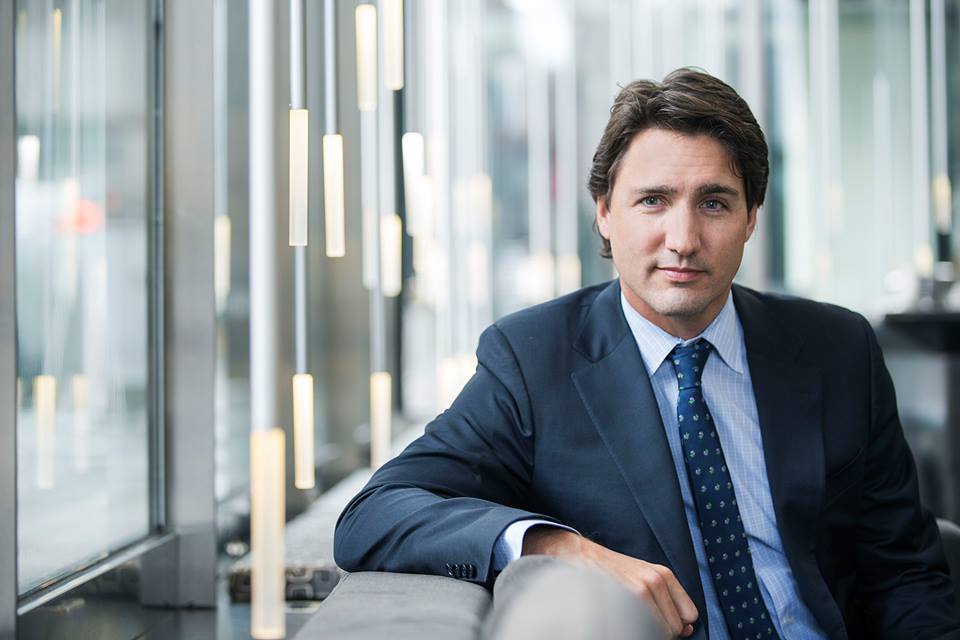
(Facebook photo)
WASHINGTON—As world leaders gather to discuss potential security lapses that might allow terrorists to obtain nuclear material, the summit host insists there won’t be any finger-pointing.
Dozens of leaders will use the two-day event that starts Thursday to make announcements on their own commitment to securing nuclear material. Among them will be Prime Minister Justin Trudeau, although Canada is considered a low-risk country by international observers.
So which are the high-risk ones? The White House won’t say. At least not in any public statements in briefings leading up to the fourth and final nuclear-security summit of Barack Obama’s presidency.
“The purpose of the summits is not to name and shame,” said Laura Holgate, a top administration official for nuclear safety and organizer of the Washington gathering.
“The purpose of the summits is to identify steps that we can take together, and certainly, individual steps that individual countries can make.
“It’s a place to create peer pressure, if you will. But you will not hear us say in an official context—or any other context—that we have particular concerns about particular countries.”
These summits stem from a 2009 Obama speech in which he called for the eventual elimination of nuclear weapons. He conceded that might not be achieved in this lifetime—but he set shorter-term objectives: One was securing nuclear material to keep it from terrorists.
Results have been mixed.
Despite progress in consolidating supplies, removing material from numerous countries and adding protections, administration officials concede certain spots remain a concern.
So where are they?
Troubling incidents occurred recently in Belgium. The White House says it’s satisfied proper protocols are in place there—including the recent deployment of soldiers to nuclear sites.
But an Islamist militant linked to the Paris attacks had gathered surveillance video of a nuclear plant employee. Two plant employees left to Syria to join the so-called Islamic State. Another plant worker was just found shot to death in his home—a killing Belgian police said was criminal, not terrorism. One employee tampered with a turbine in 2014.
Belgium isn’t listed as a top concern on the Nuclear Threat Index.
Of the 24 countries profiled this year under the non-government study, the biggest concerns were: North Korea, Iran, Pakistan, India, Israel, China and Russia.
Canada was listed as the third safest. It scored high marks in 18 categories, but was middle-of-the-pack in two: in the potential terrorist presence in Canada and in how materials were dispersed across numerous sites.
Trudeau said he took the issue seriously.
“Everyone is concerned about nuclear weapons,” he told Edmonton radio station CHED on Wednesday.
“One of the things we’ve seen around failed states, around the virulence and the resources of terrorist organizations, is there’s a nightmare scenario in which terrorists could get their hands on a dirty bomb or nuclear weapon.”
Those threats are spelled out in a new 166-page study by the Belfer Center at Harvard University.
It calls 2016 a pivotal year in nuclear safety, as leaders prepare for the post-Obama world. U.S. officials said there’ll be dozens of announcements—including commitments that would apply to international organizations that work on the issue. Citing those existing forums, Russia’s Vladimir Putin is skipping this year’s U.S.-led summit.
The Harvard study says the freeze in Russia-U.S. relations is one trouble spot.
It concludes:
Nuclear security has improved dramatically since the 1990s in Russia—which has the world’s biggest stockpiles, spread in the largest number of buildings.
But significant weaknesses have persisted or worsened. They include widespread corruption; organized crime; Islamic extremism; economic problems; a cut in Russia’s nuclear-safety budget and stalled co-operation with the U.S., following sanctions prompted by the Ukraine invasion.
“Security surrounding Russia’s nuclear stockpile has improved dramatically since … the collapse of the Soviet Union. Fences around facilities have been mended, staff are paid regularly, guards stand their posts and electric bills are paid on time,” says the paper.
“It is significantly more difficult to steal weapons-usable nuclear material in Russia than it was 20 years ago.”
Pakistan has a rapidly growing arsenal and powerful terrorist groups. “Repeated terrorist attacks on heavily guarded facilities in Pakistan—often appearing to have insider help—highlight the ongoing risk.”
Yet Pakistan has made major efforts to keep the supply safe. By some estimates, it says, 25,000 soldiers are available to guard Pakistani nuclear stocks and facilities.