Sports
Southeast Asia: Lucrative new frontier for European football but black hole for homegrown game

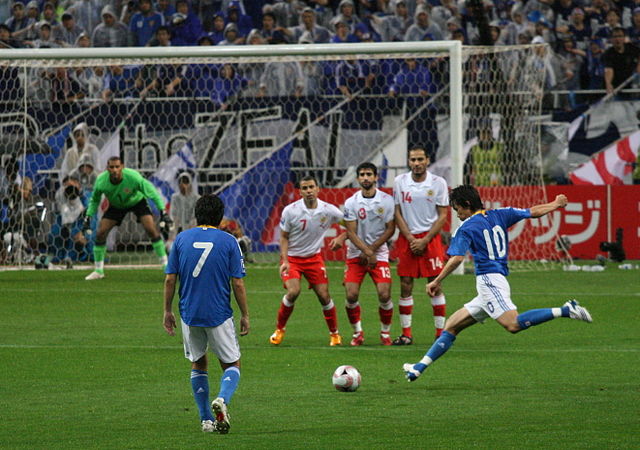
(Wikipedia photo)
HANOI, Vietnam – There were so few people watching Vietnam take on Hong Kong in a recent Asian Cup qualifier that turnstile staff hardly bothered checking tickets on the damp, cold Hanoi evening.
Rewind seven months, when Arsenal visited and it was very different.
Families decked in the North London club’s red-and-white flocked past frenetically busy ticket touts. From his roof-top portrait, Vietnamese revolutionary and hero Ho Chi Minh gazed down on the 40,000 people who cheered as the Gunners shredded the national team.
Moral of the story: Many Southeast Asian football fans, including those in Vietnam, don’t give two hoots for the homegrown game. Across the region, leagues and teams struggle to get even a fraction of the support, attention and revenue that European clubs enjoy. Match-fixing, corrupt governing bodies and chaotic management are partly to blame.
“It’s a mess,” said Nguyen Van Nam, among the mere 5,000 people who attended Vietnam’s 3-1 victory over Hong Kong. Only because he couldn’t get tickets for Arsenal’s pre-season money-spinner in July did the 38-year-old come with his two football-mad children.
“Otherwise I wouldn’t be here,” he said.
Southeast Asia is home to 620 million people, around the same as Latin America, but hasn’t sent a team to the World Cup since 1938, when Indonesia played as “Dutch East Indies” because it was still a colony.
That many fans across the region only have eyes for European football is easy to understand when one considers the pathetic showing of supposedly major Asian nations in the latest cycle of the Asian Cup. The 58-year-old competition for nearly 50 countries from Australia to Yemen is meant to showcase the region’s best national sides and their best football. But Thailand and Indonesia lost all their six matches, scoring just nine goals between them, and Singapore and Vietnam scrapped a single victory each. Hence the meagre turnout in Hanoi.
Fan fascination with European stars like Wayne Rooney and Lionel Messi seems limitless. Southeast Asia’s resilient economies and increasingly wealthy fans are major attractions for European clubs. Arsenal was one of seven Premier League clubs that visited pre-season. About one-third of Premier League shirt sponsors are Asian. Commercial tie-ups are multiplying, from Manchester United-branded credit cards in Indonesia to a Chelsea-partnered whisky in Myanmar.
Match-fixing has made fans skeptical of Asian leagues. Police forces are often ill-equipped to investigate what is a complicated crime involving transnational gangs. Indonesia and Vietnam have been investigated over allegations of throwing matches for money.
Corrupt and inept management of clubs and national teams, often by millionaire politicians or dodgy tycoons, as well as bad refereeing, crowd and player violence and constantly changing league structures have also discouraged fans.
Indonesia encompasses the worst and best of Southeast Asian football.
Jakarta’s Bung Karno stadium is full, the atmosphere electric, whenever the national team plays. League games regularly draw 20,000 fans.
But for most of the 2000s, the Indonesian football association was run by a convicted corruptor, who kept the job despite being imprisoned twice. The end of his tenure in 2011 sparked an ugly power struggle resulting in two dueling leagues and, for a time, two national squads.
Some European clubs invest in football academies in the region, but youth development as a whole is being neglected. Physical education classes or school sports teams barely exist in many places, study is given priority over sport. Childhood obesity is a growing problem.
As a short cut to league success, owners are paying for imported talent from Africa and South America. Some close to the game fear these players, typically much larger than Asians, are hampering the development of local players by making it hard for them to break into club teams.
“If you really want to be top in football, there is a foundation which starts at the schools,” said Peter Velappan, a former Malaysian team coach and former general secretary of the Asian Football Confederation.
“These days a lot of Asian countries are trying to build a house starting from the roof by importing players from abroad. No wonder it’s collapsing.”