Headline
Missing Malaysia plane could have speared into the sea, leaving few clues to follow

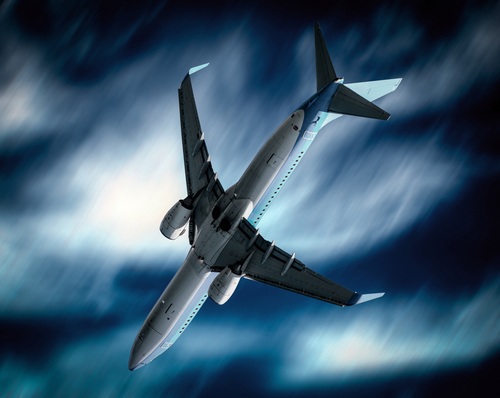
SYDNEY, Australia – Did the missing Malaysian jet plunge into the ocean at a steep angle, leaving virtually no debris on the surface? Did it come in flat, clip a wave and cartwheel into pieces? Or did it break up in midair, sending chunks tumbling down over a wide swath of water?
Exactly how the plane hit the water makes a big difference to the teams undertaking the painstaking search for the wreckage. Investigators have frustratingly little hard data to work out how Malaysia Airlines Flight 370 came down in the Indian Ocean on March 8 with 239 people on board.
Here are some possible scenarios:
A STEEP DIVE:
If the plane ran out of fuel at its normal cruising altitude and the pilots were incapacitated, the autopilot would stop working and the aircraft could dip into an increasingly steep and rapid dive, aviation experts said. Under this scenario, the plane could hit the water nose-first and close to perpendicular with the surface, piercing the ocean like an arrow.
The wings and tail would be torn away and the fuselage could reach a depth of 30 metres or 40 metres within seconds, then sink without resurfacing. Wing pieces and other heavy debris would descend soon afterward.
Whether buoyant debris from the passenger cabin – things like foam seat cushions, seatback tables and plastic drinking water bottles – would bob up to the surface would depend on whether the fuselage ruptured on impact, and how bad the damage was.
“It may have gone in almost complete somehow, and not left much on the surface,” said Jason Middleton, an aviation professor at Australia’s University of New South Wales.
Any floating debris left would be in a relatively contained area, but would begin drifting apart. Most would eventually become waterlogged and sink, though items such as foam seat cushions could float almost indefinitely, Middleton said.
AN INTENTIONAL DITCH:
Commercial flight crews train to bring a plane down in water with a minimum of damage. They dump fuel, slow the plane down to the absolute minimum speed needed to maintain control, and try to ease the plane into the water at a shallow angle.
Middleton said the ditching of hijacked Air Ethiopia Flight 961 in the Comoros Islands in 1996 is a dramatic example of what could be expected to happen next. Video of the crash shows the plane’s left wing dipping first into a flat ocean, which rips off an engine and drags the aircraft onto its left side. Debris flies off in all directions before the nose digs in and the plane flips and breaks apart. Just 50 of the 175 people aboard survived.
“You have the prospect of the plane smacking into the side or front of a wave crest, with one engine or wing dipping in first and the whole thing cartwheeling, and the airplane is going to break up,” Middleton said.
Debris would be spread over a wide area. Heavy pieces would likely sink quickly, but items such as galley parts and items from overhead compartments could float for a long time, said John M. Cox, an air safety consultant and former airline pilot.
A MIDAIR EXPLOSION:
Investigators also must consider the possibility that an explosion ripped the plane apart at high altitude. If that occurred, chunks of the plane would fall to earth at different speeds according to their weight and other factors, said Geoff Dell, an aviation and accident investigation expert at Australia’s Central Queensland University.
Wreckage could be spread over an area of several kilometres (miles), as happened when a bomb disintegrated Pan Am Flight 103 over the Scottish town of Lockerbie in 1988.
THE HOPE AGAINST HOPE:
The ditching of US Airways Flight 1549 into the Hudson River in 2009 shows that a jetliner can be brought down in water without loss of life. But Graham Edkins, a former Australian government senior air crash investigator, said it requires an almost unbelievable confluence of skill, conditions and luck.
“On a bright and sunny day, with no waves and no wind, and the captain can see everything and is very experienced, you can see it is possible to get the plane on the water in a way that everyone could get out,” Middleton said.
Conditions in the part of the Indian Ocean where the plane is believed to have gone down are nothing like those in New York that helped pull off the “Miracle on the Hudson.” Swells in the region average around 5 metres (16 feet).
Even if the plane landed relatively intact in the water, it would immediately start to sink, giving those on board little time to escape – into waters of around 8 C (46 F) in a remote region with no immediate hope of rescue.