
Breaking
Creation of a National Food Security Council proposed

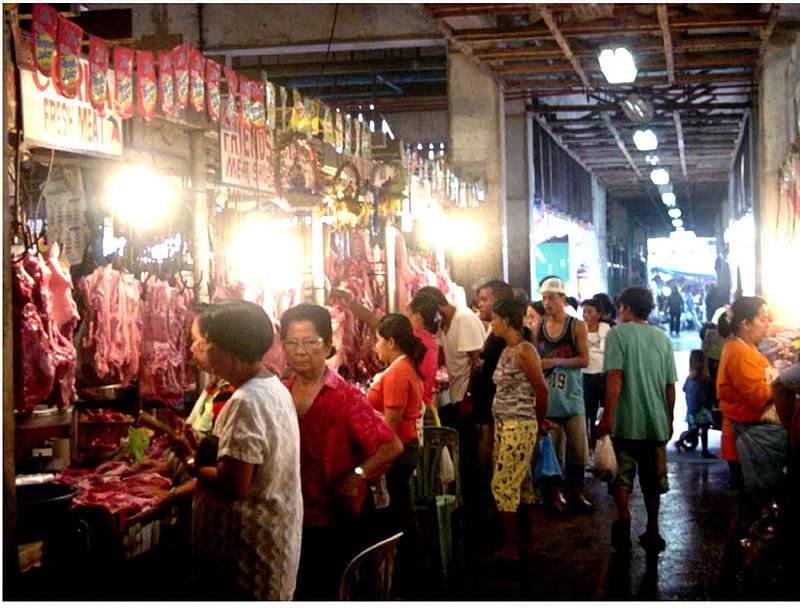
Typical market scene in the Philippines (Hulagway via Flickr / Wikipedia)
MANILA — There is a need to create a National Food Security Council that would harmonize the country’s efforts to ensure food staples self-sufficiency and security, a partylist lawmaker stressed.
Rep. Agapito H. Guanlao (Party-list, BUTIL) is author of House Bill No. 4611, entitled “An Act Creating the National Food Security Council, appropriating funds therefor and for other purposes,” now under deliberation by the House Committee on Government Reorganization chaired by Antipolo City Rep.
Romeo M. Acop.
“Food security and food staples self-sufficiency is challenged on many fronts. The country must meet the requirements to feed 100 million Filipinos,” Guanlao stressed.
Guanlao, chairman of the Special Committee on Food Security, said the proposed Council, which will be attached to the Office of the President, is designed to strengthen through legislation the creation of the Office of the Presidential Assistant on Food Security and Agricultural Modernization, or (PASFSAM).
The PASFSAM will be chairman of the proposed Council which shall govern and coordinate the existing task and functions of the National Food Authority (NFA), the National Irrigation Administration (NIA), Philippine Coconut Authority (PCA) and the Fertilizer and Pesticides Authority (FPA) and shall effect the harmonization of the said agencies pursuant to the proposed Act.
“The bill seeks to attain focus by harmonizing the programs, functions, and provide a single direction among the NFA, the NIA, the FPA and the PCA without effecting changes in their Charters,” the author clarified.
Foremost of the Council’s litany of functions is to provide the Office of the President with policy inputs, necessary data and information, based on extensive policy research, concerning food security and production trends and developments.
HB 4611 also creates a Congressional Oversight Committee in the Senate and House of Representatives to monitor the implementation of the proposed statute.
The author noted the various challenges and pressures of shrinking agricultural lands, degradation of food resource bases and the looming threat of decimation of food ecosystems and biodiversity caused by extractive activities and climate change.
Aside from the aforementioned challenges, the author said, the “inadequacies in government support to the agriculture sector – financial and credit, technological, skills transfer, and abolition of agricultural subsidies – erode the economic viability of farming, rice farming in particular.”
Among its vital mandates, the Council shall coordinate the different national and local government agencies and the private sector in the pursuit of implementing national and local food security targets and directions within the ambit of the National Food Security Strategic Development Framework or NFSSDF as provided for under the proposed Act.
The Bill mandates that the National Food Security Council shall be composed of the NFA, NIA, PCA and the FPA as the Executive Committee. Other members include the following: Departments of Agriculture; Agrarian Reform, Environment and Natural Resources; Finance; Interior and Local Government; Trade and Industry; Budget and Management; and Land Bank of the Philippines.
Also included in the Council are: Two representatives each from the House of Representatives and the Senate; and one representative from the following sectors: National Farmers Organization, National Organization of Backyard Farmers, National Organization of Grains Framers, National Fishermen’s Organization, Agri-business enterprises, Indigenous cultural communities/indigenous peoples, Civil Society Organization, Non-government organizations, Cooperatives, Consumers, Private Sector and the Academe.
It is to be noted that under HB 4611, the personnel and assets of the NFA, NIA, PCA and FPA shall be retained and transferred to the Council to ensure the efficient and uninterrupted implementation of the programs and projects.
Likewise, all regular or permanent employees who shall be affected shall not suffer any loss of seniority or ranks or decrease in emoluments.
The proposed statute mandates a regular report to Congress on the status of the Council’s operations necessary to effectively implement the Act.




















