
Technology
Australian scientists discover new galaxy more than 5 bln light years away

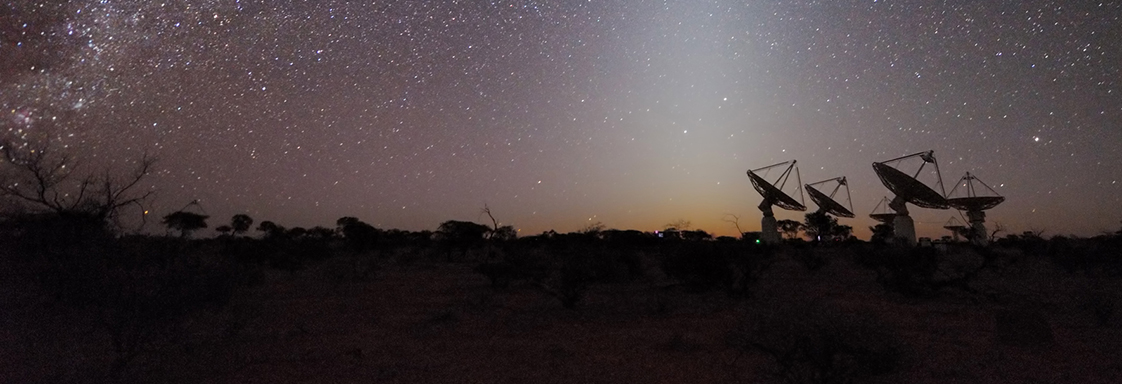
(photo courtesy of the Commonwealth Scientific and Industrial Research Organization (CSIRO))
CANBERRA – Australian scientists have used a new, high-tech telescope to reveal a galaxy more than five billion light years away.
The discovery, set to be announced on Monday at the British National Astronomy Meeting, was made possible by a series of radio emissions received by the Commonwealth Scientific and Industrial Research Organization’s (CSIRO) Australian SKA Pathfinder telescope (ASKAP), located at the Murchison Radio-astronomy Observatory (MRO) in remote Western Australia.
The CSIROs Dr James Allison led a research team using ASKAP and the unique area of “radio quietness” surrounding the MRO to reveal more information about the far-flung galaxy.
Allison’s team used a special technique to detect a change in radio waves coming from the center of a galaxy named PKS B1740-517, which is located near the Ara constellation.
The radio emission, estimated to be more than 5 billion years old, was stamped with the “imprint” of a pocket of hydrogen gas it had traveled through on its way to the earth.
The gas absorbed some of the emission, which created a minuscule “dip” in the radio signal, and Allison said the remote location of the ASKAP contributed to being able to notice the small anomaly in the signal, which led to the discovery of the galaxy.
“At many observatories, this dip would have been hidden by background radio noise, but our site is so quiet it stood out clearly,” Allison said in a statement on Monday.
He said his team will use the unique radio absorption technique with ASKAP to find more galaxies that are up to 10 billion light years away from the earth and determine how much hydrogen gas they contain.
This information could help astronomers unlock vital information about why star formation, which is fueled by hydrogen gas, has dropped off in the last 10 billion years.
The ASKAP could also assist scientists in developing new techniques to study pulsars, which are radio signals pulsed from small stars, and giant starless clouds of hydrogen gas.
“These latest research findings are demonstrating that ASKAP can do what other telescopes can’t,” Allison said.




















