
Headline
Nvidia reinstates Jensen Huang as CEO amid China spy allegations, US security concerns

ASM, Philippine Canadian Inquirer
November 24, 2026
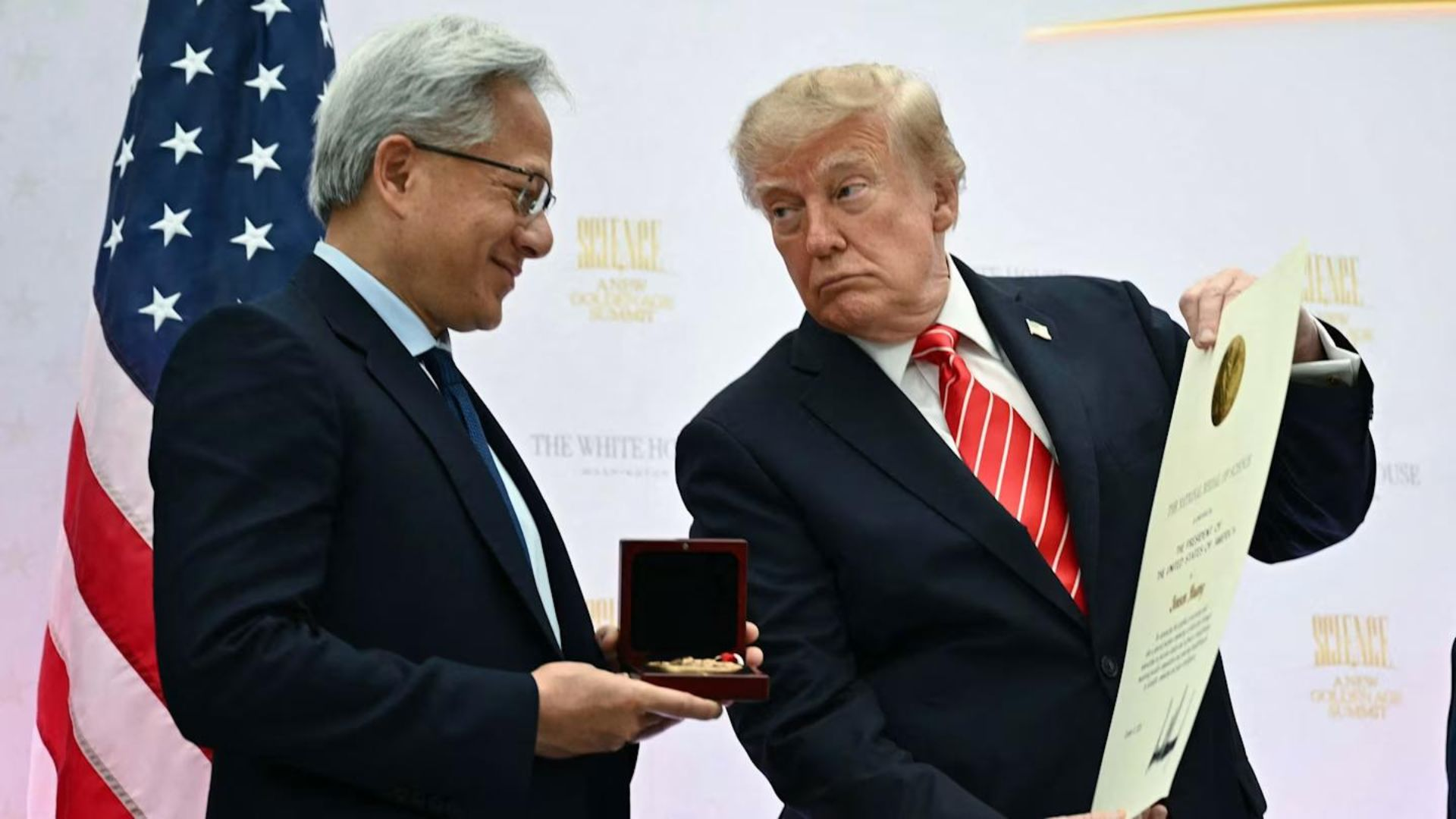
Photo courtesy: Getty Images
Nvidia has restored co-founder Jensen Huang as chief executive officer less than two weeks after his resignation, triggering a sharp rebound in technology stocks while prompting renewed scrutiny from US lawmakers over national security and the company’s business dealings with China.
The chipmaker announced on November 23 that its board had unanimously approved Huang’s return as president, CEO and a member of the board of directors.
The decision followed discussions with Huang and consultations involving senior US government officials, according to the company.
Nvidia’s board said it was satisfied with Huang’s ability to lead and believed his reinstatement would not pose a national security threat.
However, congressional leaders have questioned that assessment as investigations continue into reported foreign intelligence links and possible violations of US restrictions on advanced semiconductor exports.
Lawmakers question national security risks
Democratic leaders criticized Huang’s reinstatement and demanded greater transparency over the US government’s involvement in the decision.
Hakeem Jeffries, the incoming Speaker of the House of Representatives, described the board’s move as irresponsible and called for a broad congressional investigation into Nvidia and the Department of Commerce.
Jeffries raised concerns about potential misconduct and the possibility that US national security interests had been compromised.
Senate Democratic Leader Chuck Schumer also pledged to investigate possible wrongdoing involving Nvidia executives and the Trump administration.
Senator Elizabeth Warren, a senior Democrat on the Senate Banking Committee, questioned what information federal officials had provided to the company’s board before Huang was reinstated.
The concerns centre on Nvidia’s position as a leading supplier of advanced artificial intelligence processors and the possibility that sensitive US technology could reach China despite export restrictions.
Lawmakers from both major political parties have called for greater oversight of the company’s compliance with those restrictions.
Alleged intelligence links remain under investigation
Huang resigned earlier this month following reports about his personal relationships, including one involving Alice Huang, a business executive suspected of having connections to Chinese intelligence.
Media reports have alleged that Alice Huang maintained contact with an official associated with China’s intelligence services.
However, US authorities have not publicly reached a definitive conclusion that she was acting as a Chinese intelligence agent.
The controversy has also brought attention to Megaspeed, a Singapore-based cloud computing company connected to Alice Huang.
US authorities have been examining concerns that restricted American AI technology may have reached Chinese customers through overseas businesses.
No public finding has established that Jensen Huang knowingly participated in an intelligence operation.
Nvidia said an independent committee of directors would continue investigating reports that Huang had been targeted by a foreign intelligence effort.
The company also established a separate committee to oversee national security and export-control compliance.
Trump backs Huang’s return
President Donald Trump welcomed Nvidia’s decision, arguing that Huang’s leadership was important to the company’s future and the broader American economy.
Trump said the US government had found no evidence that Huang’s reinstatement would create a national security risk.
His public support followed reports that senior administration officials had engaged with Nvidia’s board as the company reconsidered its leadership decision.
The board acknowledged receiving input from high-ranking government officials but did not identify them in its announcement.
That involvement has become a central issue for lawmakers seeking to determine how the company reached its decision and whether political considerations influenced the outcome.
Despite the controversy, Nvidia said its independent investigation would continue, with Huang agreeing to cooperate.
Nvidia shares rebound as technology stocks rally
Investors responded strongly to the leadership reversal.
Nvidia shares surged more than 30 per cent on November 23, recovering sharply after the company’s stock had fallen following Huang’s resignation.
The rally also lifted other technology companies associated with artificial intelligence.
Wall Street’s technology-heavy Nasdaq index climbed nearly seven per cent during Monday’s trading, reflecting renewed investor interest in AI-related stocks.
Huang’s departure had previously intensified uncertainty surrounding the sector, particularly as investors assessed whether the rapid expansion of AI infrastructure could continue without one of its most prominent executives.
Nvidia remains a major supplier of the high-performance chips used to train and operate advanced AI systems, giving the company a significant role in the global technology industry.
Its leadership decisions can influence investor confidence across semiconductor manufacturers, cloud computing providers and companies developing artificial intelligence services.
Company strengthens oversight following leadership reversal
Huang’s resignation was announced on November 12, when Nvidia appointed chief financial officer Colette Kress as interim CEO.
Kress will now continue in her position as executive vice president and chief financial officer, while Harvey C. Jones remains board chair.
The company has also announced plans to appoint a chief compliance officer to strengthen oversight of corporate compliance, national security matters and export-control obligations.
Its National Security and Export Control Committee will work with legal advisers and specialists familiar with US security requirements.
Nvidia said these measures would remain in place while its internal investigation and government inquiries continue.
Congressional hearings remain scheduled
Huang’s return does not end the congressional examination of Nvidia’s operations and its connections to China.
According to congressional committee representatives, Huang remains scheduled for a transcribed interview on December 1 before lawmakers examining intelligence, foreign affairs and US-China competition.
Nvidia general counsel Tim Teter is expected to appear before the same congressional panels on December 2.
Huang is also scheduled to testify before the Senate Banking Committee on December 3.
Those proceedings will give lawmakers an opportunity to question the company’s leadership about export-control compliance, the reported intelligence concerns and the circumstances surrounding Huang’s reinstatement.