Headline
Lacson disputes Marcos’ Iran war explanation for Philippine economic slowdown

ASM, Philippine Canadian Inquirer
November 23, 2026
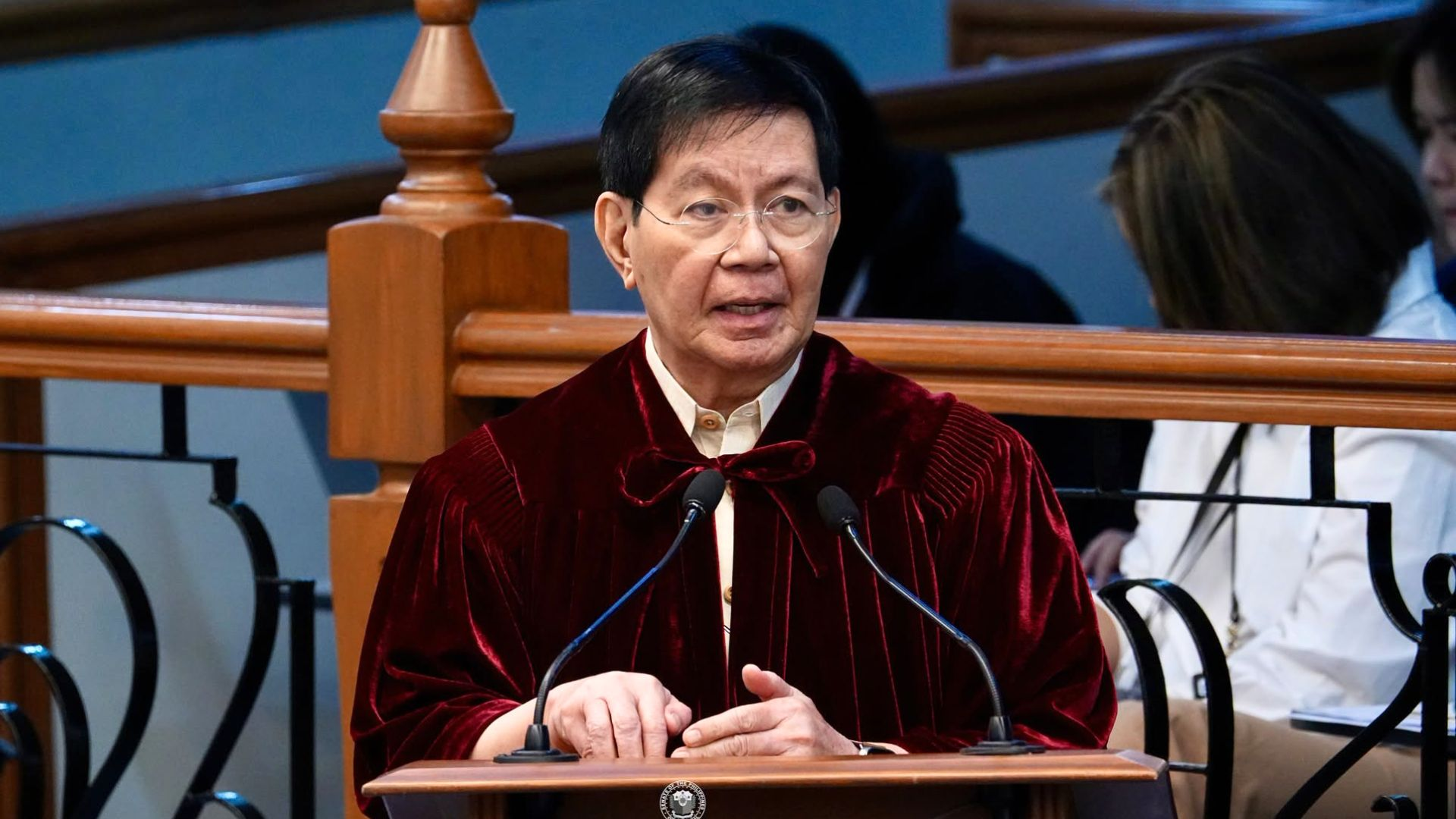
Photo courtesy: Senate of the Philippines
Senator Panfilo “Ping” Lacson has challenged President Ferdinand Marcos Jr.’s explanation that the war involving Iran is responsible for the Philippines’ economic difficulties, arguing that other Southeast Asian countries are growing considerably faster despite facing similar pressures from rising oil prices.
Lacson said the conflict alone could not adequately explain why Philippine economic growth had slowed to 2.1% in the third quarter of 2026, significantly below the growth rates recorded by several neighboring economies.
In a statement posted on X on November 22, the senator urged the administration to examine its economic policies rather than attribute the country’s sluggish performance primarily to external developments.
“With all due respect Mr President, blaming the US-Iran conflict will not suffice,” Lacson said.
Lacson points to stronger ASEAN economies
Lacson questioned why the Philippines continued to lag behind its regional neighbors when they were also affected by higher energy costs and geopolitical uncertainty.
He cited Vietnam’s economic growth of 9.95%, followed by Indonesia at 5.47%, Singapore at 5.4%, and Malaysia at 5.3%.
By comparison, the Philippines registered 2.1% growth in the third quarter, down from a revised 2.4% in the previous quarter.
The senator argued that the difference in economic performance warranted a closer examination of domestic policies and the government’s response to economic pressures.
He also clarified that he was not calling for Cabinet officials to be replaced.
“I did not posit a Cabinet reshuffle, but a long hard look at our economic team to revisit some of our economic policies,” Lacson said.
His remarks followed an earlier appeal for the administration to review its economic management amid concerns over inflation, declining investment, the weakening peso and difficulties in the agricultural sector.
Marcos defends economic managers
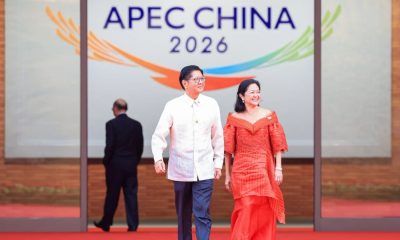
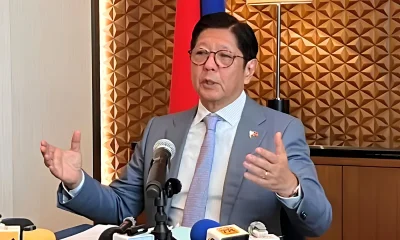
President Marcos previously rejected Lacson’s suggestion to reassess his economic team during a press conference in Shenzhen, China, on November 20.
Asked about the senator’s criticism, the President expressed disagreement and linked the country’s economic difficulties directly to the conflict involving Iran.
“All the difficulties we’re going under can be clearly directly traced to the war in Iran,” Marcos said, according to the official transcript released by the Presidential Communications Office.
The President also defended changes to his Cabinet, explaining that officials were being assigned responsibilities based on the administration’s evolving priorities.
He said emerging challenges, including the Iran conflict, advances in artificial intelligence and changing geopolitical conditions, required adjustments in government operations.
Marcos maintained that transferring officials between departments did not necessarily create instability and could help agencies respond more effectively to changing circumstances.
Philippine growth slows as inflation rises
The disagreement comes as official figures show weakening economic activity and rising consumer prices.
Data released by the Philippine Statistics Authority (PSA) on November 9 showed that the economy expanded by just 2.1% year-on-year in the third quarter, its slowest growth since the first quarter of 2021.
Several major sectors recorded weak performances.
Agriculture, forestry and fishing contracted by 4.8%, while industry declined by 0.003%, effectively remaining flat.
Household consumption, a major driver of the Philippine economy, grew by only 2.4%. Gross capital formation, which measures investment in assets such as machinery, buildings and infrastructure, fell by 0.2%.
The services sector remained a source of growth, expanding by 3.7%.
Meanwhile, inflation accelerated to 7.8% in October from 7.2% in September, reaching its highest level in three years.
Transportation costs rose by 20.1% compared with October 2025, while prices for housing, water, electricity, gas and other fuels increased by 9.3%.
The sharp increases reflected growing pressure on households, particularly those spending a substantial share of their income on transportation, utilities and everyday necessities.
Government economic planners identify multiple risks
While the Iran conflict has contributed to higher energy prices, the administration’s own economic planning documents have also identified domestic challenges affecting growth.
In July, the Development Budget Coordination Committee (DBCC) reduced its 2026 economic growth projection to between 3.5% and 4.5%.
The committee identified geopolitical tensions in the Middle East alongside governance-related concerns and weakening business and consumer confidence.
It also warned that high inflation could discourage household spending and investment, while slower remittance growth and fewer international visitors could further weigh on economic activity.
The potential effects of El Niño on agricultural production were among the additional risks identified by economic planners.
These assessments indicate that the country’s economic challenges involve a combination of international developments and domestic conditions, although they do not establish how much each factor contributed to the slowdown.
The latest figures highlight the extent of the weakness in domestic economic activity: agriculture contracted by 4.8%, industry recorded a marginal decline, and investment fell by 0.2% in the third quarter, even as government consumption expanded by 6.8%.