Canada News
Carney, Trump trade talks remain unresolved despite US midterm shake-up

ASM, Philippine Canadian Inquirer
November 21, 2026
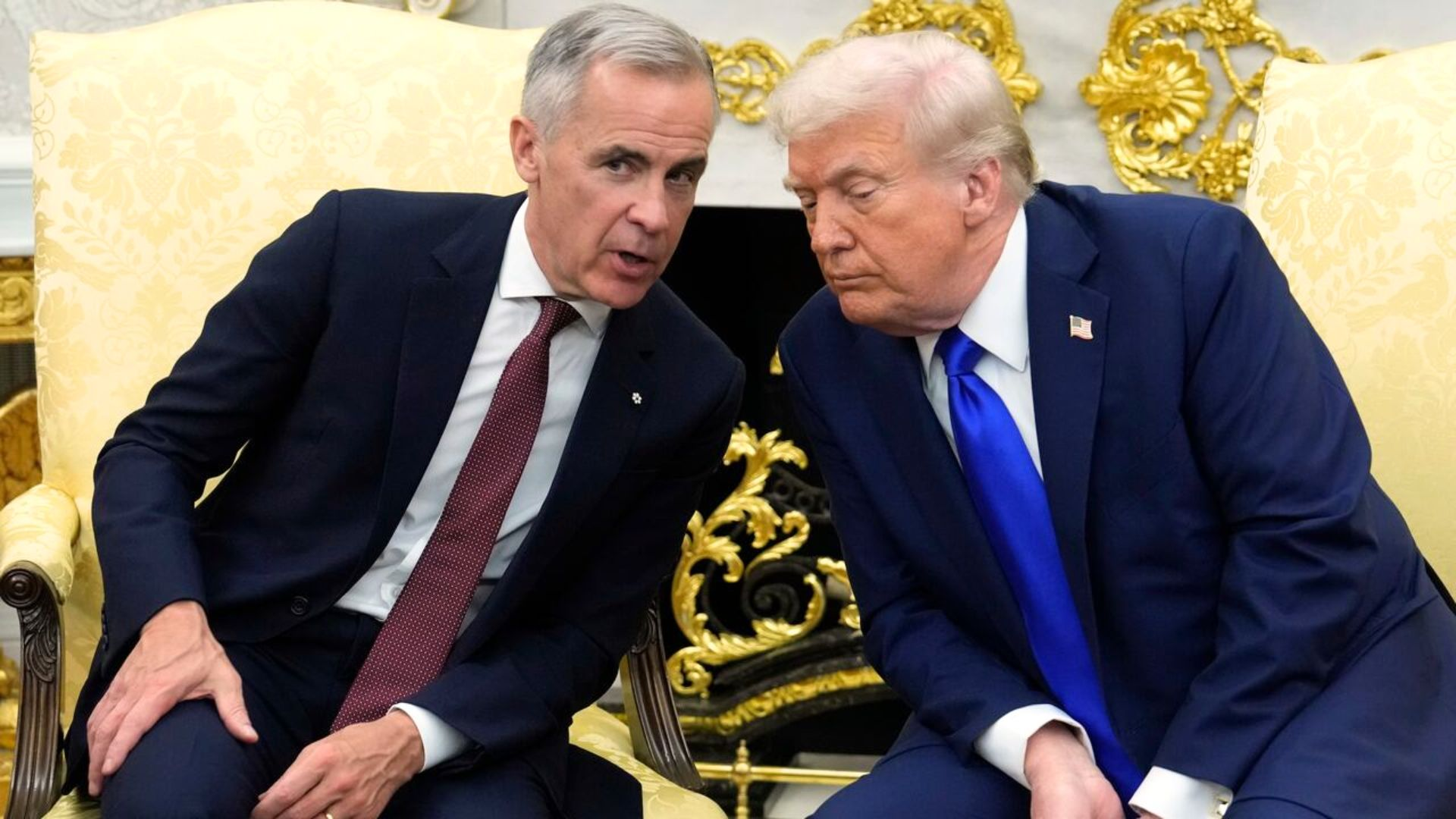
Photo courtesy: CBC News
OTTAWA, Canada — Canadian Prime Minister Mark Carney is facing another round of difficult trade negotiations with U.S. President Donald Trump, as the two countries remain without a new agreement despite renewed diplomatic discussions and a major political shift following the U.S. midterm elections.
The November 3 elections gave Democrats control of Congress, raising hopes that Washington could take a different approach to Trump’s tariffs. However, the election results have yet to produce a breakthrough in negotiations between Ottawa and the White House.
Carney and Trump met on the sidelines of the Asia-Pacific Economic Cooperation (APEC) summit in Shenzhen, China, this week. Their discussions focused on reaching an agreement that would protect Canadian jobs, improve affordability and respect Canada’s sovereignty, language and cultural protections.
A statement from the Canadian Prime Minister’s Office confirmed that both leaders agreed to continue negotiations and remain in close contact. No agreement or tariff reduction was announced following the meeting.
The renewed engagement comes after bilateral trade negotiations collapsed in August over U.S. demands that Ottawa considered unacceptable.
Among the disputed issues were restrictions on Canada’s ability to negotiate trade agreements with other countries, protections for French-language and cultural policies, and tariffs affecting Canada’s automotive industry.
Washington subsequently imposed 50% tariffs on approximately $20 billion worth of Canadian goods, prompting retaliatory measures from Ottawa. The two governments have since resumed discussions, although significant disagreements remain.
Automotive tariffs have emerged as one of the largest obstacles. The United States continues to impose a 25% tariff on Canadian automobiles, while Ottawa is seeking relief for industries affected by the trade dispute.
Sources briefed on the negotiations said several outstanding issues are preventing an interim agreement. Canadian officials nevertheless believe there may be an opportunity to reach a deal before the end of the year.
Canada-U.S. Trade Minister Dominic LeBlanc provided an update to the Advisory Committee on Canada-U.S. Economic Relations on November 19. Committee members heard that Ottawa had become more optimistic about the possibility of an interim agreement, although negotiations were expected to remain challenging.
Flavio Volpe, president of the Automotive Parts Manufacturers’ Association, said the Trump administration remains Canada’s principal negotiating counterpart despite the Democrats’ electoral gains.
The change in congressional control could eventually create pressure to reconsider U.S. tariffs, but it does not automatically remove measures imposed by the president. Democrats could also face difficulties securing enough congressional votes to override a presidential veto.
Carney has maintained that Canada will pursue an agreement only if its terms serve Canadian interests.
Speaking in Manila on November 14, the prime minister acknowledged progress after a lengthy conversation with Trump and senior U.S. officials but cautioned that negotiations had not reached the point of an agreement.
“We are making progress. There is the possibility of a deal, a bilateral deal. But we’re not yet there,” Carney said.
The prolonged dispute has also prompted Ottawa to accelerate efforts to reduce its economic dependence on the United States.
During his recent visit to Asia, Carney announced progress in trade negotiations with the Philippines and the Association of Southeast Asian Nations (ASEAN), alongside expanded economic cooperation with China.
Canada and the Philippines have completed negotiations on a proposed free trade agreement covering more than 90% of tariff lines. Officials expect the agreement to be signed in 2027, with the Canadian government projecting that it could help triple Canadian exports to the Philippines by 2035.
Meanwhile, Canada’s broader trading relationship with the United States remains tied to the future of the Canada-United States-Mexico Agreement (CUSMA).
Canadian chief trade negotiator Janice Charette warned lawmakers this week that restoring completely tariff-free trade under the agreement cannot be guaranteed.
She said Ottawa’s objective is to secure the lowest possible tariffs on the smallest range of goods while preserving preferential access for Canadian businesses and workers.
The Trump administration declined to renew CUSMA during its July review, triggering a process of annual reviews that could continue for up to a decade unless Canada, the United States and Mexico agree on an extension.