Canada News
Second CN Rail derailment in eight months renews concerns over hazardous cargo shipments in B.C.

Floyd Brenz., Philippine Canadian Inquirer
November 20, 2026
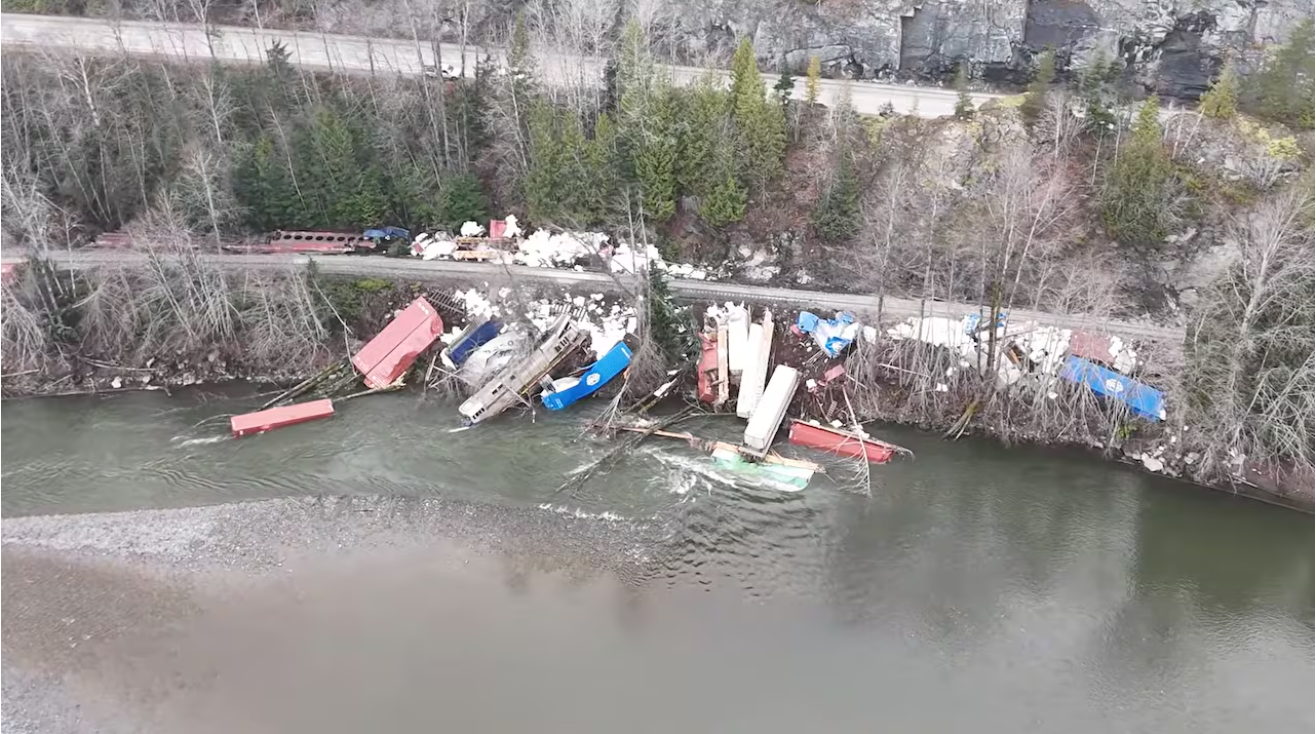
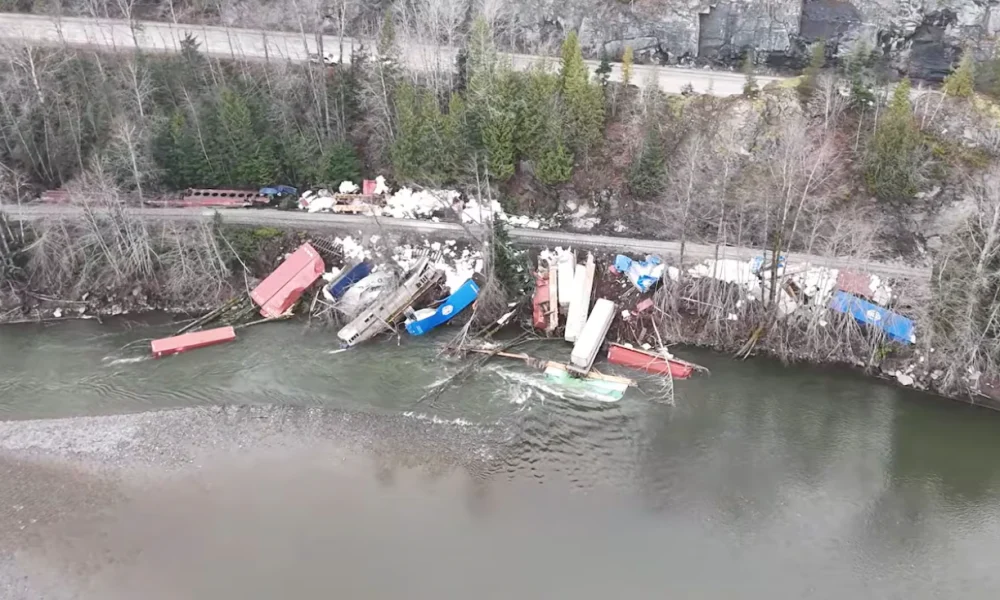
Photo Courtesy: CBC News
A second train derailment involving a diesel spill into British Columbia’s Skeena River within eight months has renewed concerns over railway safety and the transportation of hazardous materials through northwestern B.C.
The latest incident happened on November 17, when a Canadian National Railway (CN) train went off the tracks near Terrace after a suspected rockslide sent a locomotive and several railcars down an embankment and into the river.
Diesel leaking from the locomotive spread more than a kilometre downstream, prompting an environmental response. The exact volume of fuel spilled has not yet been disclosed.
CN Rail said it has completed track repairs and resumed train operations as of Thursday. Cleanup crews continue working at the site, while the provincial government has deployed containment booms and absorbent materials. A surface water sampling plan has also been prepared to monitor possible contamination.
The incident has raised fresh questions about the risks of transporting fuel and other potentially dangerous goods along a railway route that runs beside the Skeena River, an important habitat for wild salmon.
Former federal NDP MP Taylor Bachrach described the repeated derailments as a wake-up call, warning that a major accident along the route could have serious consequences for the environment and nearby communities.
First Nations leaders are also demanding stronger safety measures. Kitsumkalum First Nation Chief Councillor Troy Sam called for better coordination between government and industry to improve emergency response times.
Meanwhile, Gitxsan Hereditary Chief Skogam’Lahkx Toby Howard is urging authorities to suspend cargo train operations between Burns Lake and Prince Rupert until the railway line undergoes a comprehensive safety inspection.
The latest derailment follows a similar incident in March, when a mudslide sent grain cars into the Skeena River and resulted in the release of 7,949 litres of diesel, according to provincial records.
Environmental toxicologist Peter Ross of the Raincoast Conservation Foundation said diesel can evaporate and disperse more quickly than heavier petroleum products, but it can still harm fish and wildlife exposed to the fuel.
The repeated incidents have intensified debate over the environmental risks of expanding energy and cargo shipments through the region, particularly as Prince Rupert strengthens its role as a major export gateway to international markets.
For Indigenous communities whose livelihoods and food sources depend on the Skeena River, the concern now extends beyond the latest spill to the long-term safety of the entire rail corridor.