Headline
Vietnam overtakes Philippines in per capita income as NUS professor warns of widening economic gap

ASM, Philippine Canadian Inquirer
November 15, 2026
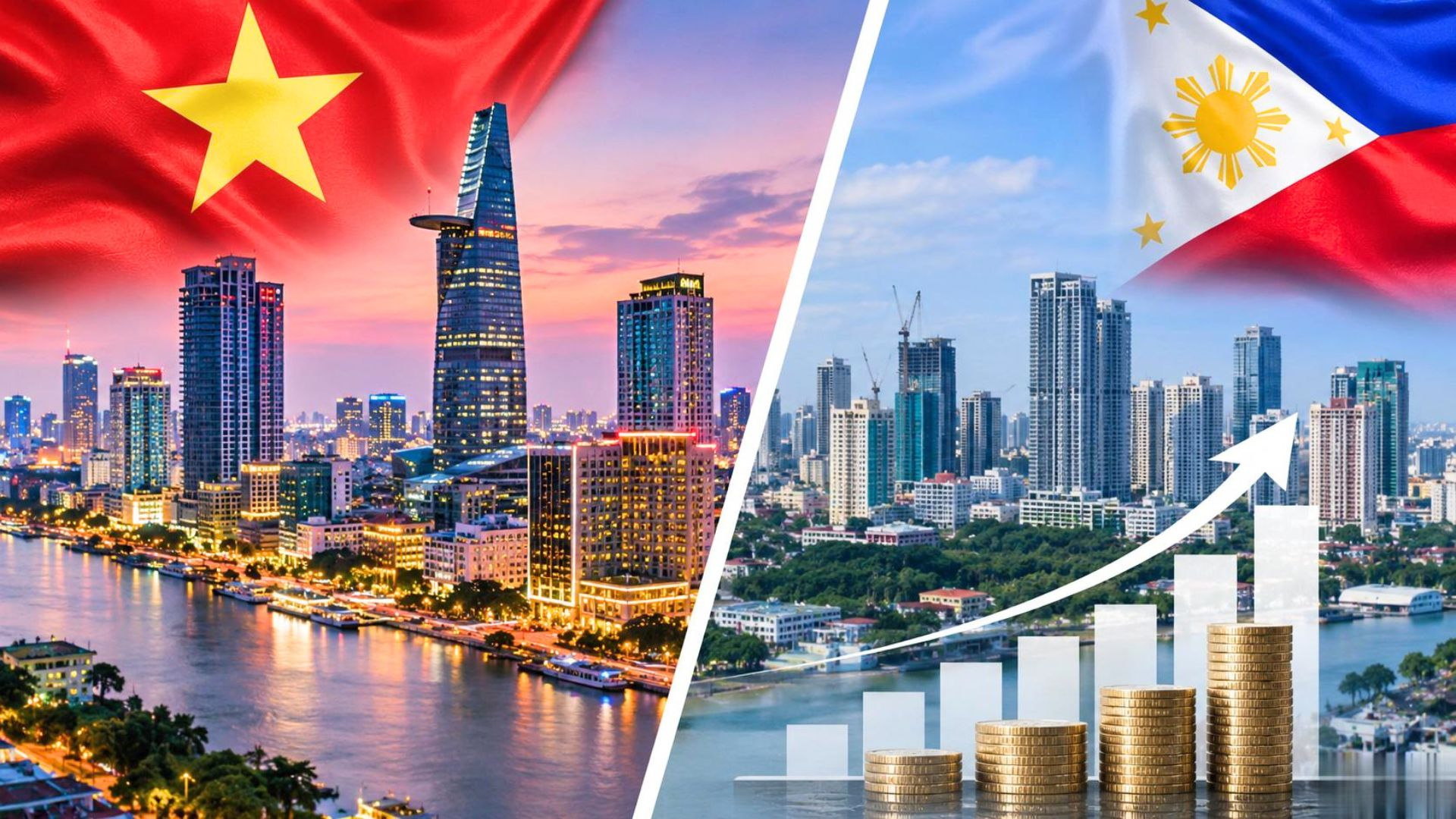
MANILA, Philippines — Vietnam, once a country that looked to the Philippines for guidance on economic development and investment policies, has surpassed its Southeast Asian neighbor in income per person, raising questions about why the Philippine economy has struggled to keep pace.
Dr. Eduardo Araral, a professor at the National University of Singapore (NUS), highlighted the growing economic disparity during an interview on November 14, saying the Philippines has fallen behind several regional neighbors despite once serving as a model for development.
“Unang-una, napag-iwanan tayo ng husto ng ating mga kapitbahay. Kung titingnan mo ‘yung kanilang progress, ‘yung kanilang per capita income nasa taas, tayo nasa baba. Humahabol lang tayo,” Araral said during the DZRH program Special on Saturday.
His assessment is supported by World Bank data showing that Vietnam’s gross domestic product (GDP) per capita reached approximately $5,066 in 2025, compared with $4,171 for the Philippines.
Vietnam’s economy also expanded by 8.0% in 2025, outpacing the Philippines’ 4.4% growth during the same period. GDP per capita measures economic output divided by population and does not directly represent individual earnings or household income.
From learning from the Philippines to leading in growth
Araral recalled visiting Vietnam in 2007 to deliver lectures, when Vietnamese officials sought advice on developing special economic zones, attracting foreign investments and promoting tourism.
At the time, the Philippines was regarded as a regional example in these areas, particularly through the Philippine Economic Zone Authority (PEZA).
“’Yan ang mga tanong sa classroom, kasi tinitingala nila ang Pilipinas noong araw,” he said.
Vietnam’s transformation began decades earlier, when the country introduced economic reforms known as Đổi Mới in 1986.
The reforms gradually shifted Vietnam away from a tightly controlled, centrally planned economy toward a market-oriented system, opening more sectors to private enterprise, international trade and foreign investment.
Japanese and Singaporean investors were among those that helped expand Vietnam’s industrial base, followed by multinational companies from other countries, including the United States.
Araral attributed much of Vietnam’s economic progress to its willingness to cooperate with international partners, develop competitive industries and create conditions that attract investors.
Why investors are choosing Vietnam
Vietnam has developed into a major manufacturing and export hub, attracting international companies seeking competitive production costs, skilled workers and access to global markets.
Araral pointed to electronics companies, including Samsung, as examples of major investors that have established significant manufacturing operations in Vietnam.
He argued that companies comparing investment opportunities in the Philippines and Vietnam could find the latter more attractive because of its tax policies, workforce quality and competitive labour costs.
“Kung may investor papasok, pipili siya between Philippines and Vietnam, madali silang mag-decide na Vietnam ang kukunin nila kasi mababa ang taxes nila at competitive ang wages pero mataas ang kalidad ng kanilang workforce,” he said.
However, investment decisions also depend on infrastructure, supply chains, regulations, market access and industry-specific requirements. Vietnam’s success in attracting manufacturers does not mean that all investors will necessarily prefer it over the Philippines.
Government reforms and regional competition
Araral also highlighted Vietnam’s efforts to streamline government operations and strengthen administrative efficiency.
Vietnam implemented a major restructuring in July 2025, reducing its provincial-level administrative units from 63 to 34 and eliminating the district level of government.
The reform created a two-tier local government structure intended to reduce administrative overlap, simplify governance and improve coordination of public resources.
Vietnamese government documents confirm that the restructuring consolidated 52 provincial-level units into 23 new units while retaining 11 unchanged.
Araral said Vietnam’s local governments also compete to attract foreign direct investment through infrastructure development, investment incentives and business-friendly policies.
He contrasted these efforts with the Philippines, where investors continue to face concerns involving infrastructure, regulatory processes and administrative efficiency.
Vietnam’s approach to foreign relations
Another factor Araral identified was Vietnam’s ability to maintain economic relationships with major global powers despite geopolitical differences.
He pointed to the country’s foreign policy approach known as bamboo diplomacy, which emphasizes flexibility while preserving national interests and strategic independence.
Vietnam maintains close economic relations with China while expanding trade and investment partnerships with the United States and other countries.
“Tayo pikon, sila walang pikon kasi kapitbahay nila ang China, pero ang biggest trading partner din nila ay Amerika. So kaya nilang sayawan ang dalawa,” Araral said.
The approach allows Vietnam to maintain relationships with competing powers without committing exclusively to either side, a strategy discussed in academic studies of the country’s foreign policy.
Bringing skilled workers and expertise home
Araral also emphasized the role of Vietnamese professionals who studied overseas and later returned to establish businesses and contribute to their country’s development.
He contrasted this with the Philippines’ continued reliance on overseas employment, observing that many Filipino professionals choose to remain abroad after completing their studies.
“Tayo, ’yung mga nag-aral sa abroad, doon na, ayaw nang bumalik,” he said.
His remarks reflect concerns over the Philippines’ ability to retain skilled workers and create domestic opportunities that encourage professionals to return.
The comparison comes as the Philippines faces slower economic growth. The Philippine economy expanded by just 2.1% in the third quarter of 2026, adding pressure on policymakers to strengthen investment, productivity and job creation.
Vietnam, meanwhile, continues to pursue ambitious economic growth targets while expanding its manufacturing capacity and modernizing public administration.