Headline
Philippines, Canada wrap up free trade talks, target 2027 signing

ASM, Philippine Canadian Inquirer
November 15, 2026
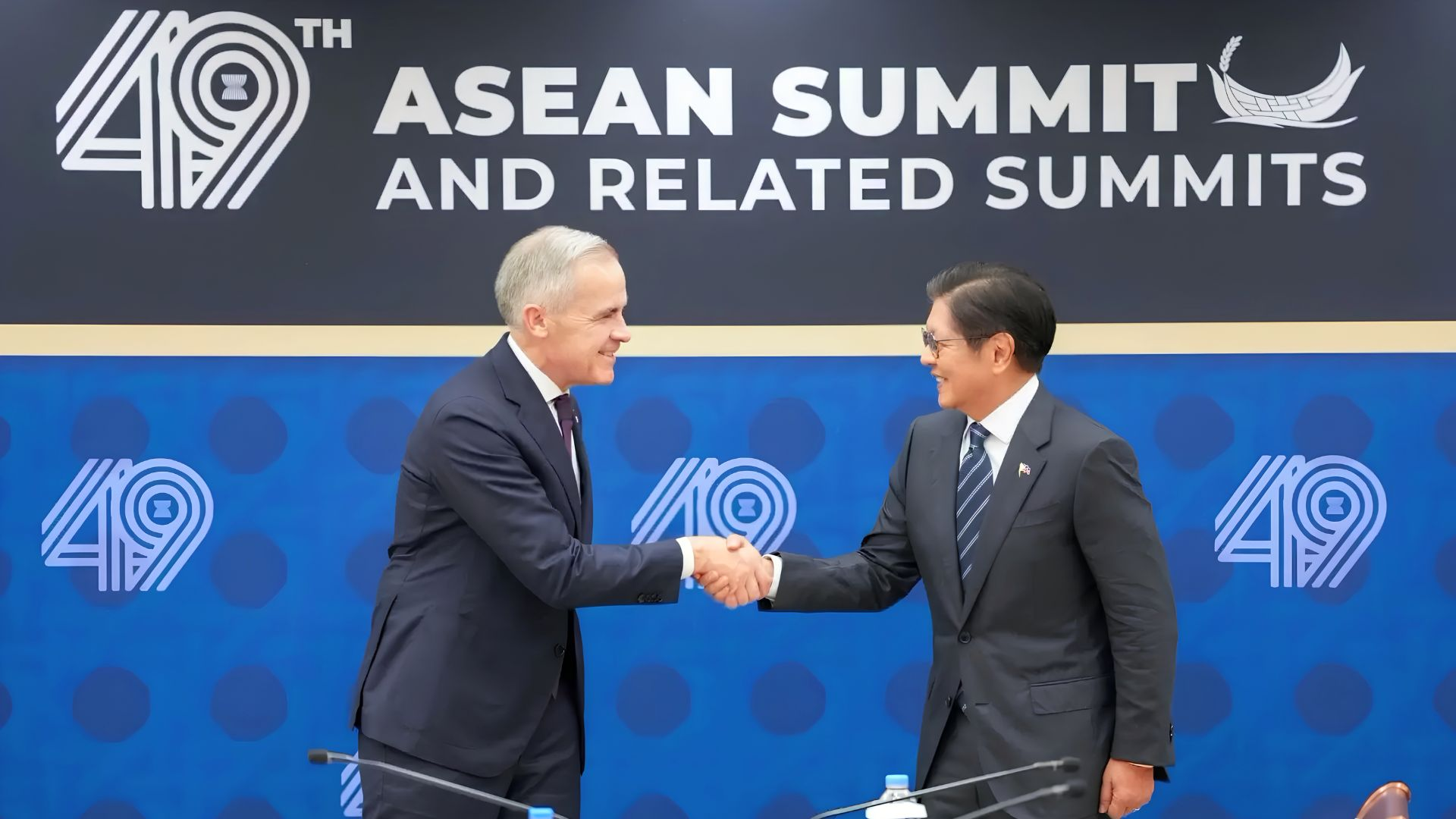
Photo courtesy: Philippine News Agency
MANILA, Philippines — The Philippines and Canada have completed negotiations for a free trade agreement (FTA), bringing both countries closer to a major trade pact aimed at expanding market access, strengthening investment ties and creating new opportunities for businesses and workers.
President Ferdinand Marcos Jr. and Canadian Prime Minister Mark Carney announced the development during their bilateral meeting in Manila on November 14, ahead of the 49th Association of Southeast Asian Nations (ASEAN) Summit.
Both governments are now working toward formally signing the agreement in 2027, following the conclusion of negotiations announced by Philippine Trade Secretary Maria Cristina Roque and Canadian Minister of International Trade Maninder Sidhu.
The proposed agreement covers trade in goods and services, investments, digital trade and micro, small and medium-sized enterprises.
For the Philippines, the pact could provide businesses with greater access to Canadian customers, creating opportunities for local manufacturers, entrepreneurs and service providers to expand internationally.
Filipino freelancers and digital workers could also benefit from provisions supporting cross-border services, potentially opening more opportunities in software development, graphic design, writing and other online industries.
The Presidential Communications Office said the agreement could help Philippine businesses reach more buyers, increase production and generate employment opportunities.
For Canada, the proposed deal is part of a broader effort to diversify trade relationships and expand economic ties across Southeast Asia.
Canadian officials expect the agreement to strengthen opportunities in sectors including agriculture and forest products. Carney also identified aerospace, artificial intelligence, mining and energy services as industries that could benefit from closer trade relations.
Ottawa estimates that the agreement could help increase Canadian exports to the Philippines by as much as threefold by 2035, although the projected gains depend on the agreement entering into force and subsequent trade growth.
The Philippines is already an important trading partner for Canada. Bilateral merchandise trade reached approximately C$3.4 billion in 2025, representing a 7.4% increase from the previous year, according to Canadian government figures.
Canada’s direct investment position in the Philippines also reached approximately C$1.7 billion in 2025, up 44% from 2024.
The conclusion of negotiations follows Marcos’ visit to Canada in July 2026, when the two leaders strengthened their strategic partnership and committed to completing free trade negotiations before the end of the year.
Beyond trade, Marcos and Carney discussed investment opportunities under the Luzon Economic Corridor, particularly in transportation, infrastructure, agriculture, food logistics and cold-chain technologies.
Their meeting also covered closer cooperation in defense, maritime security and regional stability.
Canada separately announced that negotiations for a broader free trade agreement with ASEAN had been substantially concluded, with signing also targeted for 2027.
The regional agreement is projected to add nearly C$2 billion to Canada’s gross domestic product and support approximately 14,000 jobs once implemented, particularly in agriculture and manufacturing.
Unlike the bilateral agreement with the Philippines, the ASEAN-wide negotiations have been described as substantially concluded, with remaining steps still to be completed.