Canada News
Nova Scotia opposition seeks emergency debate over $10-billion AI data centre

Floyd Brenz., Philippine Canadian Inquirer
October 20, 2026
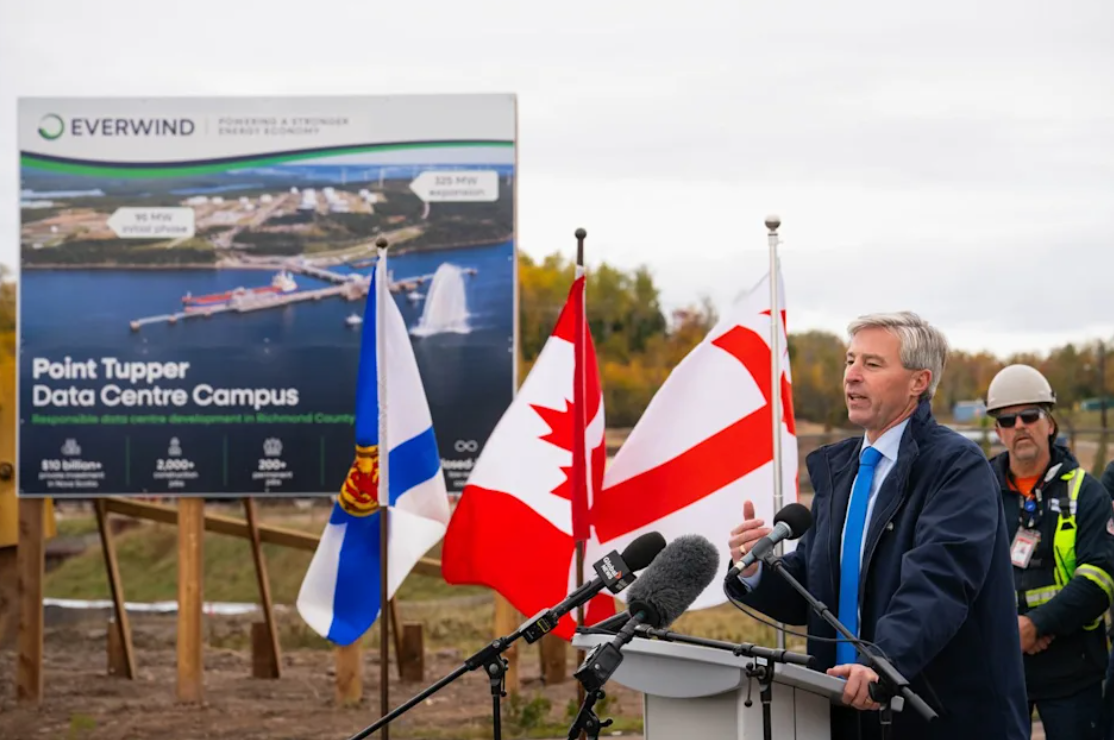
Photo Courtesy: The Canadian Press
Nova Scotia’s opposition is calling for an emergency legislative debate over a proposed $10-billion artificial intelligence data centre in Cape Breton, raising concerns about its potential impact on electricity prices, water resources and surrounding communities.
New Democratic Party Leader Claudia Chender has urged Premier Tim Houston to recall the legislature, arguing that the provincial government is moving forward with plans for large-scale AI infrastructure without sufficient public consultation or legally binding safeguards.
The proposed facility, announced by EverWind Fuels, is planned for Point Tupper, Nova Scotia. U.S.-based AI company Anthropic has signed a 20-year lease for an 18,600-square-metre site that would initially require 95 megawatts of electricity.
EverWind describes the development as the largest private investment in the province’s history. The project is expected to generate approximately 2,000 construction jobs, with another 215 permanent positions anticipated at the facility and its associated wind developments.
However, Chender said residents deserve clear answers about how the project would affect local water supplies, electricity demand and the environment. She has called for formal legislation rather than relying on assurances from the premier.
Houston has said any AI data centre operating in Nova Scotia must meet or exceed federal standards for responsible development. His proposed conditions include closed-loop cooling systems, strict limits on water use, noise and emissions, and guarantees that projects will not increase electricity rates for residents.
The premier said the proposal would undergo established approval processes and include checks and balances. EverWind, meanwhile, has pledged to cover the cost of electricity infrastructure and said the project would not raise power rates.
The company estimates the cooling system would consume an average of 100,000 litres of water daily during the initial phase, potentially increasing to 500,000 litres per day after expansion. Additional water would be required during particularly hot conditions when external cooling is needed.
Environmental advocates have questioned how the development could affect groundwater and households that rely on wells. They are also seeking greater transparency about the project’s long-term demands on provincial resources.
The debate comes as governments across Canada weigh the economic opportunities presented by AI infrastructure against concerns about its substantial energy and water requirements.
For Nova Scotia, the dispute centres on whether existing approval mechanisms and voluntary commitments provide sufficient protection for residents as the province considers a major new technology investment.