Headline
DPWH updates decades-old flood master plans as flooding risks change

Abi Sarabia M., Philippine Canadian Inquirer
September 06, 2026
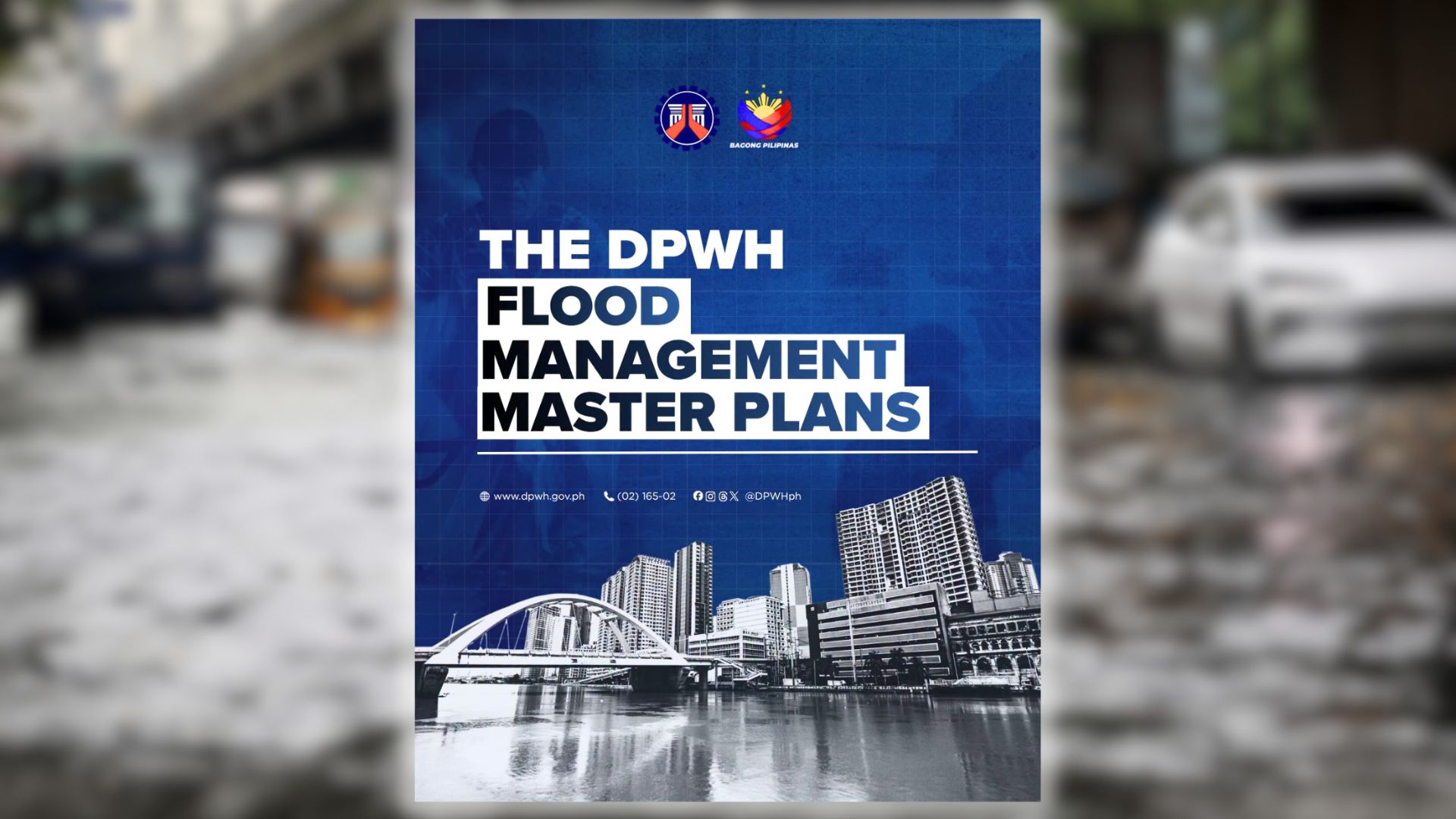
Photo courtesy: Department of Public Works and Highways FB Page
The Department of Public Works and Highways (DPWH) is updating flood management master plans across the country, including several developed decades ago, as the government moves toward a more science-based approach to recurring flooding.
Public Works Secretary Vince Dizon ordered the review and updating of the plans, with DPWH working with the University of the Philippines’ Project NOAH, local governments and other agencies to incorporate updated hazard maps, scientific data and changing climate conditions.
The move comes as some of the country’s existing flood plans date back more than 30 years.
Among them, the Tagoloan master plan dates to 1982, Cagayan to 1987, Metro Manila and surrounding areas to 1990, while plans for the Agno and Ilog-Hilabangan river basins were formulated in 1991. Other plans were developed more recently, including those for Pampanga and Bicol in 2022.
DPWH said detailed engineering designs are currently underway in 10 areas, including the Apayao-Abulug, Pampanga, Bicol, Panay, Jalaur, Buayan-Malungon, Agusan, Agno, Ilog-Hilabangan and Mindanao river basins.
Updated master plans and designs have meanwhile been completed for six areas: Abra, Tagoloan, Cagayan de Oro, Agus, Davao and Tagum-Libuganon.
Master plans and feasibility studies are also being updated for at least seven areas, including Cagayan, Agno, Metro Manila and surrounding areas, Davao, Ilog-Hilabangan, Mindanao and Metro Cebu.
Several flood-control projects based on existing plans are already completed, partially completed or under construction. These include works in Tagoloan and Cagayan, the Pasig-Marikina River Channel Improvement Project Phase IV, and projects in Abra, Agus and Tagum-Libuganon.
The government earlier said that updated master plans and feasibility studies for 16 of the country’s 18 major river basins had been completed as of May 31, 2026. Updates for the Cagayan and Pasig-Marikina-Laguna de Bay basins were targeted for completion by the end of the year.
UP Resilience Institute Executive Director Mahar Lagmay has also stressed that having master plans alone is not enough, noting that consistent implementation is critical to reducing flood risks. Project NOAH is being consulted to provide updated hazard and flood information for the government’s planning efforts.
The renewed review follows widespread flooding in parts of Luzon and growing calls for long-term flood solutions that account for heavier rainfall, urban development and changing climate conditions.