Headline
PH records ASEAN’s highest estimated adolescent HIV incidence in 2025

Abi Sarabia M., Philippine Canadian Inquirer
September 03, 2026
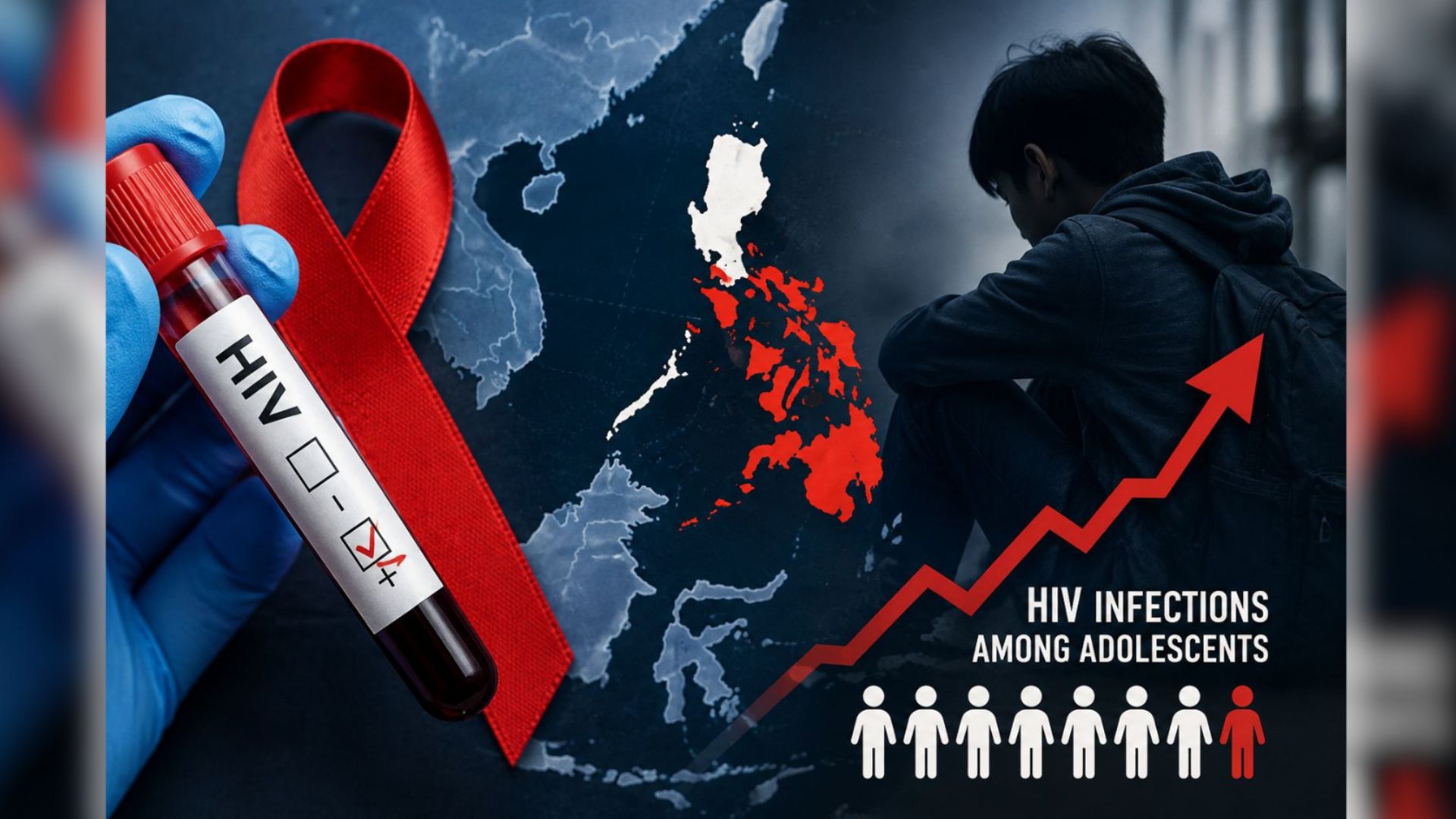
MANILA — The Philippines recorded the highest estimated rate of new HIV infections among adolescents in Southeast Asia in 2025, marking a sharp reversal from its position as one of the region’s lowest-incidence countries 25 years ago.
UNICEF data showed that HIV incidence among Filipinos aged 15 to 19 reached an estimated 0.49 per 1,000 uninfected adolescents in 2025, up from below 0.01 per 1,000 in 2000.
That is equivalent to about 49 new infections for every 100,000 uninfected adolescents in a year.
The Philippines’ estimated adolescent HIV incidence rose to 0.10 per 1,000 in 2011, 0.25 in 2019, and 0.49 in 2025.
The trend contrasts with several neighboring countries that recorded declines over the same period.
Thailand reduced its estimated adolescent HIV incidence from 1.80 per 1,000 in 2000 to 0.29 in 2025. Myanmar declined from 1.26 to 0.43, while Cambodia dropped from 0.68 to 0.16.
UP Diliman associate professor Rogelio Alicor Panao said the figures show how significantly the Philippines’ adolescent HIV situation has changed over the past 25 years.
The country has introduced several measures to improve HIV prevention and testing, including Republic Act No. 11166, which allows adolescents aged 15 to below 18 to voluntarily undergo HIV testing without parental or guardian consent.
Pre-exposure prophylaxis, or PrEP, has also been included in the Philippine National Formulary, while comprehensive sexuality education has been expanded.
However, gaps in implementation remain, particularly in access to testing, prevention services, accurate information and youth-focused health programs.
Panao said stronger efforts could include wider confidential HIV testing, more consistent access to condoms, PrEP and HIV self-testing, stronger sexuality education, and prevention campaigns on platforms commonly used by young people.
The latest figures highlight the need for stronger and more accessible HIV prevention efforts targeted at adolescents.