Canada News
British Columbia declares emergency as 102 wildfires burn across the province

Abi Sarabia M., Philippine Canadian Inquirer
August 10, 2026
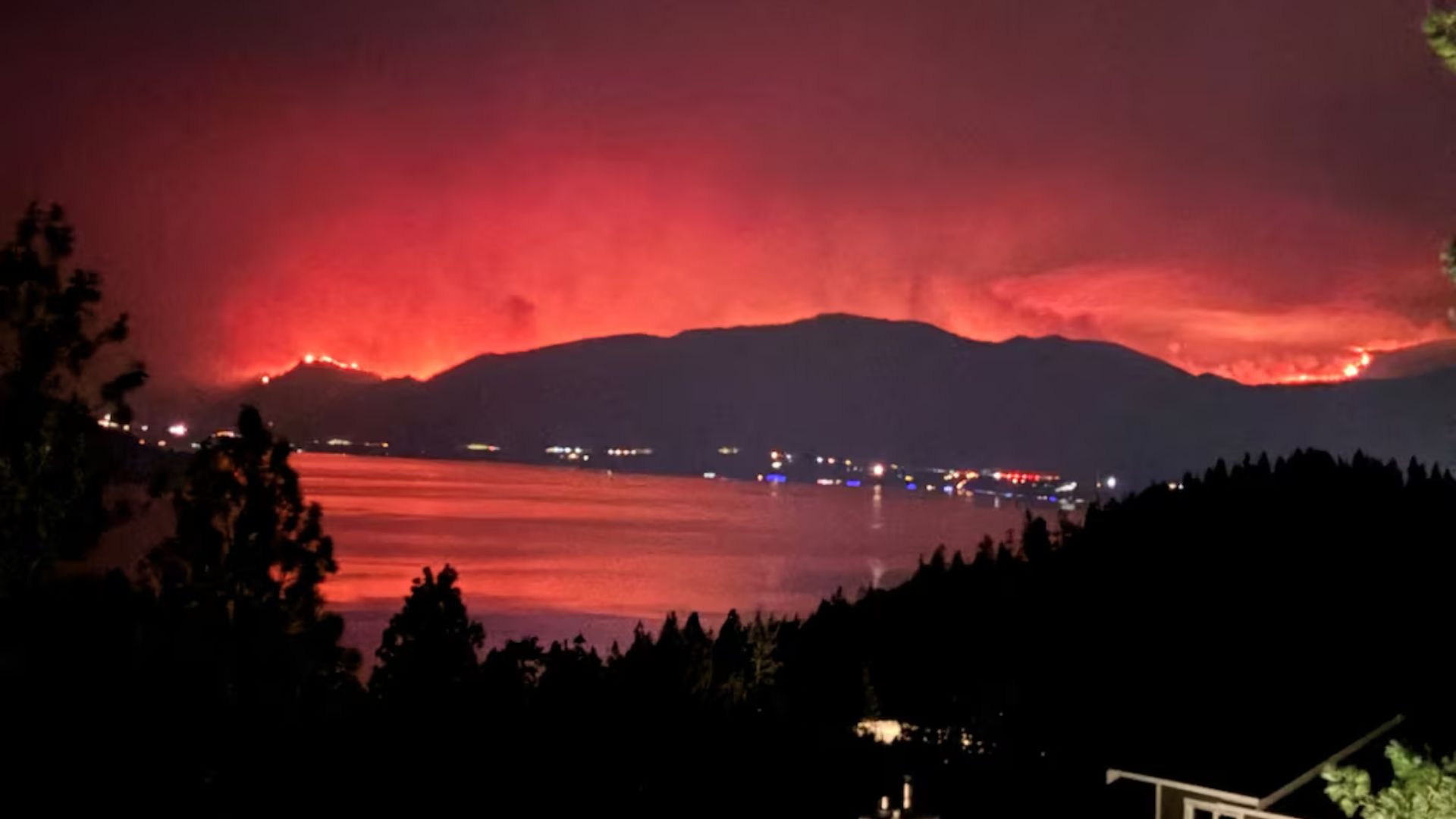
Photo courtesy: Reuters
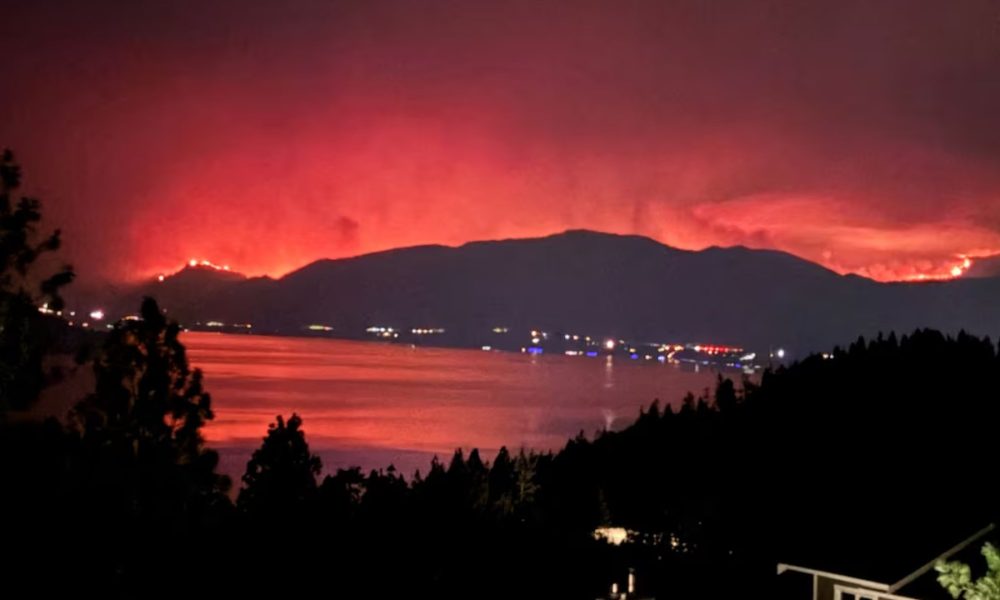
British Columbia has declared a state of emergency as fast-moving wildfires forced about 22,000 people to evacuate their homes.
Canada’s federal government has agreed to send emergency assistance to British Columbia after a series of fast-moving wildfires forced roughly 22,000 people from their homes over the weekend, with officials warning that the fires’ unusual speed has made them especially difficult to contain.
Nearly 22,000 people remained under evacuation orders across the province as of Sunday, with more than 10,000 additional residents told to be ready to leave on short notice. Of the roughly 100 wildfires burning in British Columbia, close to half were classified as out of control, and most had ignited only within the past week.
The fastest-moving of these fires, known as the Bald Range wildfire, prompted the evacuation of the entire community of Summerland, home to about 12,000 people, along with thousands more in the surrounding Peachland area. Officials said the blaze’s footprint roughly doubled within a single overnight period after it was first spotted late Friday, tearing through a stretch of the southern Okanagan Valley that serves as the heart of the province’s wine industry and is considered Canada’s second-most productive wine region.
Provincial officials said the blaze’s rate of growth had outpaced typical firefighting expectations, expanding by dozens of square kilometres within a single day and forcing crews and even emergency personnel to retreat as it approached. On Sunday, the fire had grown further, from roughly 103 to 136 square kilometres.
British Columbia’s premier, David Eby, declared a provincial state of emergency over the weekend, granting officials expanded powers including the ability to secure accommodations for evacuees and restrict travel in high-risk zones. Eby said homes had been lost and properties destroyed, adding that some residents were trapped as conditions shifted rapidly and had to be rescued. Authorities said the fire’s behavior had grown so intense that it began generating its own localized weather patterns.
British Columbia’s premier declared a provincial state of emergency over the weekend, granting officials expanded powers including the ability to secure accommodations for evacuees and restrict travel in high-risk zones. Authorities said the fire’s behavior had grown so intense that it began generating its own localized weather patterns.
Police confirmed the death of an elderly woman who was attempting to evacuate the Meadow Valley area northwest of Summerland as the fire advanced, marking the province’s first wildfire-related fatality of the year. An investigation into the circumstances of her death was ongoing.
Aerial firefighting crews, including both standard and night-vision-equipped helicopters, were deployed to the affected region, though their efforts were hampered by heavy smoke, turbulence, and the sheer scale of the fires. Several major highways in the province, including routes through the Fraser Canyon and the Okanagan region, remained closed due to the ongoing threat.
Experts monitoring the situation say the speed and behavior of this year’s fires reflect a broader shift toward more extreme and unpredictable wildfire conditions across western Canada and the northwestern United States.
Persistently dry, hot weather over the past several weeks left forested areas in the region unusually parched, creating conditions that allowed fires to spread rapidly and, increasingly, to continue burning through the night rather than slowing with cooler evening temperatures — a pattern once considered unusual but now observed more frequently.
Fire management agencies in British Columbia and neighboring Alberta have adapted by conducting nighttime firefighting operations using night-vision aircraft.
Analysts have also noted that long-standing assumptions about safe distances between wildfires and nearby communities no longer reliably apply, given how far and how quickly some fires have advanced during a single day. Officials have urged households in fire-prone areas to keep emergency kits ready in case evacuation orders are issued with little warning.
Forecasters have cautioned that current dry conditions could allow the wildfire season in British Columbia, Washington, and Oregon to extend further into the fall than usual, with some experts suggesting the region may increasingly experience prolonged “fire years” rather than a defined summer fire season.
British Columbia is home to one of Canada’s larger Filipino-Canadian communities, with more than 170,000 residents of Filipino descent living in the province, concentrated mainly in and around Metro Vancouver, according to the 2021 census.
While the areas directly affected by the Bald Range wildfire are outside the Filipino-Canadian community’s main population centres, the province-wide state of emergency and ongoing air quality advisories affect residents across British Columbia, including in the Lower Mainland.
Meanwhile, in neighboring Washington State, crews have spent more than a week fighting a separate cluster of three wildfires near Spokane, which have damaged or destroyed hundreds of structures.
Authorities said none of those fires were actively growing as cleanup and containment work continued. A man was arrested earlier in the week and charged in connection with intentionally starting the largest of the three Spokane-area fires.