Headline
House approves fuel tax relief bill on final reading

By Jose Cielito Reganit, Philippine News Agency
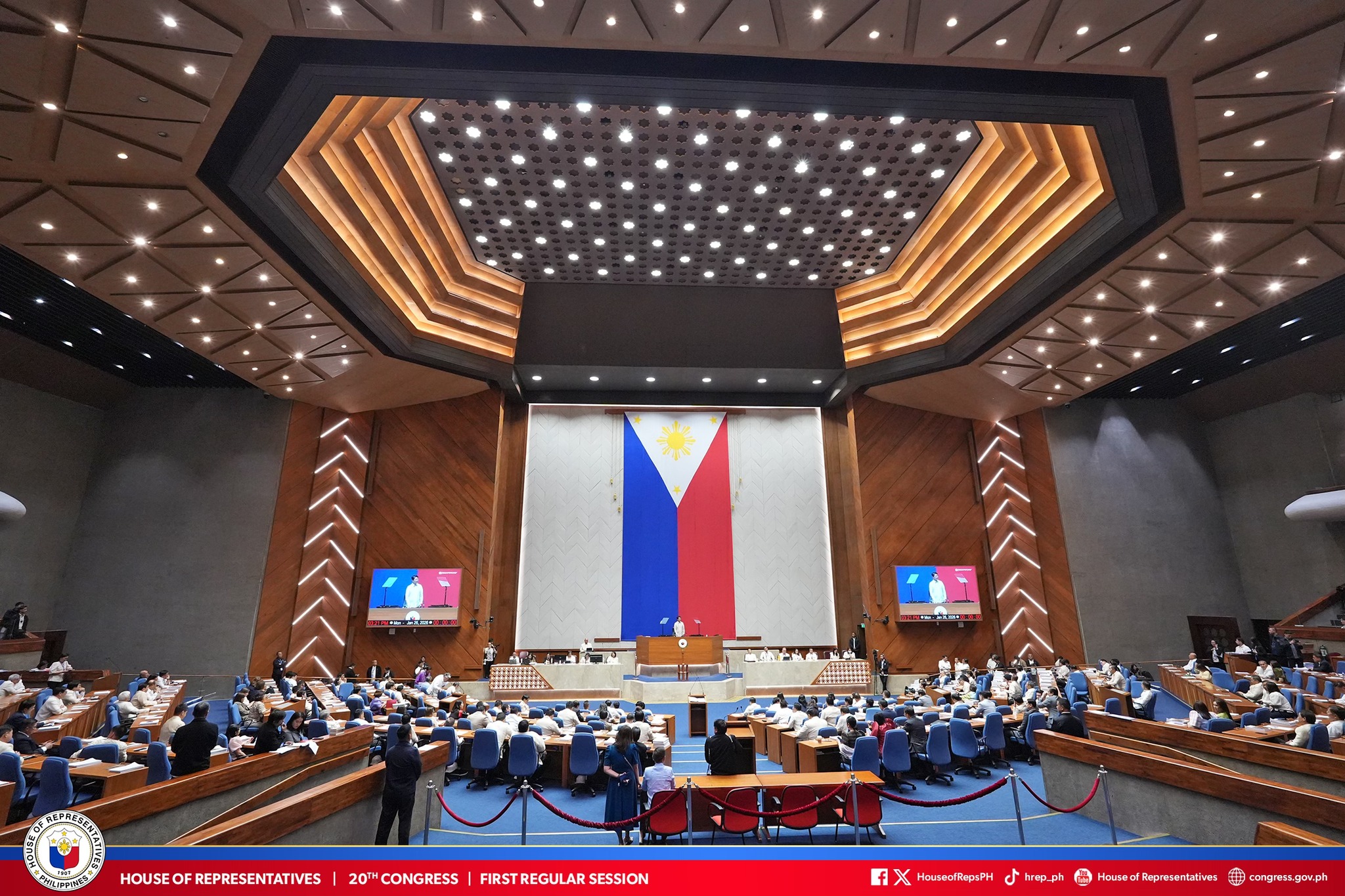
(House of Representatives of the Philippines/facebook)
MANILA – The House of Representatives on Monday approved on third and final reading the measure granting President Ferdinand R. Marcos Jr. the authority to temporarily cut or suspend excise taxes on petroleum products.
House Bill (HB) No. 8418, certified as urgent by the President, was approved with 247 affirmative votes, 3 negative votes and no abstentions.
Under existing law, excise taxes form part of the retail price of petroleum products, which means that every increase in fuel cost spills into transportation, delivery, electricity generation, and the prices of goods sold in markets and stores, making the issue far bigger than what motorists pay at gasoline stations.
HB 8418 authorizes the President, upon recommendation of the Development Budget Coordination Committee and in coordination with the Secretary of Energy, to suspend or reduce the excise tax on fuel under specific conditions designed to allow speed while preserving safeguards and oversight.
One trigger under the bill is when the average Dubai crude oil price, based on the Mean of Platts Singapore, reaches or exceeds USD80 per barrel for one month immediately before the issuance of the suspension or reduction order, a threshold meant to capture prolonged price pressure rather than short-lived market swings.
Another trigger applies when the President has declared a state of national emergency or calamity and that condition results in extraordinary increases in domestic pump prices of petroleum products, as certified by the Secretary of Energy, allowing the authority to be used when local price conditions become severe enough to require direct intervention.
The measure provides that the suspension or reduction may apply to specific petroleum products only, and that it may be implemented either as a full suspension or as a partial reduction of the excise tax, depending on prevailing conditions and the kind of relief needed.
To prevent abuse and to keep the authority narrowly tailored, the bill states that any suspension or reduction may be effective for not more than six months, unless extended or terminated earlier by Congress through a joint resolution.
It also provides that the total aggregate period of suspension or reduction may not exceed one calendar year.
The bill further requires that any suspension or reduction be lifted once the conditions that justified it no longer exist, with the applicable excise tax rates automatically reinstated upon expiration without the need of further executive or legislative action.
To keep the delegation time-bound, the President’s authority under the measure may be exercised only until Dec. 31, 2028.
As an added check, the bill directs the President, through the Secretary of Finance, to submit to the House and Senate a report within 15 days from issuance of the order and every month thereafter, detailing the factual basis for the action, the estimated foregone revenues, and the expected impact on inflation, fuel prices, and other economic activity.
The Department of Finance, Department of Budget and Management, Department of Economy, Planning and Development, Department of Energy and Bangko Sentral ng Pilipinas, in coordination with the Bureau of Internal Revenue and Bureau of Customs, are directed to jointly issue the implementing rules and regulations within 15 days from the law’s effectivity.
House Majority Leader Ferdinand Alexander “Sandro” Marcos of Ilocos Norte and Speaker Faustino “Bojie” Dy III pushed the measure as part of the House’s effort to keep government prepared for price spikes tied to international events, including conflict-driven disruptions in global oil supply that can ripple into higher costs of basic commodities.
Marcos said HB 8418 was crafted precisely for moments when an overseas crisis quickly turns into a local burden at the pump, in public transport, in the market, and on the dinner table.
“The House is moving to address an oil price crisis. This bill gives the President a lawful and time-bound way to cut or suspend fuel excise taxes so relief can reach the public before higher oil prices trigger a wider increase in fares, food and other basic expenses,” he said in a statement.
“The proposal offers real relief, especially for workers, drivers, small businesses and families who feel the impact of every peso added to the cost of fuel,” he added.