By Addisu Lashitew, McMaster University; The Conversation
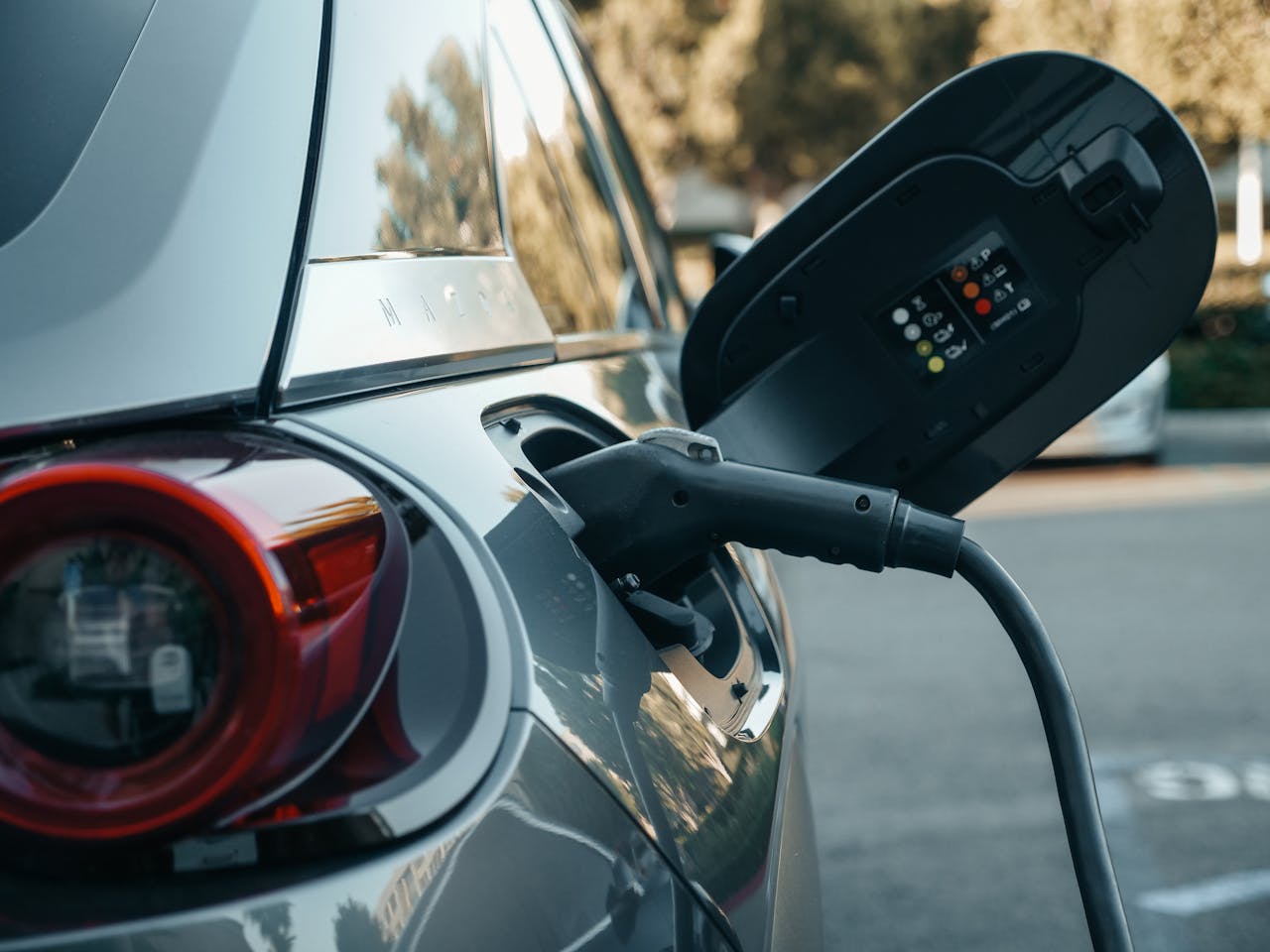
The government justified its “tariff fortress” by pointing to China’s extensive industrial policy, such as subsidies, that artificially lower production costs. (Pexels Photo)
In October 2024, Canada imposed a 100 per cent tariff on all electric vehicle (EV) imports from China, effectively barring consumers from accessing some of the world’s most innovative, affordable models. These tariffs are deepening the country’s dependence on the United States and undermining its climate goals.
Canada’s unusually prohibitive tariff mirrored the strategy of the U.S., which imposed a 100 per cent duty on Chinese EVs in September 2024.
The government justified its “tariff fortress” by pointing to China’s extensive industrial policy, such as subsidies, that artificially lower production costs. The tariffs were claimed to protect domestic producers by offsetting the cost advantage enjoyed by Chinese EV manufacturers.
While this rationale has some basis, it is highly overstated. The European Union’s in-depth investigation into Chinese support for the EV industry revealed company-specific subsidy levels, ranging from 7.8 per cent for Tesla Shanghai to 35.3 per cent for the SAIC Group, which subsequently became the basis for imposing countervailing duties.
Agriculture Minister Heath MacDonald recently said the government is considering scrapping the tariffs — a recognition that the policy may now be outdated.
A year ago, co-ordinating with the U.S. against China’s growing EV industry might have seemed defensible, but today, it leaves Canada in a weakened position in its ongoing trade war with the U.S.
This policy is misaligned with Canada’s long-term interests. It weakens economic independence, slows decarbonization and forces Canadians to pay more for EVs.
Tariffs are distorting Canada’s EV market
In July 2025, Tesla sales in the EU fell by 40 per cent even as overall EV sales rose by 39 per cent. BYD, China’s biggest EV manufacturer and a rival to Tesla, tripled its sales and moved ahead of Tesla in market share.
In Canada, too, Tesla’s sales are falling. Its market share is now a fraction of what it used to be and General Motors has recently taken first place in Canadian EV sales.
Still, Canadians continue to buy thousands of Teslas each year, while plans to sell BYD and other Chinese EVs have come to a grinding halt.
The reason why BYD has risen to the top in the EU but American automakers dominate in Canada is an outcome of Canada’s trade policy toward China, which has had the unintended effect of propping up U.S. automakers.
Canada’s auto market is already heavily dependent on American manufacturers. Tariffs that deepen this dependence further narrow consumer choice and expose Canadian EV buyers to unpredictable policy shifts in the U.S. It’s clear Canada needs a new approach.
A more nuanced strategy
Canada should adopt a more nuanced strategy that safeguards national priorities without stifling competition or limiting consumer choice. Instead of erecting tariff walls that shut out rivals, Canada should gradually open its market to prepare for the inevitable competition from China and beyond.
At the same time, it should offer targeted incentives for top Chinese EV firms to set up plants locally, transfer advanced technology and share technical know-how.
Such a policy would help stabilize car prices for Canadians, who have been hit hard amid U.S.–Canada trade tensions.
Although Ottawa recently suspended most counter-tariffs ahead of trade talks, levies on autos, steel and aluminum remain in place, keeping costs elevated. These retaliatory measures, while necessary, have burdened Canadian households, for whom vehicle purchases are the third-largest expense.
A freer trade regime with China would substantially broaden the range of affordable EVs available to Canadians, who are currently limited to costly U.S. brands averaging more than US$55,000. By contrast, Chinese manufacturers offer numerous models priced near US$25,000, a factor that would likely spur a substantial increase in EV adoption.
Second, access to Chinese EVs would help Canada meet its ambitious target of 100 per cent zero-emission new vehicle sales by 2035. Since Canada’s electricity grid is largely powered by renewable hydro and nuclear power, a faster uptake of EVs would significantly reduce emissions.
Third, lowering the tariff would support Canada’s pursuit of greater economic autonomy from the U.S.
A moderate tariff, combined with targeted incentives to attract foreign investment from Chinese EV makers, could enhance the global competitiveness of Canada’s auto industry. This also aligns with the country’s long-term strategy of incentivizing leading foreign EV producers to set up local operations.
Canada cannot hope to lead in a vital global industry by shutting itself off from competition. It must dismantle tariff walls, welcome world-class rivals and attract new investment. Only by diversifying its EV supply chain and fostering innovation can Canada secure a key position in the emerging EV economy.
Addisu Lashitew, Associate professor, McMaster University
This article is republished from The Conversation under a Creative Commons license. Read the original article.