Canada News
Filipina-Born Conspiracy Figure Known as the ‘Queen of Canada’ Faces Charges in Saskatchewan

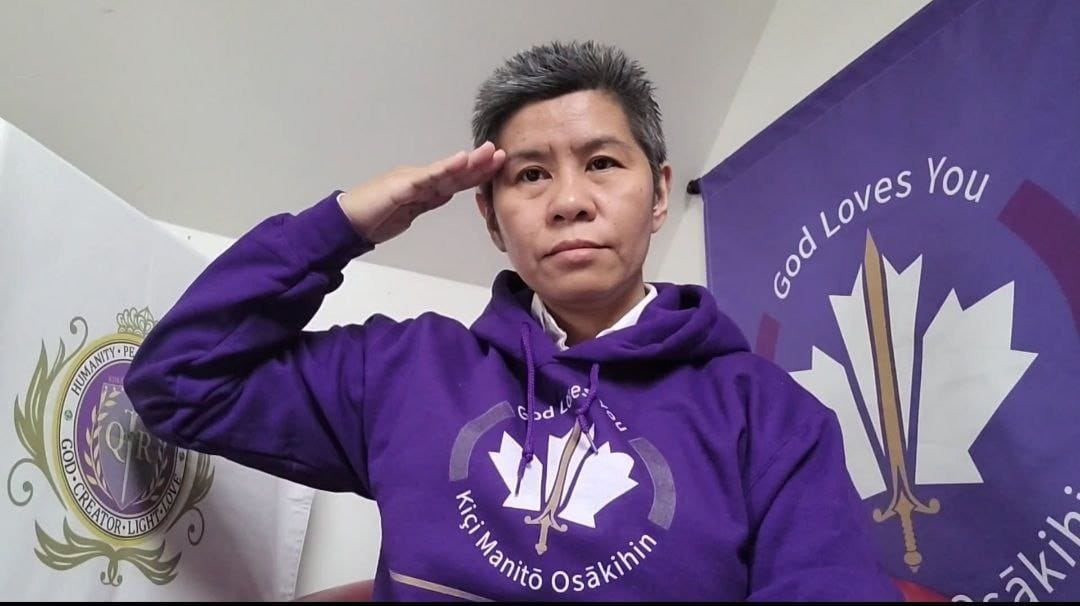
For years, Romana Didulo styled herself as the “Queen of Canada,” issuing grandiose decrees and rallying a loyal online following. This month, the Filipino-born conspiracy leader is instead facing a Canadian courtroom—her latest chapter in a saga that shows how fringe ideas, born online, can disrupt communities and test institutions.
Born in Naga City, Philippines, in 1974, Didulo immigrated to Canada and later emerged as a prominent voice in QAnon circles. In 2021, she proclaimed herself the country’s true head of state, promising debt forgiveness, free utilities, and the dismantling of government authority. Her followers—many disillusioned or searching for belonging—embraced her decrees, even when they led to personal and financial hardship.
What gave her claim an unusual twist is Canada’s own system of government. As a constitutional monarchy, Canada formally recognizes a king or queen as its head of state—currently King Charles III—though the role is largely ceremonial. For observers, Didulo’s self-coronation was more than eccentric; it struck at the symbolism of the country’s legitimate monarchy while feeding into sovereign citizen beliefs.
Her influence did not remain confined to the internet. With a caravan of loyalists, she traveled across Canada, occupying towns and even abandoned buildings. In Richmound, Saskatchewan, her group took over a decommissioned school, sparking tensions in the small community. Residents reported sewage problems, intimidation, and an atmosphere of unease.
The tensions reached a breaking point on September 3, 2025, when RCMP launched a large-scale pre-dawn raid. Tactical teams, drones, and dozens of officers converged on the Richmound compound, a scene Didulo herself livestreamed as she was taken into custody. As of this writing, Didulo has been formally charged with intimidation of a justice system participant and failing to comply with an undertaking. She was released shortly after her arrest and appeared in Swift Current Provincial Court on September 5, 2025.
Analysts warn that her rise illustrates how conspiracy-driven figures can exploit uncertainty and fear. By blending sovereign citizen ideology, anti-government rhetoric, and mystical claims, Didulo cultivated both financial support and a devoted following. At the same time, her movement unsettled communities and raised broader questions about the risks of online radicalization spilling into public life.
For Filipinos in Canada, her case carries a deeper resonance. That someone from the diaspora could gain notoriety in this way underscores both the complexities of immigrant identity and the global reach of misinformation.
Whether Didulo’s influence fades after her arrest—or grows stronger among her supporters—remains uncertain. What is clear is that the self-styled “Queen of Canada” is no longer issuing decrees from behind a screen. Instead, she is confronting the very institutions she once claimed no longer existed.