By Dee Ninis, Monash University, John Townend, Te Herenga Waka — Victoria University of Wellington, The Conversation
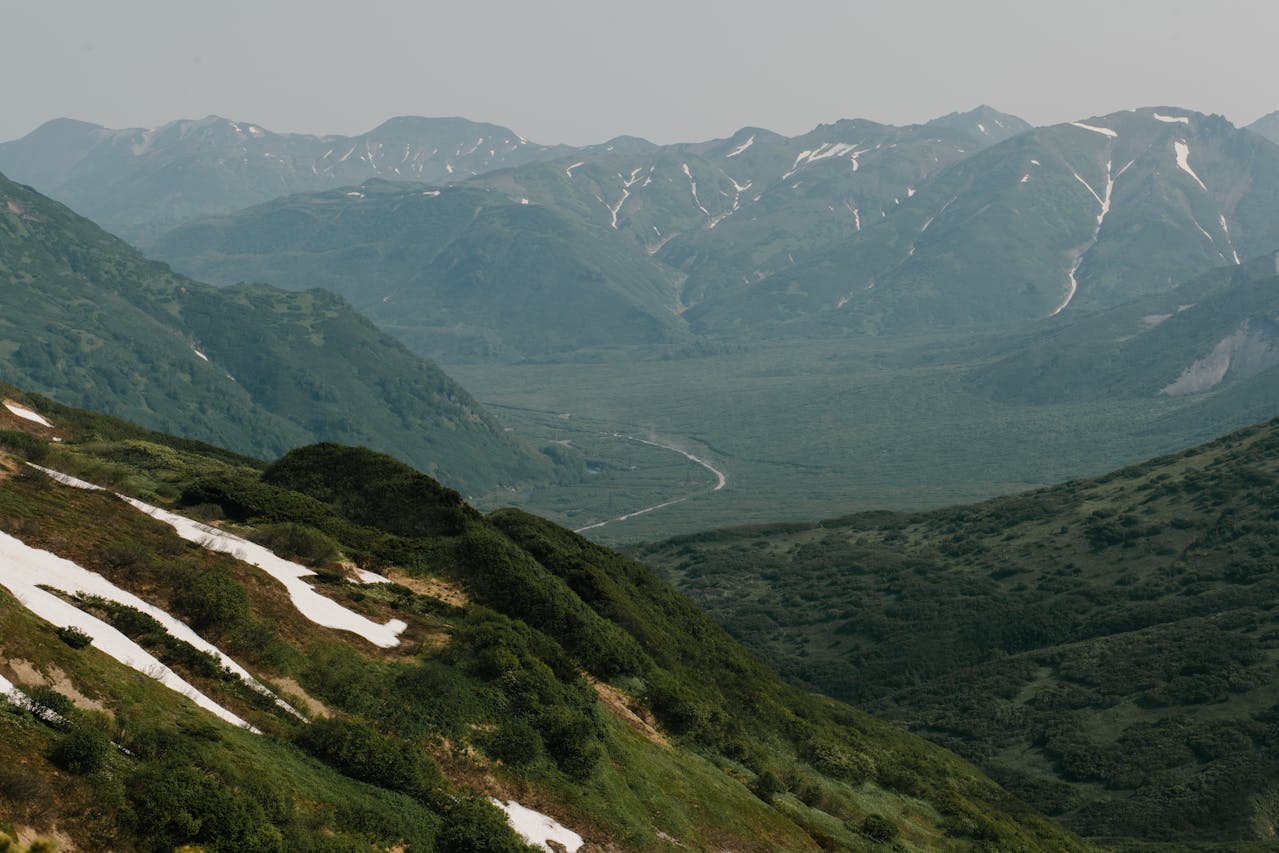
Today at about 11:30am local time, a magnitude 8.8 earthquake struck off the coast of Russia’s Kamchatka Peninsula in the country’s far east.
Originating at a depth of roughly 20 kilometres, today’s powerful earthquake – among the ten strongest in recorded history and the largest worldwide since 2011 – has caused building damage and injuries in the largest nearby city, Petropavlosk-Kamchatsky, just 119 kilometres from the epicentre.
Tsunami warnings and evacuations have reverberated through Russia, Japan and Hawaii, with advisories issued for the Philippines, Indonesia, and as far away as New Zealand and Peru.
The Pacific region is highly prone to powerful earthquakes and resulting tsunamis because it’s located in the so-called Ring of Fire, a region of heightened seismic and volcanic activity. All ten most powerful earthquakes recorded in modern history were located on the Ring of Fire.
Here’s why the underlying structure of our planet makes this part of the world so volatile.
Why does Kamchatka get such strong earthquakes?
Immediately offshore the Kamchatka Peninsula is the Kuril-Kamchatka Trench, a tectonic plate boundary where the Pacific Plate is being thrust beneath the Okhotsk Plate.
While tectonic plates move continuously relative to one another, the interface at tectonic plates is often “stuck”. The strain related to plate motion builds up until it exceeds the strength of the plate interface, at which point it is released as a sudden rupture – an earthquake.
Because of the large areas of interface at plate boundaries, both in length and depth, the rupture can span large areas of the plate boundary. This results in some of the largest and potentially most damaging earthquakes on earth.
Another factor that affects the rates and sizes of subduction zone earthquakes is the speed at which the two plates are moving relative to each other.
In the case of Kamchatka, the Pacific Plate is moving at approximately 75 millimetres per year relative to the Okhotsk plate. This is a relatively high speed by tectonic standards, and causes large earthquakes to happen more frequently here than in some other subduction zones. In 1952, a magnitude 9.0 earthquake occurred in the same subduction zone, only about 30 kilometres away from today’s magnitude 8.8 earthquake.
Other examples of subduction plate boundary earthquakes include the 2011 magnitude 9.1 Tohoku-Oki Japan earthquake, and the 2004 magnitude 9.3 Sumatra-Andaman Indonesia “Boxing Day” earthquake. Both of these initiated at a relatively shallow depth and ruptured the plate boundary right to the surface.
They uplifted one side of the sea floor relative to the other, displacing the ocean above it and resulting in devastating tsunamis. In the case of the Boxing Day earthquake, the sea floor rupture happened along a length spanning roughly 1,400km.
What is likely to happen next?
At time of writing, approximately six hours after the earthquake struck, there have already been 35 aftershocks larger than magnitude 5.0, according to the United States Geological Survey.
Aftershocks happen when stress within Earth’s crust is redistributed following the mainshock. They are often as large as one magnitude unit smaller than the mainshock. In the case of today’s earthquake, that means aftershocks larger than magnitude 7.5 are possible.
For an earthquake of this size, aftershocks can continue for weeks to months or longer, but they typically will reduce in both magnitude and frequency over time.
Today’s earthquake also produced a tsunami, which has already affected coastal communities on the Kamchatka Peninsula, the Kurile Islands, and Hokkaido, Japan.
Over the coming hours, the tsunami will propagate across the Pacific, reaching Hawaii approximately six hours after the earthquake struck and continuing as far as Chile and Peru.
Tsunami scientists will continue to refine their models of the tsunami’s effects as it propagates, and civil defence authorities will provide authoritative advice on the expected local effects.
What are the lessons from this earthquake for other parts of the world?
Fortunately, earthquakes as large as today’s occur infrequently. However, their effects locally and across the globe can be devastating.
Apart from its magnitude, several aspects of today’s Kamchatka earthquake will make it a particularly important focus of research.
For instance, the area has been seismically very active in recent months, and a magnitude 7.4 earthquake occurred on 20 July. How this previous activity affected the location and timing of today’s earthquake will be a crucial focus of that research.
Like Kamchatka and northern Japan, New Zealand also sits above a subduction zone – in fact, above two subduction zones. The larger of these, the Hikurangi subduction zone, extends offshore along the east coast of the North Island.
Based on the characteristics of this plate interface, and geological records of past earthquakes, it is likely the Hikurangi subduction zone is capable of producing earthquakes at magnitude 9. It hasn’t done so in historic times, but if that happened it would produce a tsunami.
The threat of a major subduction zone earthquake never goes away. Today’s earthquake in Kamchatka is an important reminder to everyone living in such earthquake-prone areas to stay safe and heed warnings from civil defence authorities.
Dee Ninis, Earthquake Scientist, Monash University and John Townend, Professor of Geophysics, Te Herenga Waka — Victoria University of Wellington
This article is republished from The Conversation under a Creative Commons license. Read the original article.