By Fiona MacDonald, University of Northern British Columbia, Jeanette Ashe, King’s College London, The Conversation
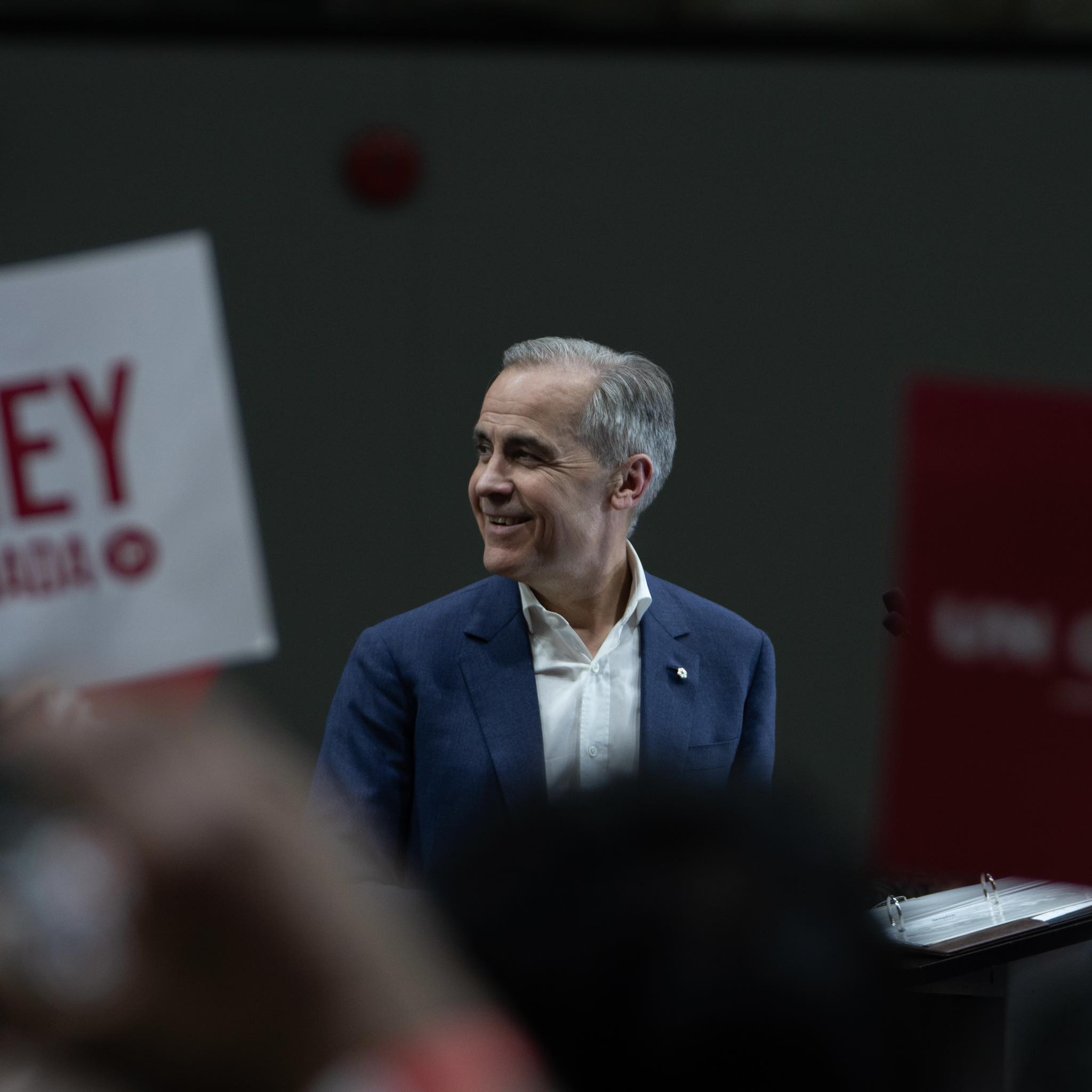
Canada’s 2025 federal election will be remembered as a game-changer. Liberal Leader Mark Carney pulled off a dramatic reversal of political fortunes after convincing voters he was the best candidate to fight annexation threats from United States President Donald Trump.
“We are over the shock of the American betrayal; we have to take care of each other,” he told cheering supporters in his victory speech in Ottawa.
“Together we will build a Canada worthy of our values. Canada strong, Canada free, Canada forever, vive le Canada!”
Canadians gave the Liberals their fourth mandate since 2015, although the race against the Conservatives was much closer than polls predicted.
Nonetheless, only four months ago, Conservative Leader Pierre Poilievre had a 25-point lead in public opinion polls and a fairly secure path to victory.
Yet Poilievre’s lead soon vanished due to shifting voter sentiments defined less by the official campaign period and more by the months that preceded it. Justin Trudeau’s early January resignation announcement and Carney’s confirmation that he was officially in the Liberal leadership race dramatically changed the political landscape.
Within a matter of weeks, Liberal support surged when Carney became party leader and Trump continued to make threats about Canada becoming a 51st American state — and to levy punishing on-again, off-again tariffs against the country.
The party went from being 20 percentage points behind the Conservatives to overtaking them, putting the party on track to secure its fourth consecutive victory. A shift described by longtime pollster Frank Graves as “unprecedented.”
Poilievre’s messaging
The emerging “Canada Strong” and “Elbows Up” narratives, linked to the widespread anti-Trump sentiment, proved a major advantage for the Liberals, who made the most out of this political gift.
This shift, alongside Carney’s elimination of the carbon tax, left Poilievre on the back foot as his longstanding messaging on Trudeau and his “axe the tax” slogan became largely irrelevant.
The impact of these shifts in electoral fortunes extended beyond the two main parties. As the election became increasingly a two-party race between the Liberals and Conservatives, the smaller parties struggled for relevance.
Election campaign polling and early results indicated steep losses for the NDP, with Jagmeet Singh losing his own seat in Burnaby, B.C. and then resigning as party leader. This could be due to voters on the left responding to calls to vote strategically to prevent Conservative victories in various ridings.
The Bloc Québecois also lost ground, as did the Green Party of Canada and the People’s Party of Canada (PPC). Neither the Greens nor the PPC fielded full slates of candidates or participated in the leaders’ debates and therefore played comparatively limited roles in this election.
Advance voting in a gendered election
Another notable feature of this election was the record advance voting turnout, which surged to 7.3 million Canadians, up sharply from 5.8 million in 2021.
Early voting has now become a central part of party campaign strategy, with campaigns “getting out the vote” at every opportunity, not just on Election Day. This trend raises questions not only about whether overall turnout will rise, but also whether party platforms remain as influential given so many votes were cast before all parties released their platforms.
While many Canadians take in elections with a focus on party leaders and seat counts, there are other important ways to contemplate election outcomes in terms of inclusion and voice. What does this election tell us about gender and diversity representation in Canada’s Parliament?
This was a deeply gendered election. The major party leaders are all men, with the exception of Elizabeth May, the Green Party co-leader.
Preliminary candidate data showed a decrease in the number of women candidates compared to 2021.
The NDP nominated the highest proportion of women candidates — the majority of its candidates are women — and fielded the most diverse slate of candidates in terms of Indigenous people, Black people, racialized people and LGBTQ+ candidates. But the party’s dramatic losses mean these gains will not translate into more diverse representation in Parliament.
Furthermore, one of Carney’s first actions as prime minister was to eliminate the sex-balanced cabinet and to reduce the size of the cabinet. He eliminated the Ministry of Women and Gender Equality (WAGE) as well as ministerial portfolios focused on youth, official languages, diversity, inclusion, disability and seniors.
These decisions reverse previous efforts taken to institutionalize gender and diversity leadership in Canada’s Parliament.
Party platforms also reflected diverging approaches when it came to women. The Conservative platform only mentioned women four times, and three of those mentions were in the context of opposition to transgender rights.
The role of young working-class men
Polling also revealed intersections of generation, gender and class are increasingly relevant. Like the last federal election, young working-class men are increasingly drawn to the Conservatives. This trend appears to be driven less by fiscal conservatism and more by concerns about rapid social change, a trend also observed in the 2024 American presidential election.
Many of these young men are expressing frustrations over housing affordability and job security, and what they view as the Liberal and NDP’s “woke culture,” which they view as eroding traditional values that have traditionally benefited men. In contrast, Canadian women of all ages continue to favour parties they view as more progressive — the Liberals and the NDP.
Theoretical explanations for this include young men feeling left behind by the Liberals, while the Conservatives have seemingly figured out a way to connect with them.
This may reflect campaign rhetoric about returning to traditional expectations and values around gender roles and men’s rights to well-paying jobs, an affordable home and taking care of their families.
Electoral reform needed?
In the aftermath of the election, there are avenues through which current gaps in representation can be addressed. Organizations like the United Nations’ Inter-parliamentary Union and the Commonwealth Parliamentary Association, as well as gender and politics scholarship, propose various reforms to continue to strengthen diversity in Parliament.
These reforms are understood to be essential for enhancing the legitimacy, responsiveness and effectiveness of Canada’s parliamentary system. Research on gender-and diversity-sensitive parliaments consistently shows that when legislative bodies reflect the diversity of the societies they govern, they are more likely to produce policies that are equitable, inclusive and trusted by the public.
Overall, this Canadian election was characterized by transformative twists and turns that shed more light on important ongoing questions about representation and the potential need for democratic reform if Canadians want to avoid a two-party system.
Fiona MacDonald, Associate Professor, Political Science, University of Northern British Columbia and Jeanette Ashe, Visiting Senior Research Fellow, King’s College London
This article is republished from The Conversation under a Creative Commons license. Read the original article.