By Katerina Sviderska, University of Cambridge, Leandre Benoit, University of Oxford, The Conversation
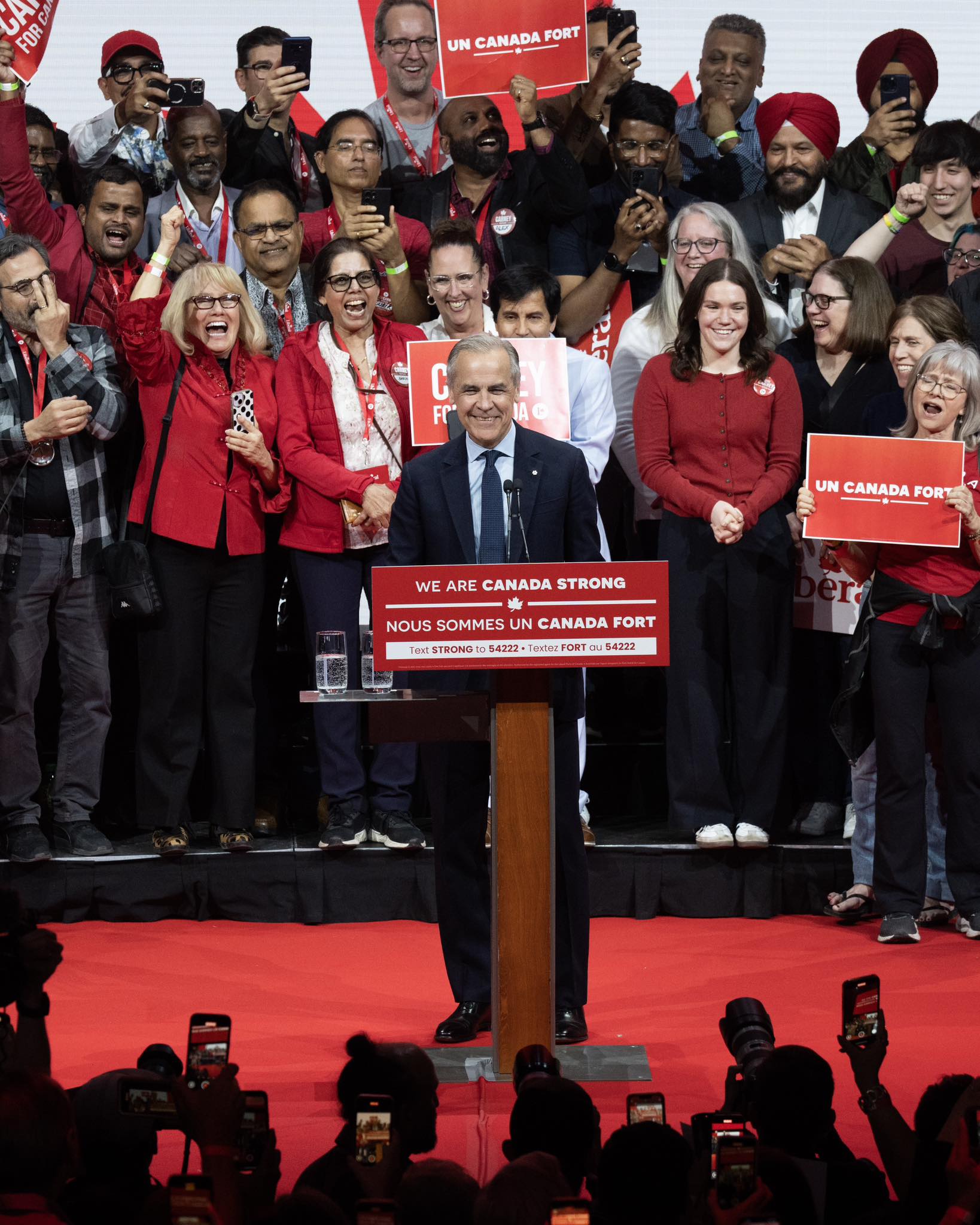
Just months ago, Canada’s Conservatives were leading the polls, surfing the wave of radical right ideas and rhetoric sweeping across the globe. But with the election victory of Mark Carney’s Liberal Party, Canada now stands out as a liberal anchor in a fractured West.
This election may not only shape Canada’s domestic trajectory, but also carries significant implications for its international partnerships amid rising geopolitical uncertainty.
As some European countries and the United States head towards isolationism, authoritarianism and turn to the East — even flirting with Russia — Canada’s continued Liberal leadership reinforces its position as a key ally for the European Union. Carney’s centrist and pro-EU attitude provides stability and relief for Europeans.
From defence to trade and climate, Canada and the EU share deep economic and strategic ties. With a Liberal government, these connections will strengthen, offering both sides what they need the most: a reliable, like-minded partner at a time of transatlantic unpredictability.
What does Carney’s victory mean specifically for the Canada-EU relationship?
Trade as a strategic anchor
Carney’s election offers new momentum for Canada-EU collaboration. His “blue liberalism” brings Canada ideologically closer to Europe’s current leadership — from Emmanuel Macron’s centrist France to the Christian Democratic Union-led coalition in Germany — providing fertile ground for pragmatic co-operation.
Trade remains the foundation of the Canada-EU relationship, and both sides should aim to build on it. At the heart of this partnership is the Comprehensive Economic and Trade Agreement (CETA), which has increased EU-Canada trade by 65 per cent since 2017.
European Council President António Costa has called the deal a success story providing clear proof “trade agreements are clearly better than trade tariffs.”
As the U.S. speeds toward toward economic nationalism, CETA has become more than a commercial agreement — it’s a strategic anchor in the global liberal order. One of the Liberal government’s early priorities is likely to consolidate and strengthen CETA. In doing so, Canada can position itself as an ambitious partner, ready to seize new opportunities as European countries seek to reduce their reliance on the American market.
Climate and energy: A balanced agenda
Climate and energy, too, offer new opportunities for co-operation. Both Canada and the EU are navigating the tensions between pursuing ambitious decarbonization goals and managing economic and inflationary pressures. After scrapping Canada’s carbon tax on his first day in office, Carney has already hinted at a more pragmatic environmental stance.
While pledging to maintain key climate policies — including the emissions cap on oil and gas — Carney’s government may recalibrate Canada’s approach to energy. This would mirror shifts among some European allies’ climate policies.
This evolving transatlantic consensus — less about abandoning climate goals, more about making them economically viable — paves the way for closer co-operation based on a common goal: bolstering economic competitiveness while maintaining environmental credibility.
Both Carney and the EU view the investment in new technologies as the path forward.
As Europe accelerates its green agenda and implements new sustainability rules, only countries with strong environmental standards qualify as long-term partners. Canada, provided it stays the course on climate policies, is well-positioned to be a key partner in Europe’s green transition.
Transatlantic defence co-operation
Beyond trade and energy, defence co-operation between Canada and the EU is expected to surge. A key priority for the new Liberal government is to finally reach NATO’s benchmark of spending two per cent of gross domestic product on defence, a longstanding commitment that has eluded previous administrations.
This signal of rearmament reflects not only alignment with NATO expectations but also a broader understanding that liberal democracies must be prepared to defend themselves. Nowhere is this more pressing than in Ukraine, the epicentre of Europe’s geopolitical storm.
Canada has been among the most reliable supporters of Ukraine since the onset of Russia’s full-scale invasion, aligning itself with Europe’s most committed nations — France, Poland, the Baltics and, increasingly, Germany.
But as threats evolve, the battlefield also extends beyond Ukraine’s frontlines. Hybrid attacks — cyber, disinformation campaigns and foreign interference in democratic processes — now wash up on all shores. Canada’s National Cyber Threat Assessment 2025–26 identifies state-sponsored cyber operations as one of the most serious threats to democratic stability, particularly from Russia and China.
In strengthening its defence collaboration, Ottawa is hoping to get a seat in the fight against autocracies. The question is no longer whether to engage, but how to lead in this era of layered and compounding threats coming from rivals like Russia and China — and now from the U.S., a historical Canadian ally.
Under Carney’s leadership, Canada is likely to pursue a pragmatic and globally engaged liberalism definitively aligned with Europe. As Canada and the EU are both looking for reliable allies to weather the storm, this renewed western alliance could solidify around Ottawa and Brussels — anchored in shared democratic values and pragmatic leadership.
Katerina Sviderska, PhD Candidate in Slavonic Studies, University of Cambridge and Leandre Benoit, PhD Candidate in Politics, University of Oxford
This article is republished from The Conversation under a Creative Commons license. Read the original article.