Canada News
The mixed government legacy of Justin Trudeau

By Jennifer Robson, Policy Options
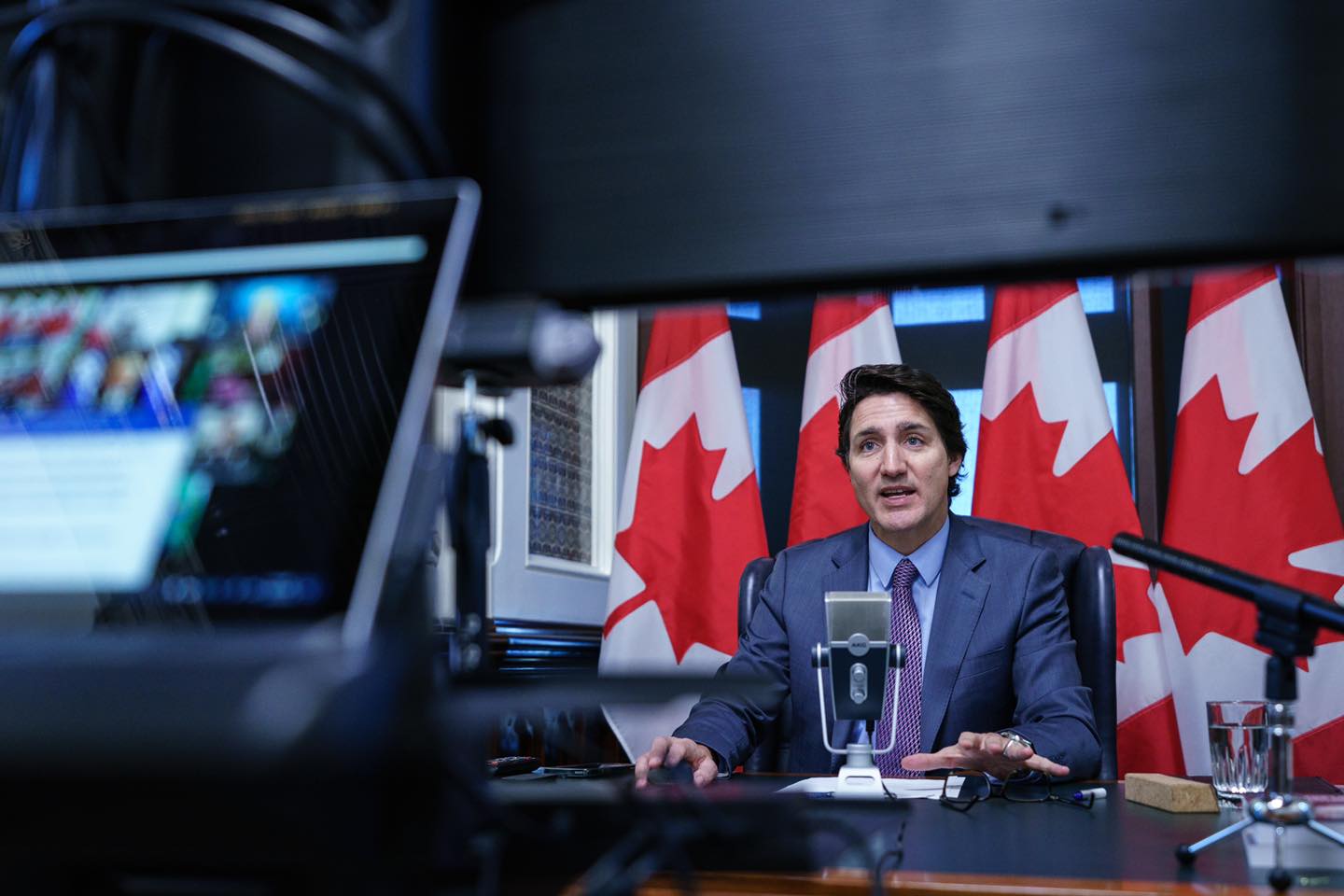
On balance, Trudeau’s impact appears to be one of modest shifts rather than transformative change. (File Photo: Justin Trudeau/Facebook)
(Version française disponible ici)
Assessing the legacy of a prime minister after nearly a decade in office is no easy task. Justin Trudeau’s tenure has spanned periods of relative economic instability, global turbulence, and the unprecedented disruption of a global pandemic.
As with any long-serving leader, his government’s record is mixed, and different observers will prioritize different aspects of that record. Did Trudeau leave Canada fundamentally changed from when he took office in 2015?
The answer depends on where one looks. While those who prioritize economic growth will point out he has presided over economic stagnation, a structural fiscal deficit and increased government inefficiency, those who prioritize social policy can point to significant reductions in poverty, particularly among children, and a more flexible parental leave for young families. The government has cancelled some ineffective boutique tax credits from the Harper era and introduced some greater progressivity in the personal income tax system. But it also produced a Canada Disability Benefit designed on the cheap and leaned far too much into intervening in areas of provincial jurisdiction.
On balance, Trudeau’s impact appears to be one of modest shifts rather than transformative change.
Progress on economic inequality and poverty
One of the most tangible impacts of the Trudeau government has been its role in poverty reduction. When he took office in 2015, Canada lacked an official poverty line. His government introduced one and improved data collection to better understand disparities across different demographics.
Since then, poverty rates have fallen significantly across most groups. Child poverty, for instance, declined from 16.3 per cent in 2015 to 9.9 per cent in 2022. Poverty rates among both seniors and newcomers also saw notable declines. The introduction of the Canada Child Benefit played a major role in these reductions, offering more targeted and generous support than previous programs.
Despite this progress, the overall distribution of income in Canada remains largely unchanged. Key measures of income inequality have barely budged and the share of income going to the richest and poorest Canadians remains almost identical to 2015 levels. Trudeau’s early rhetoric suggested an ambition to fundamentally alter income distribution, yet the results have been incremental rather than revolutionary. The government’s willingness to eliminate some tax credits and introduce higher top-end tax rates signaled an attempt to make the system fairer, but these changes did not meaningfully shift the overall landscape of inequality.
A mixed macroeconomic legacy
Trudeau took office amid an economic slowdown largely driven by falling oil prices. His government responded with an emphasis on stimulus spending and direct financial support to struggling industries and workers. Oil producing regions, and the country as a whole, emerged from that first crisis, mostly unscathed. But his government’s efforts at promoting longer-term sustained growth has met with much less success.
Canada’s GDP per capita, a key measure of economic progress, has stagnated. While GDP growth itself has been positive, population growth has outpaced economic expansion, leading to weaker per-person gains. Before the pandemic, every previous Canadian recession since 1981 had been followed by above-trend per capita GDP growth. That pattern did not hold after COVID-19. By 2023, per capita GDP was about $3,000 lower than what historical trends would have predicted.
One of the key drivers of this stagnation has been underinvestment in productivity-enhancing sectors. The Bank of Canada has warned that workforce training, labor-market efficiency, and competition policy require urgent attention to improve Canada’s long-term economic health.
Immigration, while a long-standing economic driver, has also presented challenges. For a time, the Trudeau government dramatically increased immigration levels, but the ratio of spending on settlement services to the volume of people admitted to Canada fell to half of what it had been in the Harper era. This misalignment has no doubt contributed to concerns about economic integration and declining public support for a welcoming immigration policy.
Government growth
Trudeau’s government expanded the size and spending of the federal state. Federal expenditures grew from $280.5 billion in 2014-15 to $521.5 billion in 2023-24. Revenues as a share of GDP also increased from 14 per cent to 16.6 per cent, reflecting a government that has been more willing to tax and spend than its predecessor.
However, this expansion has not necessarily translated into a more capable state. Despite an increase in spending, there is little evidence that federal operations became more efficient or effective. The public service has grown in headcount, but the share of federal spending allocated to operations is unchanged at 26.8 per cent, right where it was at the end of the Harper government. Moreover, the share of total federal spending on public servants (including salaries, benefits, and the like), actually fell from 14 per cent in 2014-15 to just under 11 per cent. The difference was not made up with higher spending on outside consultants, as that represented 3.8 per cent of total spending in 2014-15 and 3.6 per cent as Trudeau leaves office.
Meanwhile, the frustrations that Canadians experience in accessing government services and programs – from passports, to EI benefits and more, gained new political salience, with rallying cries for deep cuts to fix a broken system. In the end, the capacity of the federal state to deliver seems no better, but maybe no worse, than it was when Trudeau took office.
Looking ahead
Geopolitical risks remain a major challenge. The return of Donald Trump to the White House has upended Canada-U.S. relations, particularly in trade and defense. Canada is no better prepared for a hostile U.S. administration or any other major events than it was when Trudeau took office, raising concerns about economic vulnerability and national security.
Trudeau’s government may not be remembered for radical transformation. For those who supported Trudeau’s ambitious 2015 promises, this record may be disappointing. For those who feared drastic shifts in Canada’s political and economic landscape, it may be a relief. In the end, Trudeau’s legacy is one of measured, sometimes uneven change.
The details behind Jennifer Robson’s analysis of Justin Trudeau’s legacy in government can be found here.
This article first appeared on Policy Options and is republished here under a Creative Commons license.