
News
SC requires House to comment on petition vs. ‘fake news’ hearings

By Benjamin Pulta, Philippine News Agency
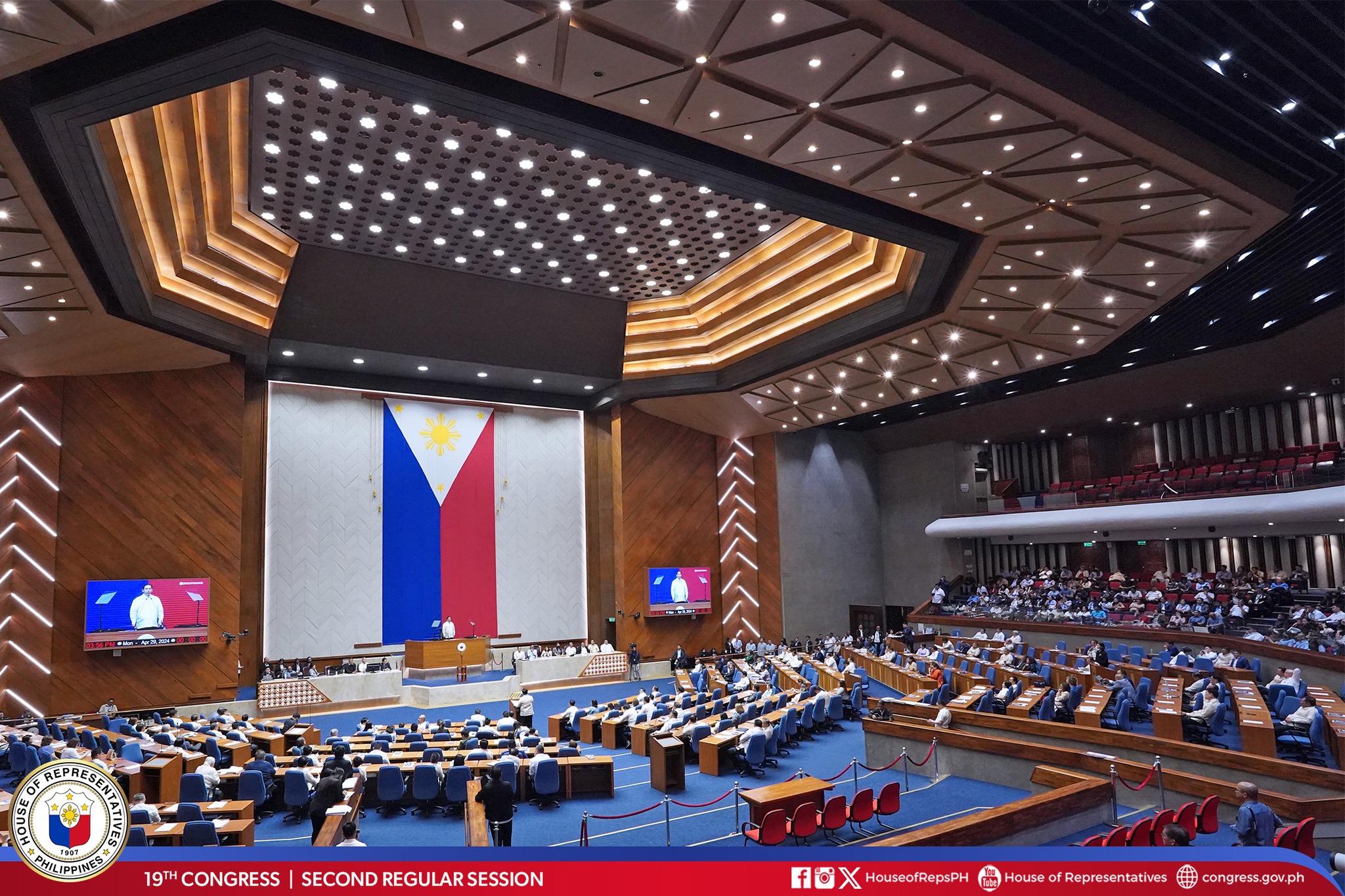
They claimed that the inquiry conducted by the House Committees on Public Order and Safety, on Information and Communications Technology, and on Public Information – known as the Tri Committee — violates their constitutional rights to free speech, expression and press freedom. (File Photo: House of Representatives of the Philippines/Facebook)
MANILA – The Supreme Court (SC) has required the House of Representatives to comment on the petition filed by vloggers and social media influencers questioning the constitutionality of a legislative inquiry on the dissemination of fake news and malicious content on social media platforms.
“In a resolution dated February 11, 2025, the Court required the respondents to comment on the petition for certiorari and prohibition (with urgent prayer for the issuance of a TRO — temporary restraining orde — and writ of preliminary injunction) within a non-extendible period of 15 days from notice, to be filed with the Court and served on petitioners by personal service.” SC Spokesperson Atty. Camille Ting said in a message to reporters on Thursday.
The petitioners include Trixie Cruz-Angeles, Krizette Laureta Chu, Sass Rogando Sasot, Mark Anthony Lopez, Lorraine Marie Badoy-Partosa, Jeffrey Almendras Celiz (Eric Celiz), Dr. Richard Mata, Ethel Pineda Garcia, Joie De Vivre (Elizabeth Joi Cruz), Aaron Peña and Mary Jean Reyes.
They claimed that the inquiry conducted by the House Committees on Public Order and Safety, on Information and Communications Technology, and on Public Information – known as the Tri Committee — violates their constitutional rights to free speech, expression and press freedom.
Surigao del Norte Rep. Robert Ace Barbers, who is one of the respondents, has earlier clarified that the joint panel is not intended to suppress freedom of speech or expression.
Barbers, whose privilege speech last Dec. 16, together with a resolution authored by Senior Deputy Speaker Aurelio Gonzales Jr., prompted the inquiry, said he and his colleagues only want certain rules or best practices to govern the dissemination of information on social media.
“Our take being members of the 19th Congress is to establish a set of rules, conscious of course of the constitutional right to freedom of expression. Yung sa akin lang naman po ay isang polisiya or framework na kung saan ay hindi magamit ang social media platforms (I just like to see a policy or framework that social media platforms would not be used) for spreading fake news or espousing disinformation, misinformation or malinformation,” he stressed during the second hearing of the panel on Feb. 18.




















