
Technology
Cities need to get ahead of autonomous delivery robots

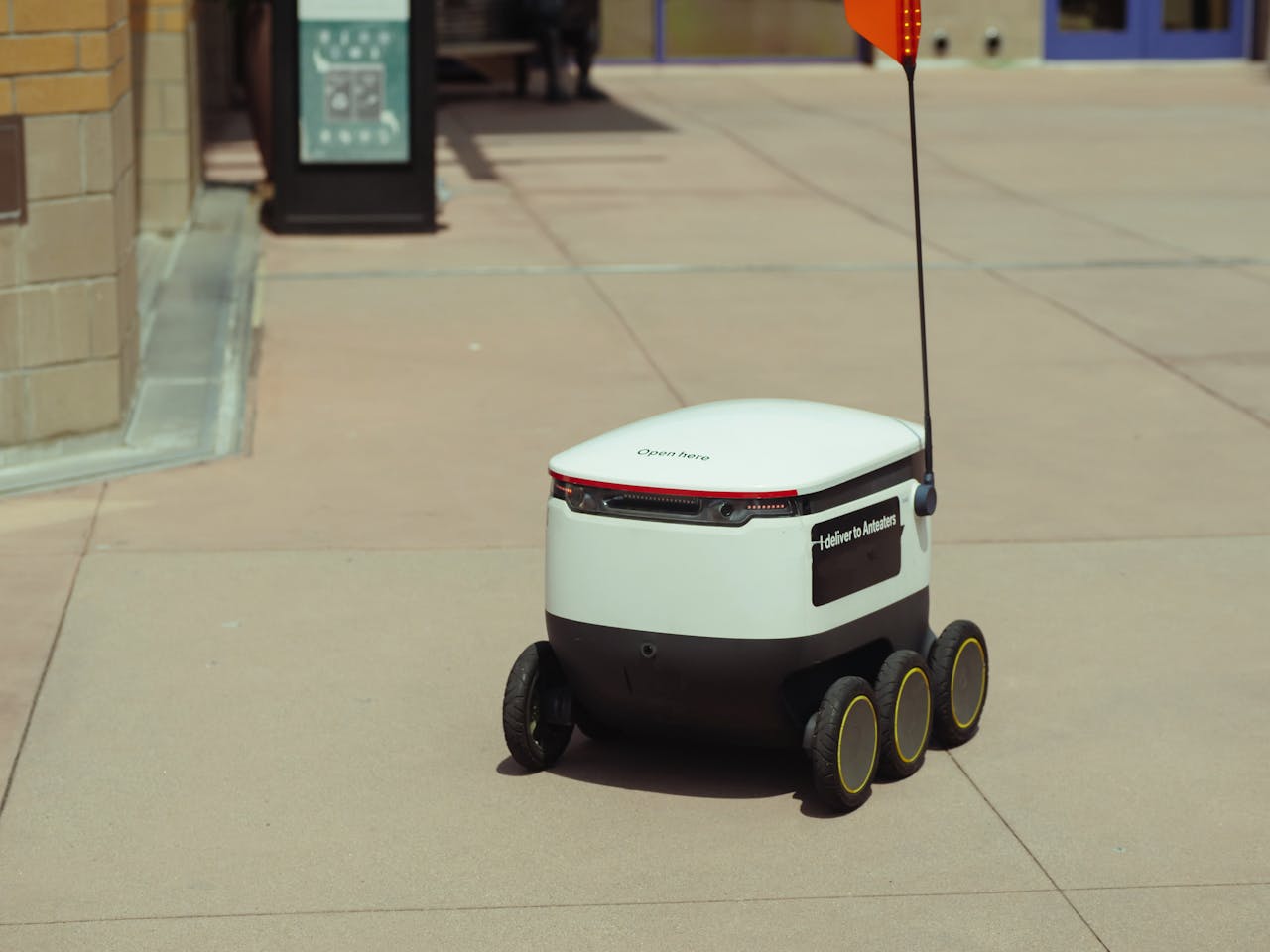
Broader adoption of delivery robots could turn less frequent incidents into a wider problem for pedestrians, cyclists and wheelchair users. (Pexels Photo)
Autonomous delivery robots are increasingly appearing on sidewalks as a solution to the last-mile delivery challenges of online shopping, which is on the rise and expanding rapidly every year. But these robots can impede pedestrian flow, cause discomfort and amplify navigation challenges in crowded pedestrian environments as shown by studies in highly controlled settings.
On streets in Canadian cities where the robots have been deployed in small numbers, there have been a few incidents. That has been enough to spark public backlash in Canada, with particular safety concerns for older adults, people with disabilities and mobility challenges.
Broader adoption of delivery robots could turn less frequent incidents into a wider problem for pedestrians, cyclists and wheelchair users.
Before that happens, municipalities need to arm themselves with a more comprehensive understanding of the negative impacts that wider use is likely to bring. They will need further research and inclusive planning to ensure this intrusive technology does not disadvantage city sidewalk users.
Rapid expansion at the expense of sidewalk access
E-commerce revenue in Canada reached the equivalent of $94.3 billion in 2024 and is expected to rise to $150.3 billion by 2029.
Tiny Mile is a Toronto delivery company that launched in 2020. It intended to deploy 200 sidewalk delivery robots by 2023, but that didn’t happen. Toronto city council banned autonomous delivery robots from sidewalks and bike lanes in December 2021. The city’s accessibility advisory committee voiced safety concerns and pointed to the Ontarians With Disabilities Act.
Soon after, Ottawa also restricted sidewalk robots, citing similar concerns.
Manufacturers of these autonomous robots claim they will not impede sidewalk users despite evidence to the contrary. Much of the literature about the robots focuses on overcoming technological challenges and fostering consumer acceptance of the robots.
Little research has been devoted to the problems they pose. That is changing, but most studies have so far relied on small-scale field observations that can’t capture the full potential for conflicts or exceptional situations.
In 2021, 40 dangerous near-misses between pedestrians and sidewalk delivery robots were documented in a five-day study conducted on the Northern Arizona University campus. An additional 60 moderate-risk interactions were logged. In most cases, the robots were to blame.
In 2019, a Pittsburgh woman described how a delivery robot blocked her and her wheelchair from accessing the sidewalk after crossing a busy intersection. “I found myself sitting in the street as the traffic light turned green, blocked by a non-sentient being incapable of understanding the consequences of its actions.”
Visually impaired people also face distinct challenges with the robots, including an increased risk of tripping, damaging their canes or encountering difficulties if their guide dogs struggle to navigate around the robots.
Active evaluation is urgently needed
Speed is also a significant concern especially for robots with heavy loads. Crash test studies show that impacts involving larger 60-kilogram robots traveling at 11 km/h can cause severe injuries, especially for children, who face a higher risk of direct torso and head trauma.
Sidewalk autonomous delivery robots generally max out at 45 kilograms with speeds of seven km/h. This is the case for those developed by Starship and Kiwibot, for example. But faster and larger cargo-sized robots are expected as the industry advances. Higher speeds will increase the risk of collision-related injuries. Yet already Idaho and Florida have approved speed limits of up to 16 km/h.
There is a clear and pressing need for research to inform policies governing the deployment of sidewalk robots.
Towards regulating AI: A natural, labour and capital resources perspective
Sidewalk Labs’ city-of-the-future in Toronto was a stress test we needed
How partnerships can help cities cope with technological disruption
Cities must avoid the missteps that followed the introduction of Uber and Lyft, where reactive policymaking led to unintended consequences, including heightened congestion and conflicts with existing transportation systems.
A proactive and pre-emptive policy framework is essential to mitigate potential challenges associated with the widespread deployment of these delivery technologies.
Canadian policymakers must carefully evaluate how other cities have regulated sidewalk robots to identify best practices for incorporating pedestrian needs and concerns into these frameworks. Furthermore, new evidence must be generated to understand pedestrian behaviour and attitudes toward sidewalk robots in less controlled and real-world environments.
This can be accomplished through large-scale observational studies or comprehensive surveys using scenario-based questions to analyze pedestrian reactions, measure public acceptance and explore regulatory preferences.
Too often, the deployment of new urban technologies focuses on those who stand to benefit while overlooking those who could be excluded or burdened by them. In the case of autonomous sidewalk robots, efforts to lower delivery costs and satisfy consumer demand for faster delivery times risk creating new forms of privilege and marginalization.
This article first appeared on Policy Options and is republished here under a Creative Commons license.




















