
Canada News
Advocates hope a new national registry will reveal extent of Indigenous sterilization

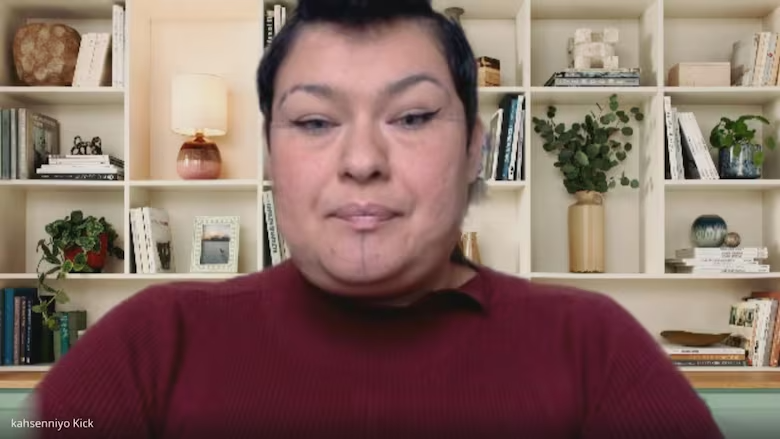
Kahsenniyo Kick is the public education lead of Survivors Circle for Reproductive Justice. (Nadeer Hashmi/CBC)
By
No official numbers or records exist for similar cases, organization says
Advocates hope a new national registry will reveal the extent of forced and coerced sterilization of Indigenous women across Canada.
“It’s challenging to know the full extent of the issue right now because.. .there hasn’t really been a national report or study done on it in detail,” said Kahsenniyo Kick with the non-profit Survivor Circle for Reproductive Justice.
Forced or coerced sterilization refers to the practice of sterilizing Indigenous women in Canada without proper or informed consent.
Formed in 2023, Kick said the not-for-profit organization supports survivors and advocates for reproductive justice for all First Nations, Inuit, and Métis across the provinces and territories.
Kick said she was coerced into sterilization at a hospital in Six Nations, Ont. She went in for a C-section delivery, but left sterilized without full understanding, or having given consent.
“There’s a lot of shame and embarrassment and kind of guilt, that I carried for a really long time,” Kick said.
“So for me personally, you know, making sure that the information is getting out that folks have rights and that there are certain things that need to happen for that consent to be to be valid.”
Kick said no official numbers or records exist for similar cases. That’s why the organization launched a national registry in November.
“We’re really hoping to be able to connect with as many survivors as possible,” Kick said. “Our work is really survivor-led.”
She said Indigenous women in the North are more likely to be sterilized, as often times they have to travel outside their communities for medical treatment.
“So we don’t have a full scope of the issue, but there’s definitely a certain vulnerability that women in the North face in terms of racism within the health-care [system],” Kick said.

Steven Cooper is an Edmonton-based lawyer specializing in Indigenous law, who is also involved in class-actions relating to forced sterilization in southern Canada.
He said forced sterilization often goes unreported, or survivors may not realize it happened to them.
“While the national registry might improve our knowledge, I’m not terribly confident that’s going to make a lot of difference,” Cooper said.
“Part of the problem with forced sterilizations is they’re terribly personal. They don’t have the sort of community network that, for example, residential school survivors would have.”
In the Northwest Territories, Cooper said, the most recent case involved a Tuktoyaktuk woman he represented a few years ago, but it’s not the only one.
“We know there are more. I mean, I’ve been contacted by three or four other individuals who are reluctant to proceed,” Cooper said.
But Cooper said survivors speaking out will help reveal the extent of the problem.
“When they hear that somebody has come forward that there are other people like them, they find strength and strength in numbers,” he said.
Kick said as part of building the national registry, Indigenous sterilization survivors can also apply for a healing fund.
She said the fund can help pay for grief counselling, therapy or reproductive technology.




















