

By Scott Lucas, University College Dublin; The Conversation
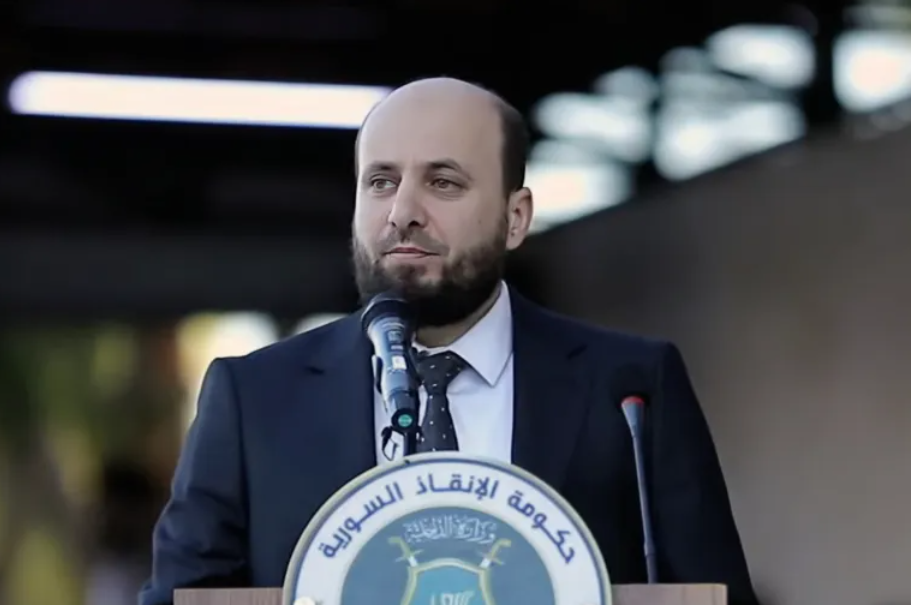
Since the start of 2024, Bashir has been the political head of the Syrian Salvation Government (SSG), the administration of the HTS-led opposition area in north-west Syria. (File photo by عبد الرحمان بومعيزة/Wikimedia Commons, CC0)
Dressed in a modest grey suit and tie with a light blue shirt, bald and bearded, 41-year-old Mohammed al-Bashir addressed his fellow Syrians on Tuesday from behind a desk in an empty conference room. Asking for “stability and calm”, he announced that he would serve as the head of a transitional government until March 1.
Less than two weeks ago, any such address would have been given by Bashar al-Assad, the brutal dictator who had overseen the killing of hundreds of thousands of Syria’s citizens and the displacement of more than 11 million.
But Assad’s regime and 54 years of single-family rule collapsed after an 11-day rebel offensive. He and his wife Asma were smuggled out of Damascus by Russian intelligence officers, who flew them to Moscow.
Bashir was speaking to countrymen full of hope, but also wary about what may come next. He owes thanks for his position to the Islamist faction Hayat Tahrir al-Sham (HTS), which led the rebel coalition that toppled Assad. Since the start of 2024, Bashir has been the political head of the Syrian Salvation Government (SSG), the administration of the HTS-led opposition area in north-west Syria.
Supported by Turkey, the HTS and SSG had ensured governance and a measure of stability in parts of Idlib and Aleppo provinces since November 2017. But they had also been accused by human rights groups of abuses of power and discrimination against religious and ethnic minorities. Despite breaking from Al-Qaeda in 2016, HTS is also designated as “terrorist” by the UN, US, UK, and some European countries.
In an interview with Italy’s Corriere della Sera newspaper on December 11, Bashir was asked about HTS’s past. He responded: “The wrongful actions of certain Islamist groups have led many people, especially in the west, to associate Muslims with terrorism and Islam with extremism. There were mistakes and misunderstandings that distorted the true meaning of Islam, which is ‘the religion of justice’. Precisely because we are Islamic, we will guarantee the rights of all people and all communities in Syria.”
Moving towards stability
Born in Idlib province, Bashir graduated in electrical engineering from the University of Aleppo in 2007. He worked for the state-owned Syrian Gas Company, and after the start of the Syrian uprising in March 2011, was director of an institution providing education to children affected by the conflict. In 2021, he obtained a second degree in Sharia and Law from Idlib University.
The prime minister is the essential technocratic contrast to HTS leader Ahmed al-Sharaa, formerly Abu Mohammed al-Golani. It is the latter who has reaped all the international attention and questions after Assad’s downfall.
In an interview with Sky News after the ousting of the previous government, al-Sharaa addressed other countries: “Their fears are unnecessary, God willing. The fear was from the presence of the [Assad] regime. The country is moving towards development and reconstruction. It’s going towards stability.”
Bashir is the face of that stability. As rebels moved south from Idlib and Aleppo to liberate Hama city earlier this month, he hailed not only “a new dawn of freedom and dignity”, but pledged: “We promise you in the Salvation Government that we are committed to living up to your expectation, rebuilding your city to return it to its leading civilised status … This is a day of joy and pride, but it is also a day of work and responsibility.”
That quest for responsibility and legitimacy involves many more than the prime minister. Soon after his Tuesday address, Bashir reported meeting with members from the old government and some directors from the administration in Idlib and its surrounding areas “to facilitate all the necessary works for the next two months”.
The technocrats are already developing plans for administration, reviewing the regime’s bureaucracy. Mohammad Yasser Ghazal, seconded from Idlib to head the Damascus City Council, said: “It’s all going to become one. All the government bodies will be dissolved: no Salvation Government, no factions, nothing. It will all soon be dissolved into one Syrian republic.”
Facing the regime’s legacy of corruption, cronyism, and centralised power, the new officials have asked department chiefs to list their remits and explain their department’s functions. They have encountered staff quoting government handbooks from the 1930s and 1960s, while failing to answer direct questions about their duties or decision making.
Rapid moves in early days
It is early days, but so far the rapid transition to rebel and now government rule has been largely peaceful with the continuation of services and daily business. The rebels issued a statement pledging respect for all minorities. And facing the possibility of looting, they warned against any destruction of public or private property and imposed an overnight curfew.
Utilities have been maintained. In Aleppo city, one of the first acts was to install new mobile phone towers. The financial system has been secured, and airports will soon reopen. Salaries, which averaged around US$25 (£19.80) per month under the regime, will be increased in line with SSG wages to around US$100 per month.
A total amnesty for army soldiers, police, and security personnel was declared, provided they submitted paperwork for official clemency and identification cards. Hundreds of men queued up in the hours after Aleppo fell to complete the process.
Individual acts of retribution have been reported against certain figures connected with the regime. One of those executed was Jalal al-Daqqaq, who was implicated in the killing of more than 200 Syrian detainees, reportedly feeding their throats to his pet lion.
However, there has been general adherence to the rebel injunction to avoid violence. Posts on X suggest that sources from minority sects, including Druze, Ismailis and Alawites (whose members include the Assads), confirm that any revenge operations have not been ethnically motivated.
The new government is aware that the maintenance of security and services is good politics. With the Assad regime leaving a basket-case economy as well as a crippled society, international assistance will be valuable.
For that to be obtained, HTS will need to be taken off the UN, US, and European blacklists. Ghazal summarises that the plans of the technocrats “require political recognition [and addressing] the terrorist designation, which I think is soon”.
But good politics will also have to convince ordinary Syrians who lived under the regime. At a store selling freshly printed Syrian revolutionary flags in Damascus, shopkeeper Fadi al-Mously was asked by the Washington Post to identify the new prime minister. He couldn’t. But whoever he is, “We don’t want him,” Mously said. “We want elections.”
Scott Lucas, Professor of International Politics, Clinton Institute, University College Dublin
This article is republished from The Conversation under a Creative Commons license. Read the original article.




















