
Canada News
Science Matters: Transit funding will drive Canadian cities into the future

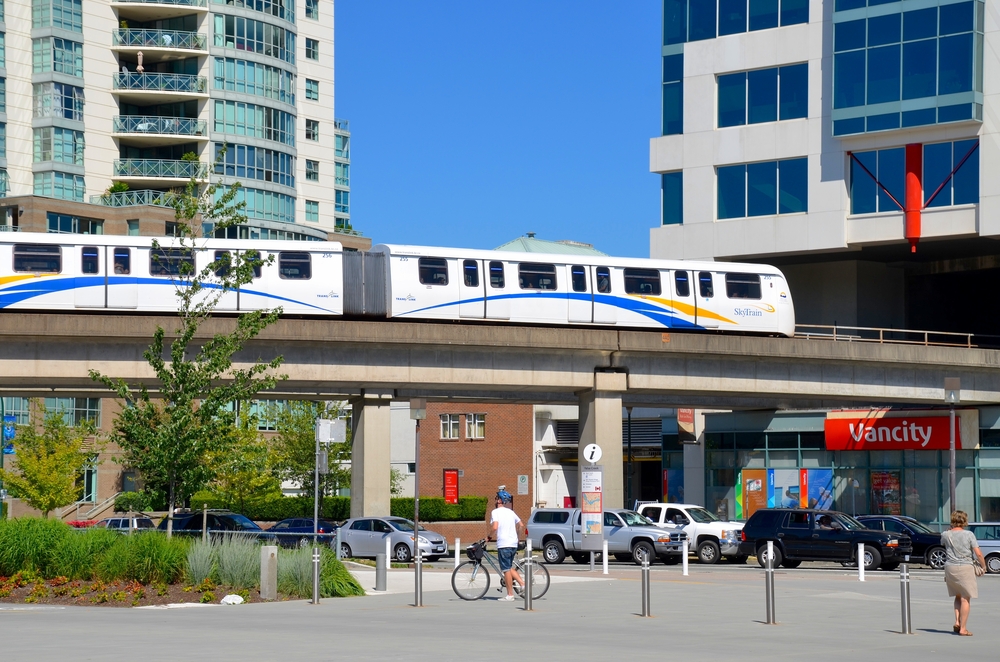
Downtown Vancouver Skytrain Transportation (Lissandra Melo / Shutterstock)
Many people think of Canada as a landscape of forests, mountains, water and ice, but the Canadian experience is fast becoming focused on glass and concrete. Our 2011 census revealed that 81 per cent of us now live in cities. And despite taking up less land space, our environmental impact continues to grow. As the UN notes, cities cover only two per cent of the world’s land area but produce 60 per cent of CO2 emissions — including a significant proportion from urban transportation, as people commute to school and work on increasingly crowded roads and transit networks.
Changing the way we move through cities is a critical step in reducing carbon emissions. The most direct way to accomplish this is to provide urbanites with reliable alternatives to automobile travel. By investing in walkways, cycling networks and efficient public transportation – including rapid rail and bus systems – cities can promote healthy lifestyles while protecting the environment. A two-car household that replaces one vehicle with alternative transportation can cut its annual emissions by 10 per cent.
Building balanced transportation systems and improving transit reduces reliance on private vehicles, cuts traffic congestion and leads to better public health by keeping pollutants linked to asthma and cardiovascular disease out of the air. It can also help curb North America’s obesity epidemic, which is leading to diseases like diabetes and sending health care costs skyrocketing.
Recent research on the relationship between health and transit use in Metro Vancouver by University of British Columbia urban planning and public health professor Lawrence Frank and two health authorities reveals that residents of areas with above average public transportation use are 26 per cent less likely to be obese and 49 per cent more likely to walk for at least 30 minutes a day than people living in low transit use areas.
Vancouver is a good case study for the future of Canadian urban public transit. Metro residents are voting on a plebiscite to fund regional transit and transportation expansion with a 0.5 per cent provincial sales tax increase. Many groups in the region – including business, labour, environmental, health and student – are setting aside political differences and joining the Better Transit and Transportation Coalition to support it.
With only eight cents of every tax dollar going to Canadian municipalities, cities across the country are looking for ways to fund infrastructure maintenance and improvements.
Canada is also the only major industrialized country without a national transit funding strategy. Provincial governments, such as Ontario’s, have had some success in securing funding for transit improvements, but across the country the issue is largely in the hands of local leaders.
Although Metro Vancouver’s transit ridership has increased dramatically in recent years, road congestion is still a problem, costing the regional economy up to $1.2 billion per year. To combat similar issues, cities around the world, including London, Milan and Stockholm, have introduced congestion charges for drivers who use city streets during peak hours, funnelling monies raised to into transit improvements. By comparison, a Vancouver sales tax increase would spread the cost out to include transit users, cyclists, walkers and visitors.
North American cities often have a more difficult time than European municipalities convincing residents to support transit funding.
Denver, Colorado, has had two transit funding referendums, one that failed and a more recent one that passed. In 2014, Seattle residents took part in two votes, agreeing to a 0.1 per cent sales tax increase and a $60 vehicle levy to improve transit only after bus service faced severe cuts following a “No” vote on transit funding earlier in the year.
Canadians aren’t often invited to directly participate in policy-making. The vote in Metro Vancouver is the first of its kind nationally and will likely set off a heated debate about how transportation funding is discussed in this country. While the outcome remains uncertain, one thing is clear: People with realistic transit options have a daily choice to support or degrade the environment. When faced with that choice, history has shown more people opt to leave their cars in the garage. We need to think seriously about how we keep our cities moving into the future.
Dr. David Suzuki is a scientist, broadcaster, author and co-founder of the David Suzuki Foundation. Written with contributions from David Suzuki Foundation Climate and Clean Energy Communications and Research Specialist Steve Kux. Learn more at www.davidsuzuki.org.




















