
Canada News
401 black bears have been killed by wildlife officers in N.W.T. since 2021

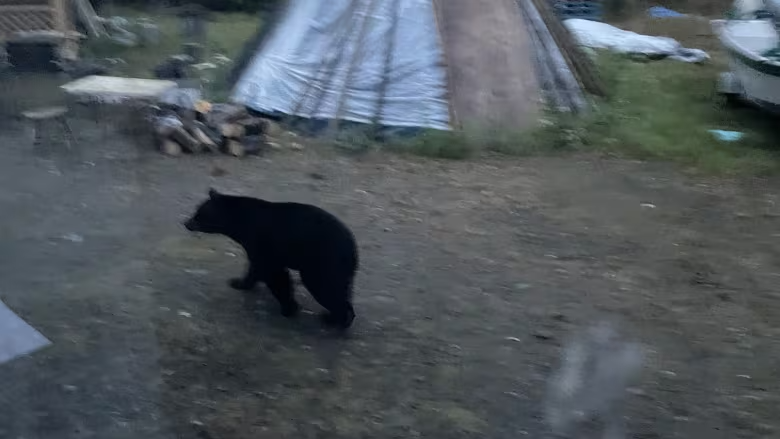
A black bear on Mary Adele Chocolate’s property in Gamèti, N.W.T., earlier this month. (Mary Adele Chocolate)
By RCI, CBC News
Fraction of that number of bears have been relocated instead of dispatched
Mary Adele Chocolate is still a bit rattled after seeing a family of bears getting into the garbage outside her home in Gamèti, N.W.T., a little over a week ago.
“I know bears can do anything, you know, they can break the window, they can break the door, or they can do anything, if they’re hungry,” she said.
“And I’m scared of that. I have children and our grandchildren here all the time.
”
Chocolate said there were three bears seen around Gamèti that day, and she says that wildlife officers ended up shooting one of them — adding to a grim tally of dispatched bears in the territory.
Since 2021, hundreds of black bears have been killed by N.W.T. wildlife officials. The number dwarfs the number of bears that have instead been captured and relocated, away from a community.
According to statistics from the territory’s Department of Environment and Climate Change first reported by Cabin Radio, 401 black bears were killed by wildlife officers between 2021 and last month.
Bear relocation considerations
The Sahtu region had the highest number of bears killed since 2021 at 132, followed by the South Slave where 116 have been killed. In the Dehcho and North Slave, the number of black bear deaths were 101 and 50 respectively, while in the same time period the Beaufort Delta recorded two black bear deaths.
The only regions where black bears were relocated over that period were in the North Slave and South Slave.
Since 2021, 39 bears have been relocated according to the government statistics.
Julian Sabourin, who works for the environment department as a renewable resource officer in Yellowknife, says only some bears are suitable “candidates for relocation.”
“It can’t be habituated to garbage. They can’t have done anything maybe aggressive towards human beings,” he said.
“But if they’re getting into garbage, they’re still scared of people, vehicles, and then they do go into the trap, then that’s usually a more suitable candidate to be relocated.”
An example, he says, might be a bear seen “just hanging out on the outskirts” of Yellowknife but not posing an apparent threat to people. That animal would likely be captured and relocated, not dispatched, Sabourin says.
“That’s a situation where we would most likely set up the trap in hopes to catch the bear, and then just take it further away from Yellowknife or any other communities,” Sabourin said.
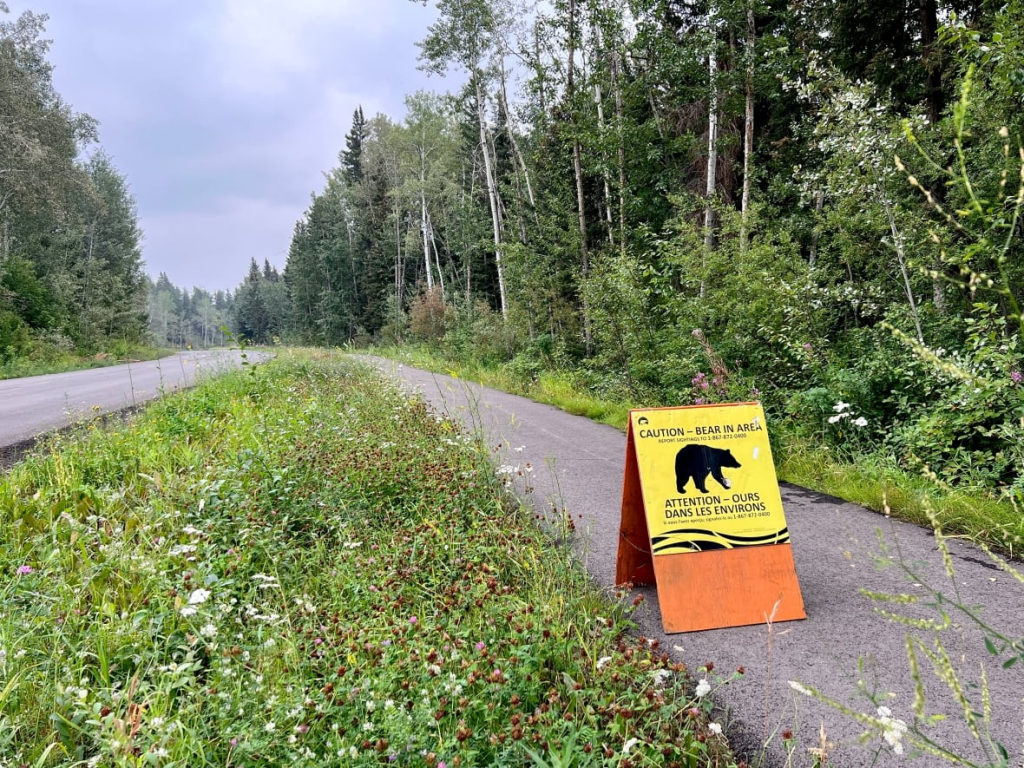
Sabourin says there’s still a lot to learn about what happens after a bear has been relocated. He says conservation officers want to start putting ear tags or collars on captured bears to track their movements after they’re released.
“I think being able to do work with our biologists to be able to collar them will be able to give us a way better answer to understand how they do after relocation,” he said.
Sabourin said the best way for people to avoid problematic bear encounters is to always be careful about anything on their property or camp site that might attract a bear, such as food, garbage and recycleables.
“We obviously are still part of the boreal forest. So there’s always going to be bears in and around the community,” Sabourin said.
“For the most part, people are doing a good job when they’re on the land managing their attractants. However, there’s always room for improvement. So I just cannot stress that enough, that people are always being mindful of managing their attractants, even if they are living in residential areas.”
According to the environment department there have been seven serious bear-human interactions in the N.W.T. since 2010. Two of those interactions resulted in human fatalities — in the Mackenzie Mountains near Norman Wells in 2014 and in Tulita in 2019 — four in injuries, and one with no injuries.
Black bears were also responsible for two other deaths in the N.W.T. in the decade before that — at Prosperous Lake in 2001 and at Nonacho Lake in June 2005.
-With files from Jenna Dulewich and Joanne Stassen




















