

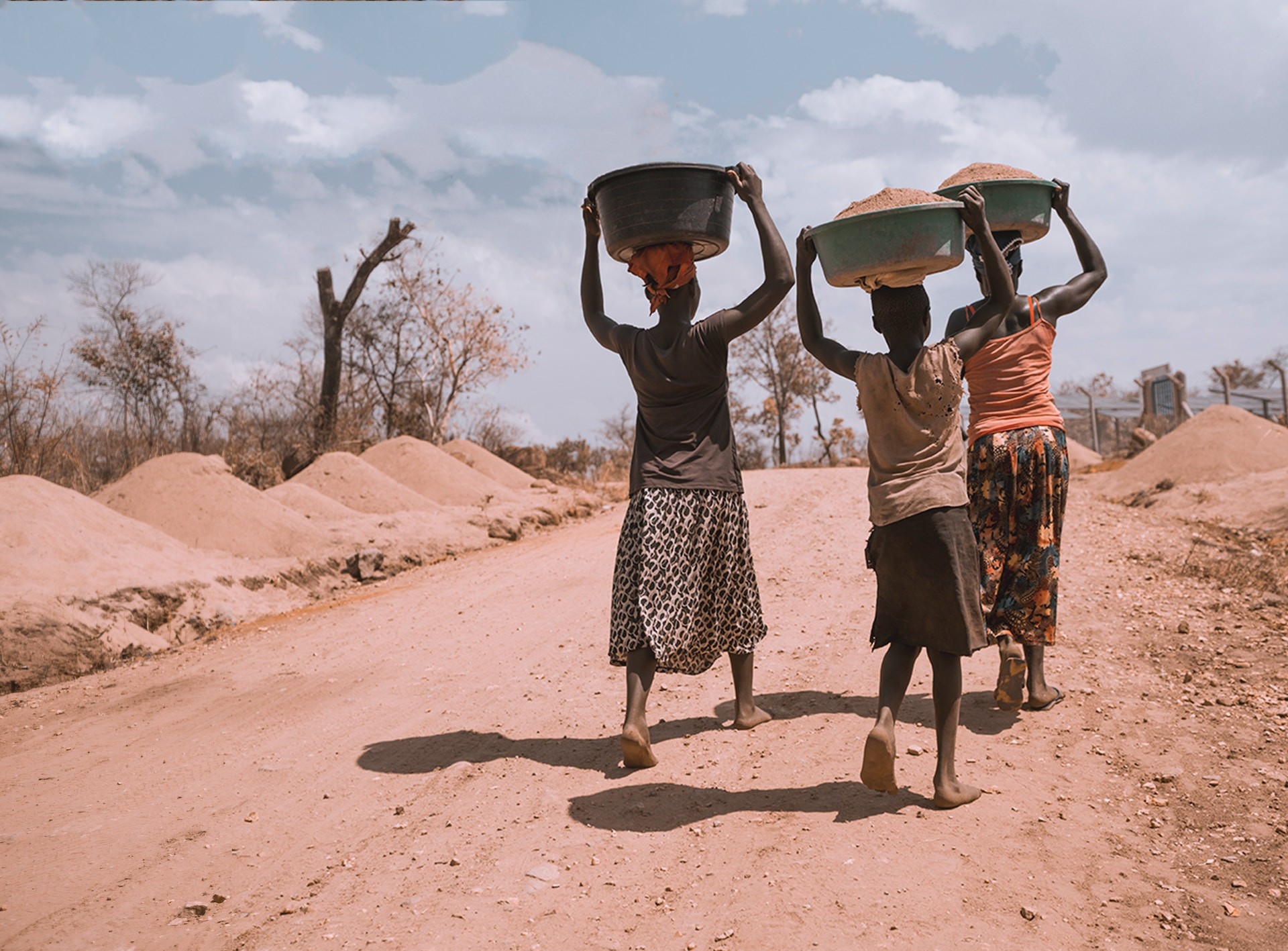
Canada’s immigration policy for Sudanese people is an insufficient response to the scale and gravity of displacement in and from Sudan. (File photo: Ninno JackJr/Unsplash)
Sudan’s civil war has forcibly displaced more than 9.2 million people since it began in April 2023. This represents not only the largest internal displacement situation globally, it’s also a growing humanitarian emergency affecting 25 million people.
In February 2024, the Canadian government launched a humanitarian immigration program for Sudanese with a family “anchor” in Canada. Capped at 3,250 applications, the program was no longer accepting submissions as of May 6, 2024, despite stringent requirements.
Canada’s immigration policy for Sudanese people is an insufficient response to the scale and gravity of displacement in and from Sudan.
Deep-rooted conflict
Sudan became embroiled in civil war due to a derailed political transition and failed state formation. The conflict is fuelled by power struggles between two military leaders, Abdel Fattah al-Burhan, chief of the Sudanese Armed Forces (SAF), and Mohammed Hamdan Dagalo (known as Hemedti), leader of the paramilitary Rapid Support Forces (RSF).
Fourteen months after the conflict erupted, neither of the conflicting parties have declared victory. The recent SRF attack in Wad Al-Noura, Gezira State, killed 200 people, including 35 children.
The conflict is likely to persist, and has the potential to expand since each party has invited governments of neighbouring countries to participate in the conflict on their respective sides.
The Jeddah Talks and commitments made in November 2023 between the warring parties have not borne fruit. If the war continues unabated, it will further militarize Sudanese society, reduce the state to a battleground for various warlords and potentially cause one of the largest refugee situations in Africa.
Canada’s insufficient response
The federal government waited 10 months after civil war broke out before announcing the limited family reunification program disguised as a humanitarian refugee pathway. The permanent residence program is restricted to people who “resided in Sudan when the conflict began on April 15, 2023” and who “are the child, grandchild, parent or sibling” of a Canadian citizen or permanent resident residing in Canada outside the province of Québec.
The family “anchor” in Canada must sign an agreement to support their family members from Sudan. They must also provide proof of minimum income to demonstrate they have the financial capacity to provide “basic needs, including housing, food, clothing and other basic necessities of life.”
This downloads integration and settlement responsibilities onto Canada-based family members. And by capping applications at 3,250 and limiting eligibility to Sudanese with family in Canada, the Canadian government is leaving millions behind.
Three recommendations
In the face of the largest displacement situation in the world, we urge the Canadian government to take leadership in three key areas:
- It must offer other refugee resettlement pathways, including through established private sponsorship and government assistance routes. Recently, Canada has led global efforts to resettle Syrians and Afghans. Now is the time to act for displaced Sudanese people facing an escalating humanitarian emergency.
- It must scale up humanitarian assistance to displaced and war-affected populations in Sudan and neighbouring countries. While the UN has appealed for US$4.1 billion from the international community, Canada has only announced CA$132.2 million. Relief agencies have repeatedly raised the alarm about the dire consequences of chronically underfunding humanitarian assistance to Sudan. The UN emergency relief chief recently called on G7 countries, including Canada, to act immediately to prevent starvation of five million people in Sudan.
- It must pursue all diplomatic efforts to find a peaceful resolution to the conflict, including through the Intergovernmental Authority on Development in Eastern Africa and the African Union. The Canadian government must also work with its powerful western allies at the G7 to put maximum pressure on the parties to agree to an immediate ceasefire and work towards a negotiated peaceful settlement.

Christina Clark-Kazak, Professor, Public and International Affairs, L’Université d’Ottawa/University of Ottawa and Bantayehu Shiferaw Chanie, Visiting Researcher, Public and International Affairs, L’Université d’Ottawa/University of Ottawa
This article is republished from The Conversation under a Creative Commons license. Read the original article.




















