

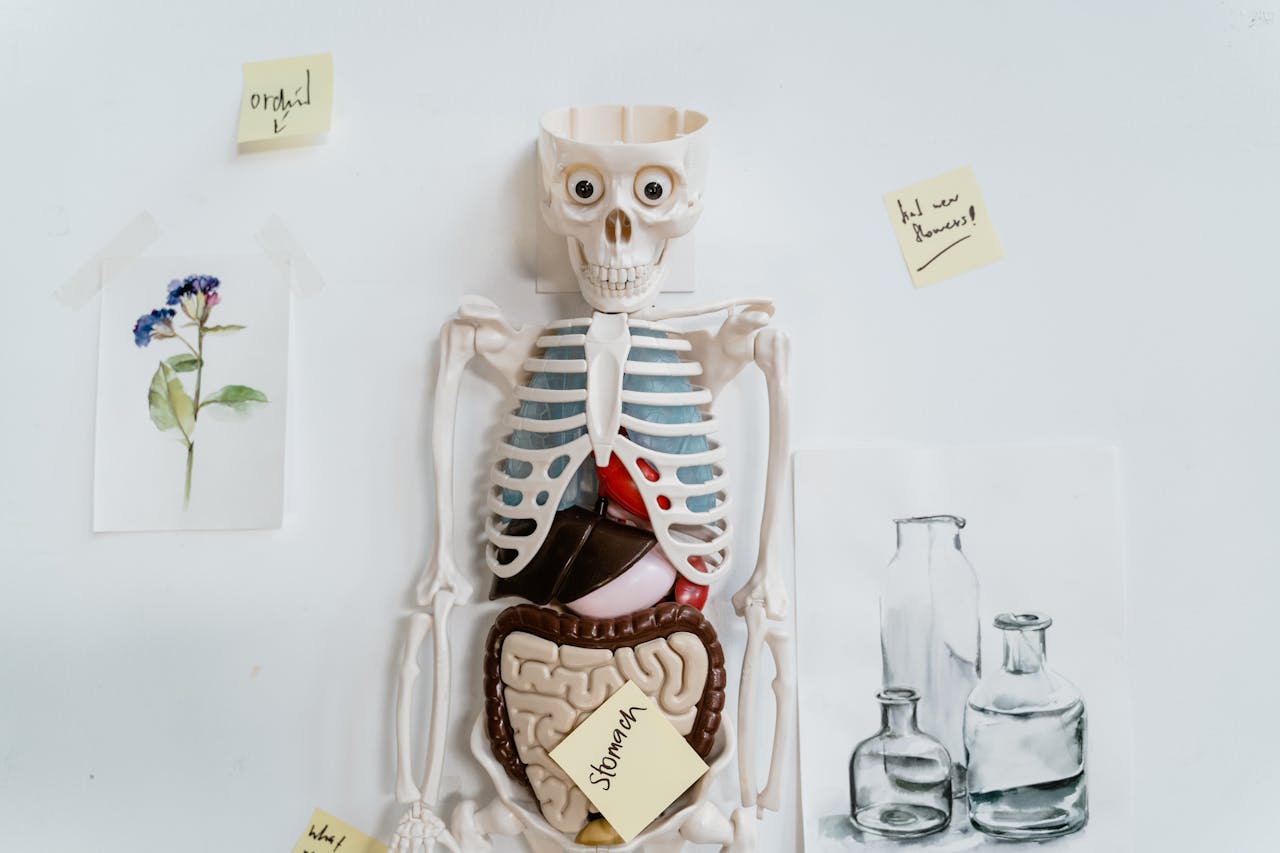
Over 100 genes have been identified as playing a role in ensuring our organs develop on their normal side. (Pexels Photo)
Organs in the body tend to be in a set order and position. This is useful when it comes to diagnosing certain conditions. Anyone with appendicitis or gallstones, for example, will tell you exactly where the agonising pain is. Sometimes, though, organs end up in the “wrong” place.
Developmentally, one of the largest single organ abnormalities is dextrocardia where the heart, instead of being slightly over to the left (known as levocardia), is flipped to the right. This is a fairly rare occurrence, about one in 12,000 people are born this way.
Where this happens in the absence of any other abnormalities, people will live a normal life, with the only “symptoms” being a different readout on an ECG.
In some people, all the abdominal and thorax contents can be flipped to the opposite side, this is known as situs inversus totalis. The singers Donny Osmond and Enrique Iglesias have this condition, as does actress Catherine O’Hara. Osmond’s condition was diagnosed when his appendicitis was overlooked because he experienced pain on the left, rather than the normal location, on the right.
Situs inversus totalis is relatively rare, affecting one in 10,000 people – typically more males. In some people, they can have only the heart and lungs mirrored. This is called situs inversus.
Over 100 genes have been identified as playing a role in ensuring our organs develop on their normal side. Situs inversus is inherited when both parents pass on a defective copy of the same gene.
People with this condition may never notice any symptoms if they are healthy. Indeed, there are reports of people living well beyond the average life expectancy and only being diagnosed after death.
In very rare circumstances people with situs inversus totalis can have levocardia, flipping their heart and lungs back to the “normal” left-sided arrangement.
The only circumstances where life expectancy is affected in dextrocardia and situs inversus totalis is if there are other heart defects.
One structure that has a habit of appearing away from where it should be is teeth. Several people have had teeth grow in their nose, causing a variety of symptoms such as nosebleeds and infection. There have also been cases of teeth found in the eye socket, which can be difficult to remove if they are anchored firmly in the bone.
Hernias and prolapse
Sometimes parts of the body are in the wrong place because of a structural – rather than developmental – problem.
Hernias can see abdominal organs end up in the chest or outside the cavity they are supposed to be located in.
We have normal openings in the diaphragm, a sheet of muscle that helps us breathe, to let blood vessels and our oesophagus through. The diaphragm also keeps the thoracic organs in the chest and the abdominal organs in the abdomen. In some circumstances, though, these openings can become weak, or an increase in pressure (coughing, sneezing or straining) can force things through them.
The liver, parts of the small intestine and colon can end up in the chest.
More commonly, the part of the stomach herniates through the opening of the oesophagus. This “hiatus hernia” is very common, with one in four people possessing one by the age of 40. This rises to 55 to 60% of people over the age of 50, but many don’t have any symptoms.
Hiatus hernias are more common in women and overweight people.
One type of these hiatal hernias can be dangerous: paraoesophageal hernias can strangle the stomach cutting off critical blood supply. They require emergency surgery.
Another class of hernias are inguinal hernias. In this condition, pieces of the bowel can enter into the inguinal canal in the lower abdomen directly through its opening and potentially protrude into the groin. Inguinal hernias are more common in men, with 27% likely to experience one in their lifetime compared with 3% of women.
In some cases, the giant hernia can reach the level of the knees. A different type of inguinal hernia can protrude through the wall of the canal, rather than the natural opening. This is rarer and is more common in older male patients.
Other organs can end up in the wrong place through prolapse, especially in women where the womb can prolapse into the vagina. In the most severe case, it can protrude out of the vagina externally. This can happen during pregnancy and labour and poses a significant risk.
Risk factors for womb prolapse include multiple vaginal childbirths, being overweight, chronic constipation and older age.
Although having organs and structures in the wrong place may sound unpleasant, our ability to diagnose and treat many of these conditions has improved the quality of life for many who suffer from them.
Adam Taylor, Professor and Director of the Clinical Anatomy Learning Centre, Lancaster University
This article is republished from The Conversation under a Creative Commons license. Read the original article.




















