
Canada News
Why Ontario school boards are suing social media platforms for causing an attention crisis

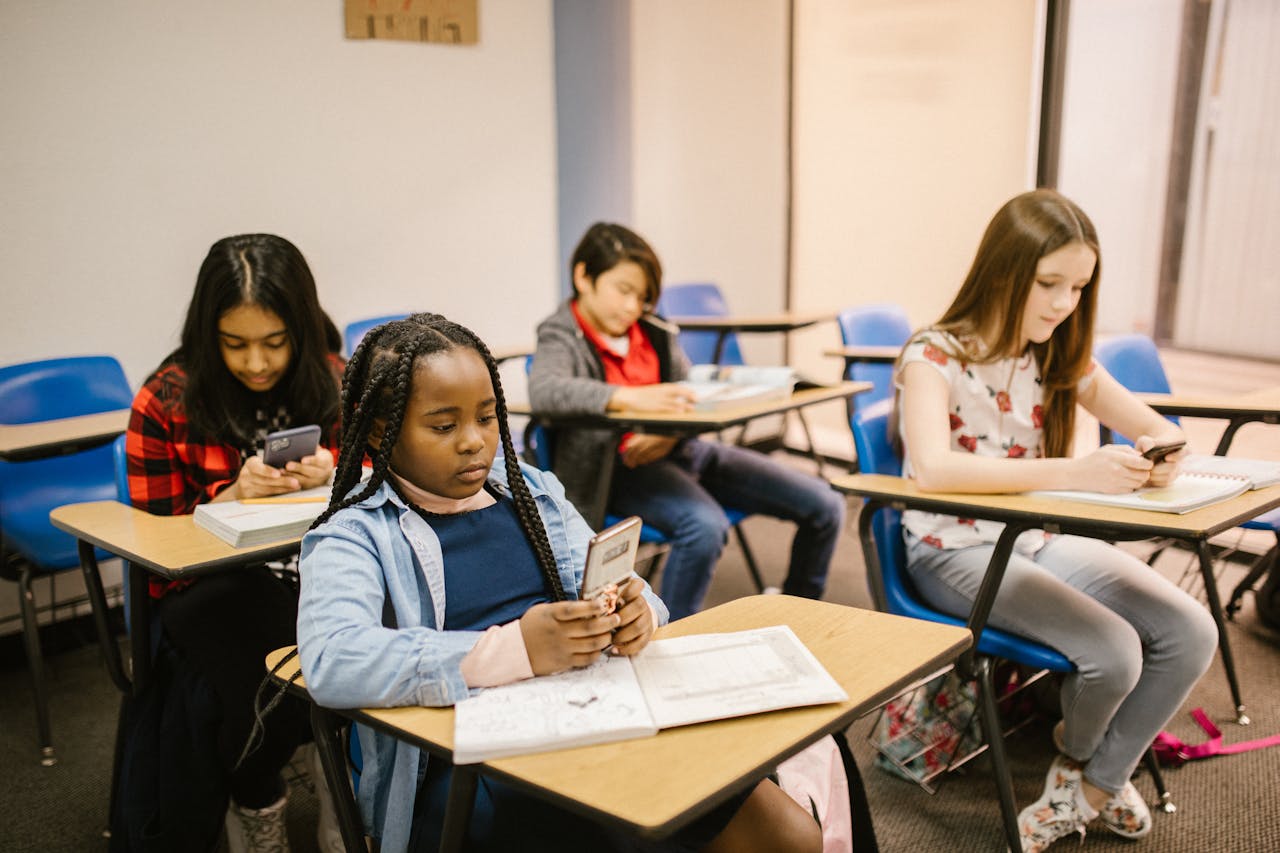
Schools could force a settlement with social media companies to bring about changes in the way their apps work. (Pexels Photo)
Four of Ontario’s largest school boards have brought a lawsuit against four of the biggest social media companies for causing an epidemic of addiction among teens. The boards are seeking over $4 billion in damages.
Time spent on Snapchat, TikTok, Instagram and Youtube, the suit claims, has led to “an attention, learning, and mental health crisis.” The apps cause “distraction, social withdrawal, cyberbullying” and “a rapid escalation of aggression.”
The core claim in the lawsuit is that social media apps cause a public nuisance. A business does this when it pollutes a river. Protesters do it when they block a public road. The school boards allege that TikTok, Snapchat and others have interfered with a public right to education and impaired young people’s mental health.
Just as a business can be forced to stop polluting, the school boards want Google, Meta, ByteDance and Snapchat to be forced to change their algorithms to make them less addictive and harmful. They should also pay the costs that boards have incurred to address mental health and attention issues.
Following a larger trend
The suit by Ontario school boards is a creative use of the law, but not new. It follows over 200 lawsuits by school boards in the United States in the past year against the same four companies, making a similar claim.
The idea for these lawsuits draws, in turn, on an earlier wave of suits by school boards against creators of e-cigarettes. Those suits claimed that vaping amounted to a public nuisance by causing addiction among teens and other health issues.
A class action in that case resulted in a billion-dollar settlement, offering a blueprint of what might happen in Ontario.
Schools could force a settlement with social media companies to bring about changes in the way their apps work. For example, content on a platform might be served up chronologically rather than be chosen by an algorithm. TikTok and Youtube wouldn’t show us the most addictive content, but only the content we’ve chosen to see.
California recently tabled a bill that would force social media companies to do just this, and also require apps to default to a one-hour daily time limit for children. A handful of other states have tabled similar bills.
Should social media be held liable?
Debates about the harm that social media may be causing young, impressionable minds continues to unfold. But the boundaries of legal liability remain largely unknown.
Part of the problem is an American law passed at the time the web was born: section 230 of the Communications Decency Act. This gave any business in the United States that hosts a platform on the internet a shield from liability for anything someone might post on their platform.
Since then, there hasn’t been much law passed in North America dealing with harms caused by the platforms themselves — for their design of algorithms or other features that may lead to harm.
The focus thus far has been on passing law that would make social media companies remove or block harmful content quickly, such as the European Union’s Digital Services Act or the Online Harms Act now before Canada’s Parliament.
A public nuisance?
But courts are mover closer to sorting out the question of liability.
A key case was heard in February in the U.S. Supreme Court. In Gonzalez v Google, the family of a victim of a 2015 terrorist attack in Paris sued Google, the owner of YouTube, on the basis that its algorithms played an important role helping ISIS to recruit people who may have been involved in the attack.
That case has an obvious problem. How do we know whether YouTube’s algorithms played a material role in causing someone to join ISIS, let alone partake in a terrorist attack — and the one in Paris in particular? The damage is too remote.
School boards in Ontario and throughout the U.S. are seeking to get around this problem by relying on a law with far greater scope. Claiming that TikTok or Snap offers teens a defective product, causing harm, is harder to make out. What exactly is the defect? And how many other things are happening in their lives that may affect their attention or mental health?
But public nuisance is an easier claim to make out — if a court agrees that TikTok, Instagram or other platforms have interfered with a public right to education, in a way that could potentially harm any student.
The court would have to agree that a “public right to education” is like a public right to travel a road or fish a stream or breath clean air. It would also have to agree that by exposing teens to Tiktok’s highly addictive algorithm (or that of other platforms) interfered with young people’s right to education and mental health in a similar way that polluting a stream or blocking a road interferes with a public right to clean water or movement on a public road.
The parallel would seem plausible enough to make a settlement a reasonable possibility.
But what may be more important is that these cases have brought to the fore a matter of serious public concern, and forced the companies to do more than make promises about trying to do better in the future.
It may be the first lawsuit of its kind in Canada. But it may not be the last.
Robert Diab, Professor, Faculty of Law, Thompson Rivers University
This article is republished from The Conversation under a Creative Commons license. Read the original article.




















