
Curious Kids: what did people use before toothpaste was invented?

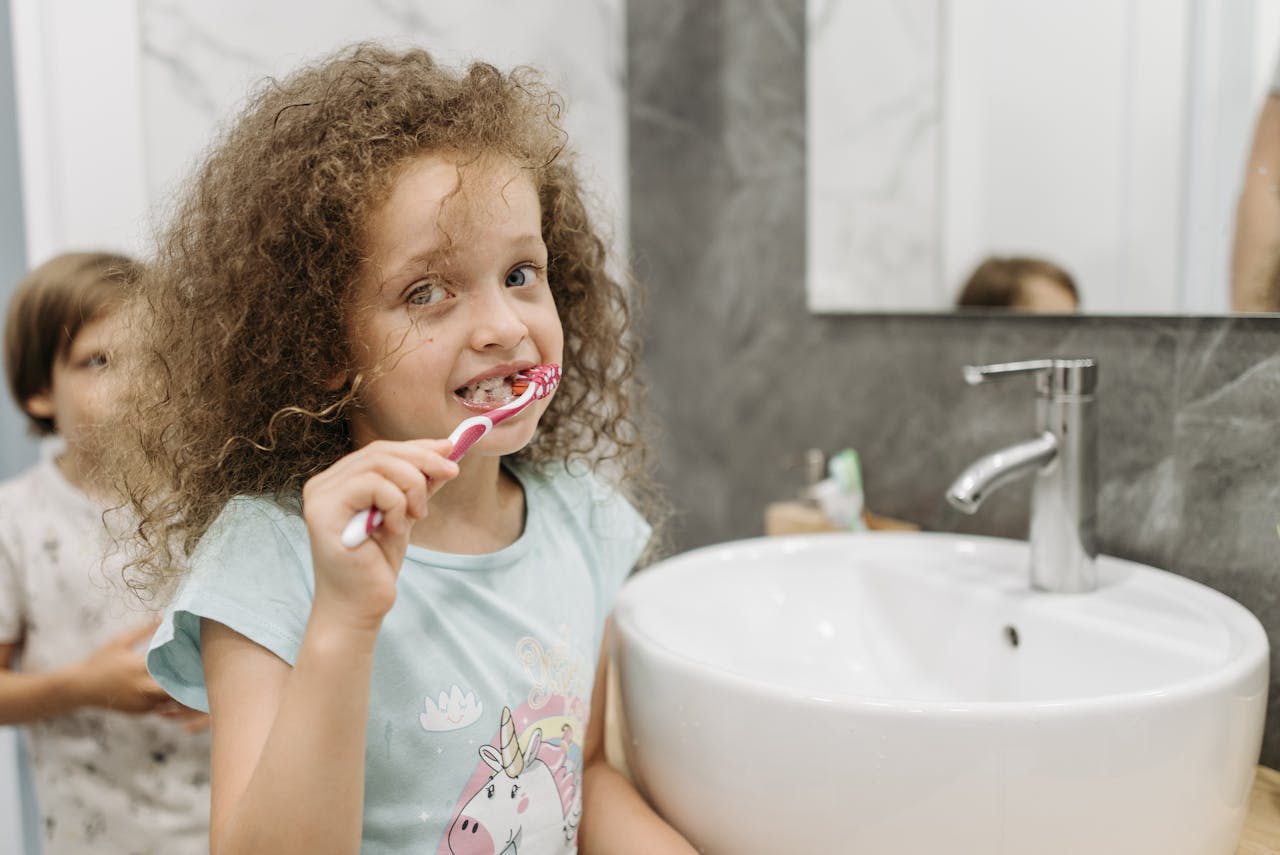
They thought getting holes in teeth was part of growing up. (Pexels Photo)
How does toothpaste work? What did people use before toothpaste was invented? – Amelia, age 7, Meanjin (Brisbane)

Thanks for your great questions, Amelia.
I’m a dentist, so I know a bit about how toothpaste works and what we used before it was invented.
How does toothpaste work?
Toothpaste makes your mouth smell fresh and feel clean. If you brush your teeth two times a day, toothpaste also helps protect your teeth from forming holes or cavities. Let’s look at these benefits one at a time.
That fresh feeling
Some toothpaste ingredients mix with your spit (or saliva) to make a soapy sudsy foam. The sudsy foam turns into slimy slop that you spit out.
Many toothpastes also have a slight sandy feeling to scrub stains off your teeth. This also helps remove the sticky, soft, white globs that grow on your teeth called plaque (pronounced plark).
Plaque is made from sticky bits of food and bacteria (tiny bugs). The bacteria in your plaque live, grow and multiply in your mouth. Some bacteria – such as Streptococcus mutans (pronounced strep-toe-cock-us mew-tans) – love to digest the sugary food you eat. Other bacteria in your plaque burp rotten-egg gases that make your breath smell.
No wonder we want to get rid of plaque with gassy bacteria.
Prevents cavities
Even worse, plaque bacteria poo out diarrhoea (pronounced die-ree-a). That diarrhoea is “acidic”, meaning it can dissolve your teeth to form holes. So we brush our teeth twice a day to get rid of as much bacteria and their diarrhoea as we can.
There are lots of special ingredients in toothpastes to prevent holes from forming that include:
- xylitol (pronounced zy-lee-toll). When bacteria in your plaque eat this, they get constipated and poo less acid
- fluoride (pronounced floor-ride). Your teeth have tiny gaps on the surface that are so small you can only see them with a microscope. Fluoride fills these gaps to make your teeth strong. This is how fluoride protects against nasty bacteria poo from dissolving your teeth.
What did people use in the olden days?
People who lived a long time ago didn’t know much about Streptococcus mutans and bacteria poo. They thought getting holes in teeth was part of growing up. They were wrong. But they tried to make their teeth look whiter by using tooth powders.
People in ancient Egypt, China and India used their fingers to rub tooth powders on their teeth.
The first tooth powders were made of crushed animal bones, ox hooves, and egg, snail and oyster shells. Later, people added crushed charcoal (the black stuff you get when you burn bones or wood), powdered tree bark and flavouring herbs.
The ancient Romans cleaned their teeth with toothpaste made with pee.
Thank goodness things have changed.
Thank your lucky stars
The next time you brush your teeth, think of all those people in the olden days. They made tooth powders with bones and shells, and toothpaste with pee.
Luckily, we now have toothpastes that leave a better taste in your mouth and stop holes forming in your teeth.
But when you brush your teeth, remember to spit out the toothpaste. Don’t rinse it away with water. We want to keep a bit in your mouth to protect your teeth from that nasty bacteria poo.
Hello, Curious Kids! Do you have a question you’d like an expert to answer? Ask an adult to send your question to [email protected]
Arosha Weerakoon, Senior Lecturer and General Dentist, School of Dentistry, The University of Queensland
This article is republished from The Conversation under a Creative Commons license. Read the original article.




















