
News
Are American nuclear weapons returning to the United Kingdom?

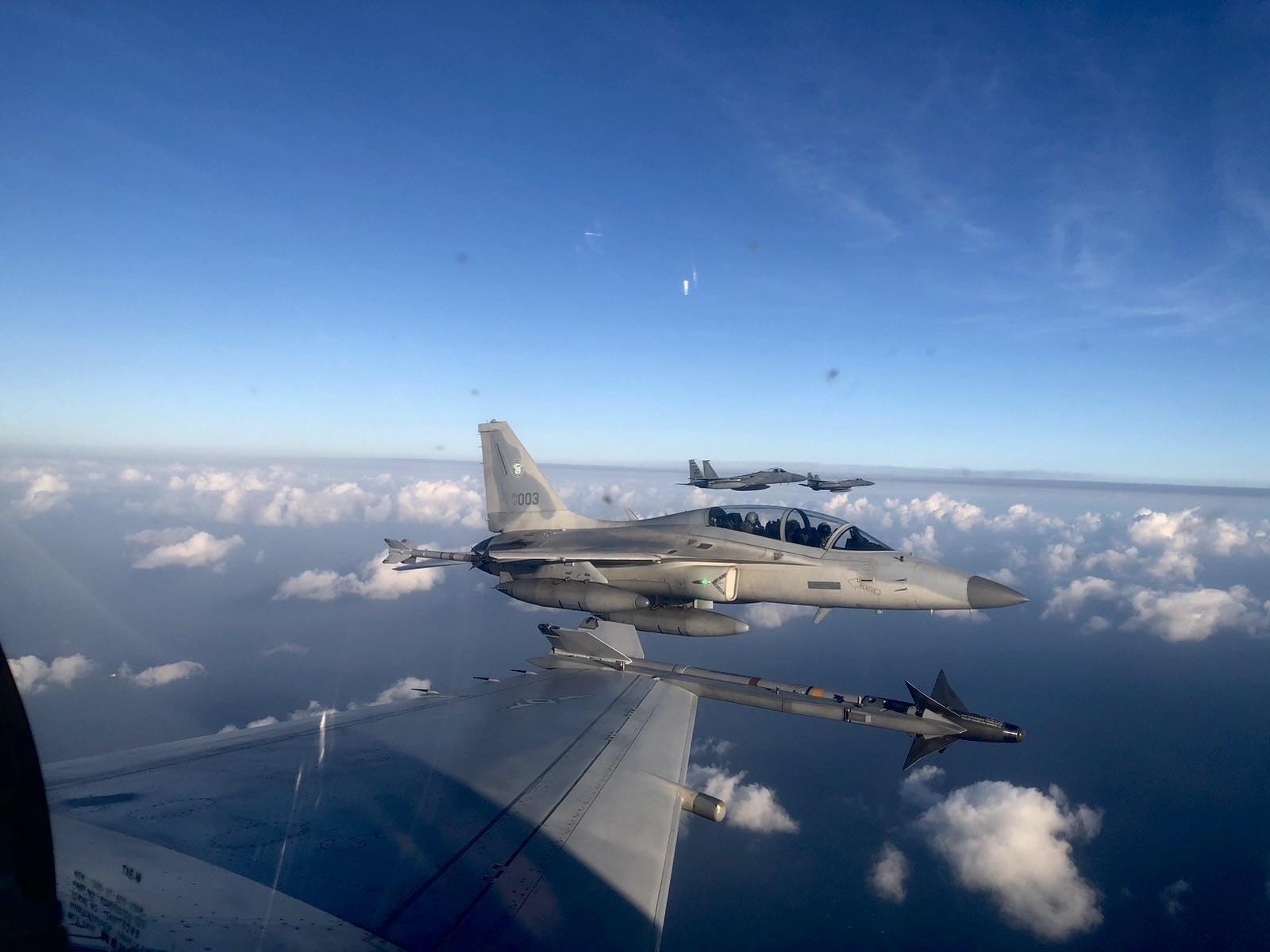
FILE: MARITIME PATROL. A Philippine Air Force FA-50PH jet fighter joins the maritime air patrol of the Philippines and the United States over Batanes and areas in the West Philippine Sea on Tuesday (Nov. 21, 2023). The maritime cooperative activity between the Armed Forces of the Philippines (AFP) and the US Indo-Pacific Command (USINDOPACOM) will run until Nov. 23. (Photo: Philippine Air Force/Facebook)
In August 2023, nuclear weapons researchers Matt Korda and Hans Kristensen of the Federation of American Scientists reported it was increasingly apparent the United States was upgrading its Lakenheath military base in the United Kingdom.
This base hosted American nuclear weapons in the past, which raises questions about whether they’re returning. Citing Pentagon documents it obtained, The Telegraph also reported on the developments, noting it would be the first time in 15 years that U.S. nuclear weapons would be stationed on British soil.
While there is no official confirmation about the move, The Telegraph reports that the U.S. is currently building the specific facilities needed to store nuclear weapons at Lakenheath.
This would also mean that for the first time since 1972, NATO is considering an expansion to its nuclear sharing arrangements. Through these arrangements, the U.S. has stationed some of its nuclear weapons on its allies’ territory since the early days of the Cold War.
Hosting American nukes
At its height in the 1960s, 13 states hosted American nuclear weapons at the same time, including Canada. Yet in the last few decades, this number has gradually dwindled to only five NATO members: Belgium, Germany, Italy, the Netherlands and Turkey. Canada withdrew in 1984, as did Greece in 2001. The United Kingdom was the most recent country to exit the scheme in 2009.
The nuclear weapons hosted by the five participants are B61 gravity bombs and can be delivered by aircraft, such as German and Italian Tornados, F-22s and the newer American F-35s. Under nuclear sharing, they would be flown into combat by the European participants’ own pilots.
Their yield is variable, and can be as high as more than five times that of the “Little Boy” bomb dropped on Hiroshima that killed more than 100,000 people.
While B61 gravity bombs are perceived to have little military utility, this move is important in terms of optics and is clearly connected to Russia’s hostility toward the West, its war in Ukraine and Moscow’s own announcement that it would deploy some of its nuclear weapons in Belarus.
High international threat environment
Russia’s war against Ukraine has fundamentally altered the international security environment. European members of NATO, especially those bordering Russia, are experiencing heightened insecurity.
Whereas the post-Cold War security environment had made NATO members question the relevance of nuclear sharing, recent events have reignited the debate on the alliance’s nuclear capabilities.
In the 2010s, members like Germany were questioning their participation in the scheme. Since Russia’s invasion of Ukraine in February 2022, that is no longer the case: consensus among nuclear sharing participants has been strengthened.
In a forthcoming research article in International Affairs, we surmise this kind of reinforcement or expansion of nuclear sharing could be the result of the Ukraine war and the changing threat perception of NATO members, which has slowed down the political momentum of anti-nuclear voices.
From NATO’s perspective, nuclear sharing serves two important goals. The first is to deter rivals or potential enemies by demonstrating U.S. resolve and strength. The second is to reassure NATO’s own members.
Stationing its bombs in Europe means the United States cannot sit out conflicts in the region. Reassuring NATO nations is the goal that appears most closely connected to this new development, as European members have repeatedly called for a reinforcement of NATO’s stand against Russia.
NATO members, particularly those in eastern Europe, fear a Russian invasion of their territory. By stationing some of its nuclear weapons in the United Kingdom again, the U.S. is matching Russia’s new deployment in Belarus. But more importantly, it makes clear its presence in Europe isn’t fleeting.
Nuclear sharing remains contentious
Ever since the 2000s, there has been considerable pressure coming from citizens in NATO nations to withdraw from nuclear sharing. German, Belgian and Dutch decision-makers publicly considered removing the bombs from their territory.
In the absence of credible and overt threats to their security, and without forceful pressure coming from NATO itself, it had become difficult for these countries’ leaders to uphold the arrangement. After all, it’s hard for a democratic state to pursue certain avenues when it lacks the public support to do so.
The current Russian threat has overtaken these preoccupations.
Much like any other political arrangement, however, NATO’s nuclear sharing arrangement can be contentious and subject to renegotiations, as shown by Poland’s demands to also host American nuclear weapons.
NATO and its member states will no doubt use this opportunity to update its case for nuclear sharing and the existence of the alliance itself as it marks its 75th anniversary in July 2024.
Émile Lambert-Deslandes, PhD student in International Relations, Queen’s University, Ontario and Stéfanie von Hlatky, Associate Professor of Political Studies and Fellow at the Centre for International and Defence Policy, Queen’s University, Ontario
This article is republished from The Conversation under a Creative Commons license. Read the original article.




















