
News
How cars and road infrastructure became part of the UK’s culture wars

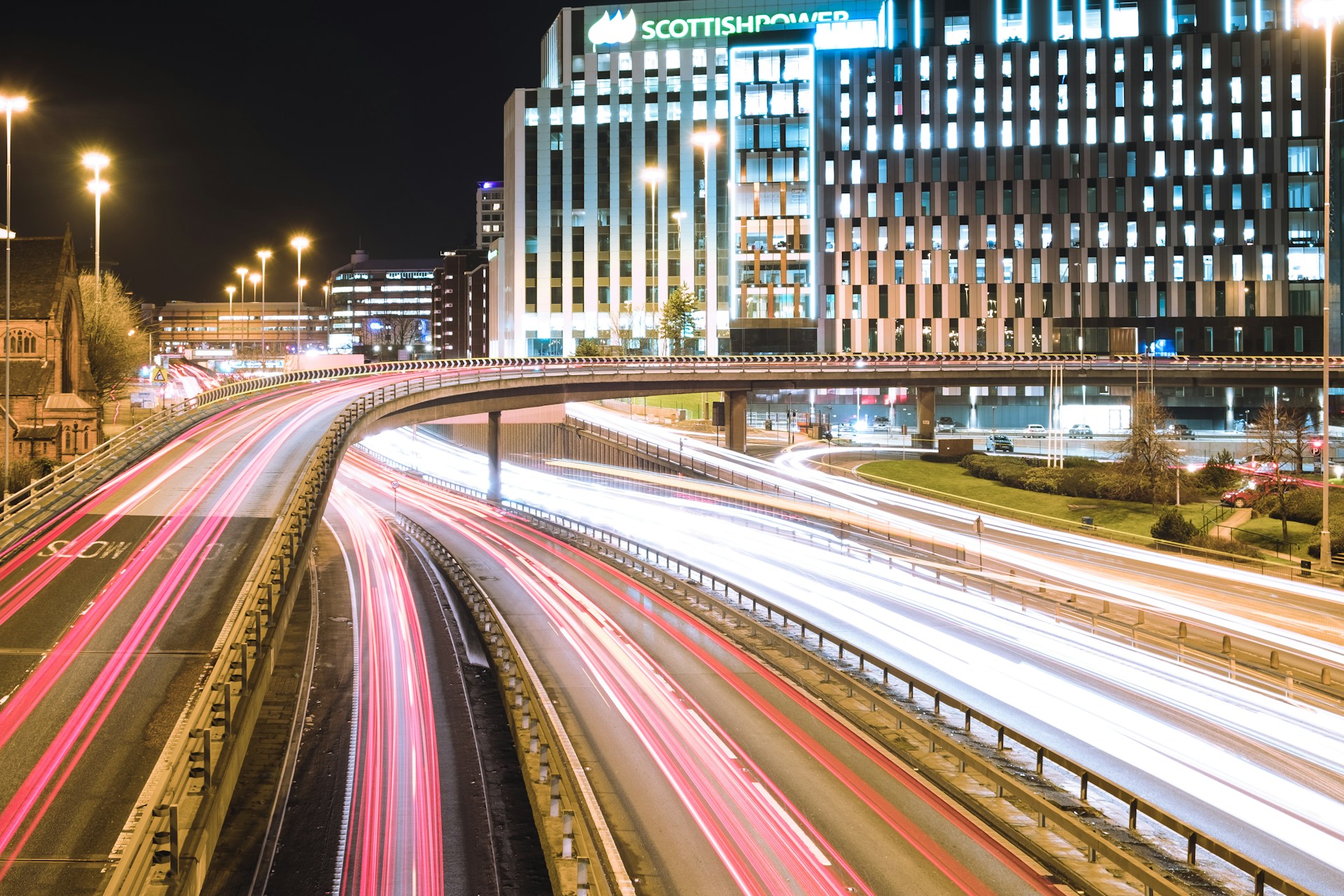
Turning infrastructure into a politically expedient culture war issue only serves to further disempower those most in need of its improvement. (File Photo: Euan Cameron/Unsplash)
When government ministers began to defund cycling and walking infrastructure in England in 2023, climate campaigners were confused. It marked a significant shift in transport policy and seemed at odds with the government’s own targets to reduce carbon emissions from road transport.
But a recent legal challenge led by sustainable transport campaigning group Transport Action Network has shown that this ministerial decision-making was driven, in part, by conspiracy theories.
Urban planners have long devised schemes to discourage people from using their cars for short trips. Initiatives including 15-minute cities, low-traffic neighbourhoods (LTNs) and ultra-low emissions zones (Ulez) are designed to promote more active forms of travel.
The aim is to reduce traffic congestion and toxic pollution and the negative impacts both have on residents’ quality of life and health. Less car use is also widely recognised as one of the most effective ways to combat the climate crisis.
Yet, in the wake of COVID-19, these simple measures have become entangled with anti-lockdown conspiracy theories. They have been misconstrued as restrictions on people’s basic freedoms. According to this misinformation, the measures could lead to outright bans on car driving, residents being imprisoned in small areas and even people being prevented from leaving their homes at certain times of day.
These theories are fiction, not fact. But they are nonetheless born of a national context in which public transport provision is failing. For many people across the UK – particularly outside of London – car travel is not simply the preferred means of mobility: it is their only viable option.
In my recent book, The Broken Promise of Infrastructure, I show that belief in these conspiracy theories is driven, in part, by plummeting public confidence in government. Wasteful spending and unprecedented levels of privatisation have weakened Britain’s basic infrastructure through disrepair and neglect, lack of reinvestment and accountability, and endemic mismanagement. Repeated broken promises – including the failures of “levelling up” – have, in turn, eroded the population’s faith in national government. In 2022, only 35% of people surveyed said they trusted government, well below the average for high-income countries.
Political rhetoric
At the Conservative party conference in September 2023, the secretary of state for transport, Mark Harper, gave credence to the evidently false notion that 15-minute cities meant “local councils can decide how often you go to the shops”.
A few days earlier, Prime Minister Rishi Sunak had claimed in a high-profile interview with the Sun newspaper, that such policies didn’t “reflect the values of Britain”. He promised to “slam the breaks on the war on motorists”.
These strange rhetorical appeals to conspiracy theories are driven, in part, by crude political strategy. Amid a wave of by-election defeats in 2023, the Tories held on to Uxbridge partly because of local opposition to the expansion of London’s Ulez.
In reality, the Uxbridge vote was determined as much by low turnout as it was by Ulez. The electoral potential of this opposition to anti-car policies in a national contest is ambiguous, at best. Sunak has nonetheless sought to capitalise on any vote-winning policy issue he can find, even if it further damages public trust in government.
But there is a bigger story here, alluded to by Sunak when he tweeted, in July 2023, “Talking about freedom, sat in Margaret Thatcher’s old Rover… it’s why I’m reviewing anti-car schemes across the country.”
In the 1980s, Margaret Thatcher advocated an ideological connection between the deregulation of markets and the expansion of car use. She opened the M25 motorway two days after the “big bang”, an agreement between her government and the London Stock Exchange which unleashed unprecedented deregulatory measures on finance capital.
The freeholds on motorway service stations were some of the first publicly owned assets that Thatcher privatised. Meanwhile, her notorious 1989 white paper, titled Roads for Prosperity, committed to “the biggest road-building programme since the Romans”. At a cost of £6 billion, it more than doubled the road budget at the time, not shrinking but expanding state intervention.
Since the 2010s, successive Conservative governments have repeatedly resurrected Thatcher’s ideological obsession with cars. In 2011, the then transport secretary, Philip Hammond, argued that the five minutes gained by travelling at 80mph rather than 70mph along a motorway provide a boost to the economy in the same way as a tax exemption or subsidy.
More recently, during her successful campaign to become prime minister, Liz Truss suggested doing away with the 70mph speed limit on Britain’s motorways. Once she took office, this was followed by her disastrous mini-budget, which, not coincidentally, aimed to deregulate finance and stimulate a second “big bang”.
The road safety experts who took Truss seriously pointed out pressing dangers, from increased fatalities to rising emissions. But this response misses the populist appeal that political advocates of the free market are trying to achieve through pro-car rhetoric.
In connecting the individual autonomy that car travel enables to neoliberal economic policies, these advocates are wielding the feelings of freedom elicted by the “open road”. In this way, they are spreading the idea that government intervention of any kind is an infringement on individual liberty.
This ignores the crucial role that government has always had in building and maintaining the country’s roads. It also deflects attention from Britain’s crumbling transport infrastructure. Instead of demanding the state intervene to fix things, this strategy deliberately casts intervention itself as the problem.
Most dangerously, it makes cynical use of conspiracy theories. These often take root in disempowered communities. Turning infrastructure into a politically expedient culture war issue only serves to further disempower those most in need of its improvement.
The car has turned from a private convenience into a public nuisance. If the government is serious about improving people’s lives, it should increase investment in affordable public transport and accessible walking and cycling infrastructure. This is what will empower communities to take back control of their neighbourhoods.
Dominic Davies, Senior Lecturer in English, City, University of London
This article is republished from The Conversation under a Creative Commons license. Read the original article.




















