
News
Disinformation is often blamed for swaying elections – the research says something else

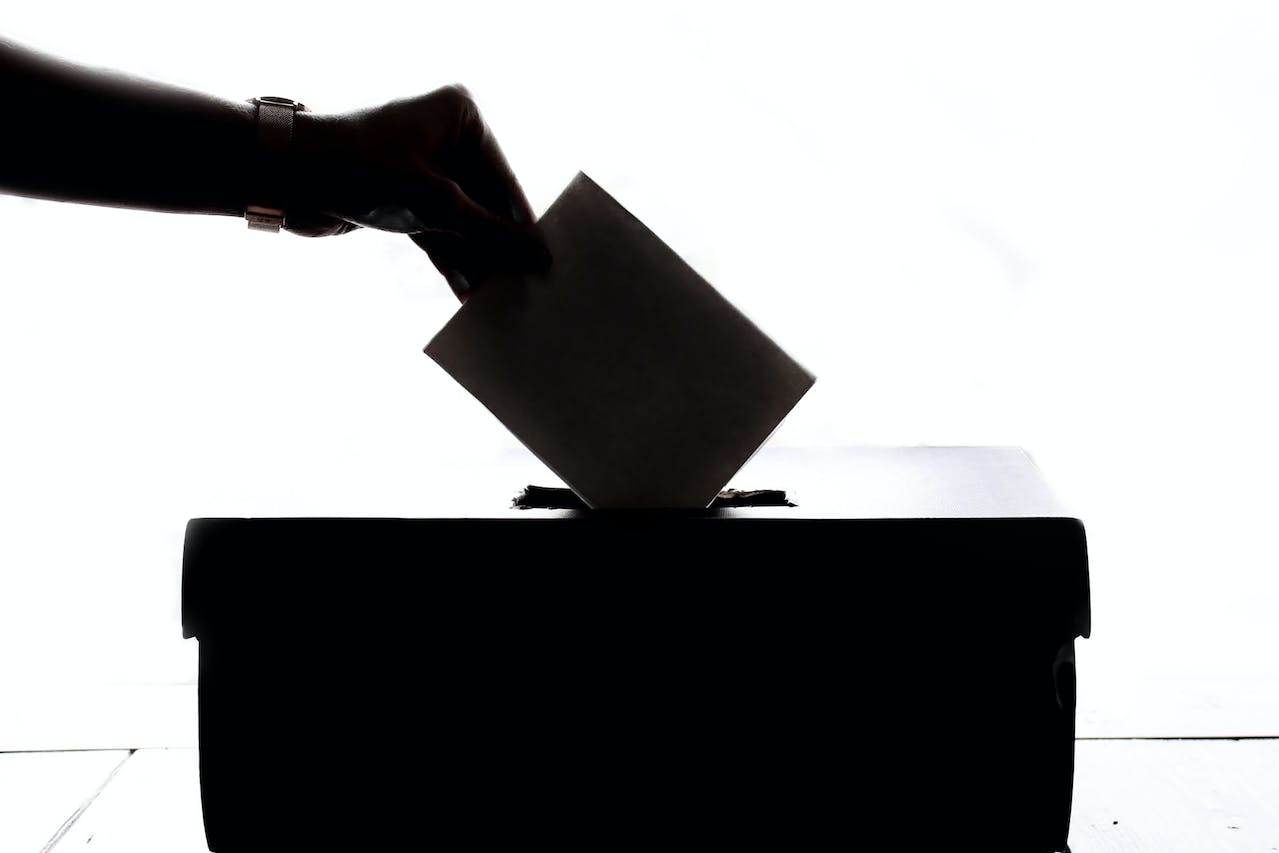
In fact, research has gone into understanding the reasons for dramatic failures of traditional pollsters to predict elections and referendums in Argentina in 2019, Quebec in 2018, UK in 2016 and US in 2016. (Pexels Photo)
Many countries face general elections this year. Political campaigning will include misleading and even false information. Just days ago, it was reported that a robocall impersonating US president Joe Biden had told recipients not to vote in the presidential primary.
But can disinformation significantly influence voting?
There are two typical styles of election campaigning. One is positive, presenting favourable attributes of politicians and their policies, and the other is negative – disparaging the opposition. The latter can backfire, though, or lead to voters disengaging with the entire democratic process.
Voters are already fairly savvy – they know that campaigning tactics often include distortions and untruths. Both types of tactics, positive and negative, can feature misinformation, which loosely refers to inaccurate, false and misleading information. Sometimes this even counts as disinformation, because the details are deliberately designed to be misleading.
Unfortunately, recent research shows that the lack of clarity in defining misinformation and disinformation is a problem. There is no consensus. Scientifically and practically, this is bad. It’s hard to chart the scale of a problem if your starting point includes vague or confused concepts. This is a problem for the general public, too, given it makes it harder to decipher and trust research on the topic.
For example, depending on how inclusive the definition is, propaganda, deep fakes, fake news and conspiracy theories are all examples of disinformation. But news parody or political satire can be too.
Unfortunately, researchers often fail to provide clear definitions, and do not carefully compare different types of disinformation, adding uncertainty to evidence examining its effect on voting behaviour.
Nevertheless, let’s investigate the research on disinformation so far, which is generally viewed as more serious than misinformation, to see how much influence it can really have on the way we vote.
Unconvincing findings
Consider a study published in 2023, investigating the role of fake news in the Italian general elections in 2013 and 2018. It used debunking websites to help create a fake news score for articles published in the run-up to the election.
Then the researchers analysed populist parties’ pre-election Facebook posts containing such news content. This also generated an engagement score based on the number of likes and shares of the posts.
Finally, scores were combined with actual electoral votes for populist parties to gauge the possible influence of fake news on such votes. The researchers estimated that fake news added a small but statistically significant electoral gain for populist parties. But the researchers suggested that fake news could not be the sole cause of the overall increase in vote share for populist parties – it only seemed to add a small amount to the overall increase in vote share.
Similar studies showing low effects of fake news on persuading voters has led some researchers to argue that the panic about fake news is overblown.
Other recent studies have looked at the potential influence of disinformation by asking people how they intended to vote and whether they believed specific pieces of disinformation. This was examined in national or presidential elections in the Czech Republic in 2021, Kenya in 2017, South Korea in 2017, Indonesia in 2019, Malaysia in 2018, Philippines in 2022 and Taiwan in 2018.
The general finding among all these studies was that it is hard to establish a reliable causal influence of fake news on voting. One reason was that who people say they vote for and how they actually vote can be vastly different.
In fact, research has gone into understanding the reasons for dramatic failures of traditional pollsters to predict elections and referendums in Argentina in 2019, Quebec in 2018, UK in 2016 and US in 2016. People didn’t, for many reasons, reveal their actual voting intentions to pollsters and researchers.
Who is susceptible?
What about specific groups of voters, though? Might there be some that are more influenced by disinformation than others? Political affiliation doesn’t seem to matter. People tend to rate fake news as accurate when it’s in line with their own political beliefs. For instance, in the 2016 US presidential elections, both Hillary Clinton and Donald Trump supporters were equally likely to rate fake news about their opposition as accurate.
How about undecided voters? Some studies show that undecided voters are more likely than decided voters to consider fake news headlines as credible. But the opposite has also been shown – that they are less susceptible to political fake news.
Still, to maximise the influence of disinformation in an election, undecided voters would be the obvious target, especially in close-run elections. But accurately profiling undecided voters is difficult – especially since people are cautious in revealing their voting intentions and the reasons behind them.
And if politicians or campaign staff use disinformation in aggressive negative campaigning to sway undecided voters, they can end up increasing disengagement in the election process – making some people even more undecided.
Ultimately, most research suggests that fake news is more likely to enhance existing beliefs and views rather than radically change voting intentions of the undecided.
Another issue that often gets ignored is a phenomenon known in psychology as the third-person effect – that we think that others are more persuadable, and even gullible, than ourselves.
So when it comes to who is susceptible to disinformation, it is likely that those studying it, as well as those participating in the studies, assume they are immune, but that anyone else, such as supporters of the opposing political party, are not – making the evidence harder to interpret.
It would be naive to say that disinformation, such as political propaganda, doesn’t have any influence on voting. But we should be careful not to assign disinformation as the sole explanation for election results that go against predictions.
If we assign disinformation such a high level of influence, we ultimately deny people’s agency in making free voting choices. And studies show that we are aware that manipulative methods are used on us. Still, we all judge that we can maintain an ability to make our own choice when voting.
It’s important to take this seriously. Our belief in free will is ultimately a reason so many of us back democracy in the first place. Denying it can arguably be more damaging than a few fake news posts lurking on social media.
Magda Osman, Principal Research Associate in Basic and Applied Decision Making, Cambridge Judge Business School
This article is republished from The Conversation under a Creative Commons license. Read the original article.




















