
News
An overlooked and undercounted group of Arab American and Muslim voters may have outsized impact on 2024 presidential election

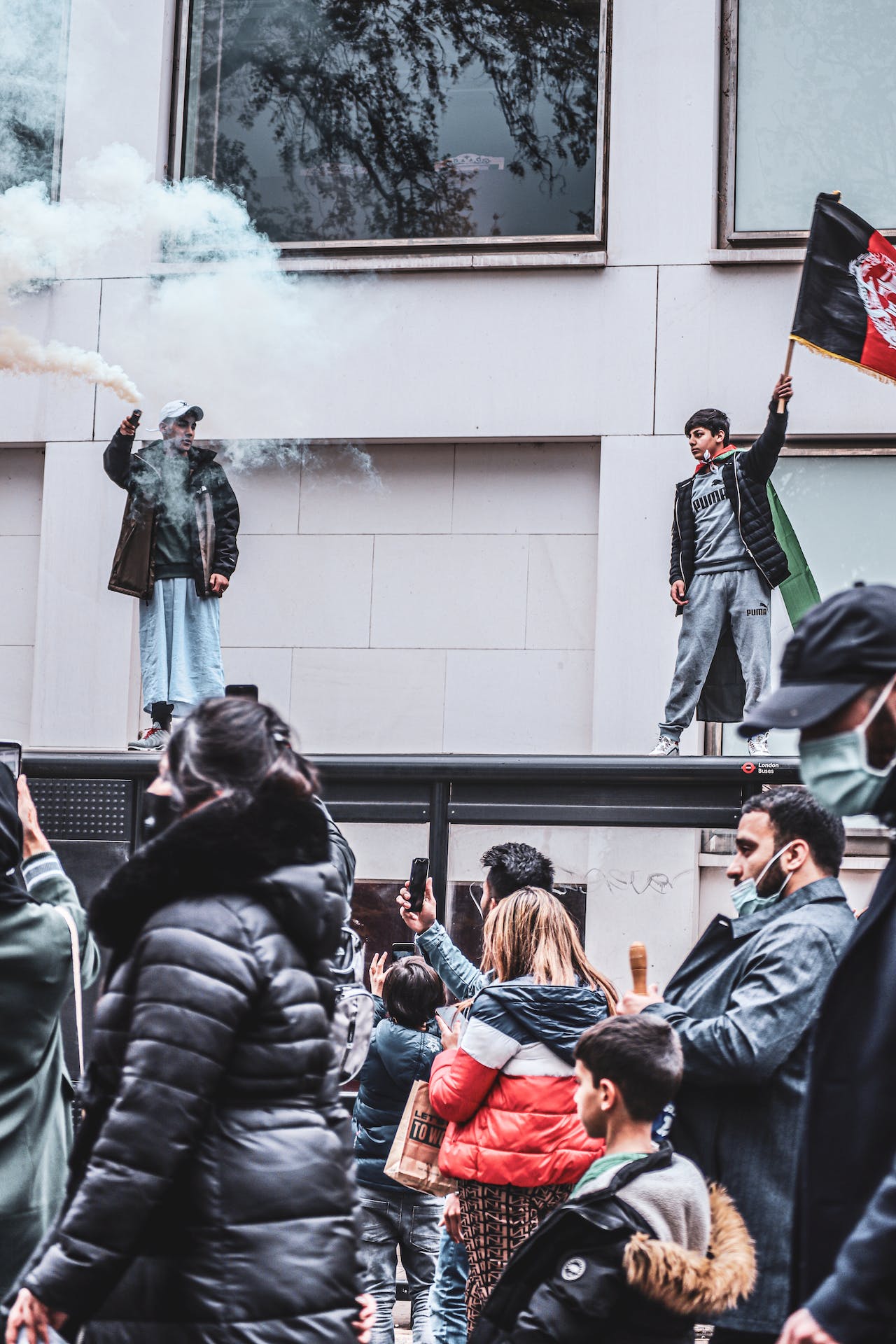
People demonstrate in support of Palestinians. (Pexels Photo)
Though domestic issues tend to motivate most U.S. voters, the war in the Middle East may be the dominant issue in mind for an increasingly important voting block: Middle Eastern and Muslim Americans.
Since the Oct. 7, 2023, Hamas attack on Israel, members of these communities have watched the rising death toll and heard vivid accounts of the horrors befalling Palestinians in Gaza as Israeli Prime Minister Benjamin Netanyahu continues to bombard the enclave with the support of the Biden administration.
For some Arab Americans, a community that overwhelmingly voted Democratic in the 2020 presidential election, that support may have negative consequences on Biden’s attempt to regain the White House in 2024. In fact, numerous Middle Eastern and Muslim American leaders have called for their communities to “abandon Biden” in the upcoming presidential election.
The question, then, is what effect such defections could have on Biden’s chances of winning reelection.
As a whole, the number of Middle Eastern or Muslim Americans is quite small. According to the 2020 census – the first year such data was recorded – 3.5 million Americans reported being of Middle Eastern and North African descent, about 1% of the total U.S. population of nearly 335 million citizens.
But the outcome of the 2024 presidential election may come down to results in a few swing states where Middle Eastern and Muslim Americans are concentrated, such as Michigan, Virginia, Georgia, Pennsylvania and Arizona.
In the 2020 presidential election, for instance, Biden won the state of Michigan by a total of 154,000 votes. The state is home to overlapping groups of more than 200,000 registered voters who are Muslim and 300,000 who claim ancestry from the Middle East and North Africa.
Working around statistical erasure
As a social scientist, I specialize in statistical analysis and research on how race, ethnicity and religion affect political outcomes in the U.S. I know from firsthand experience that any effort to gauge the attitudes and behaviors of Middle Eastern and Muslim Americans requires a bit of analytic gymnastics.
For starters, since 1977, the U.S. government has categorized those with ancestral ties to the “original peoples of Europe, North Africa, or the Middle East” as “white,” according to the U.S. Office of Management and Budget.
That stipulation is found in that agency’s Race and Ethnic Standards for Federal Statistics and Administrative Reporting and is used in U.S. census reports.
As a result, members of this community are subsumed within an expansive grouping of “whites” that effectively renders them invisible in nearly all administrative data and public opinion polls.
Similarly, Muslims are not captured in official data, as the U.S. does not record its citizens’ religious affiliations.
Even public opinion surveys that record religious denomination typically offer little to no insight into this community. When it comes to more prevalent religious groups – Catholics, Protestants, white evangelicals – their opinions are frequently reported and the subject of many polls.
But Muslims are nearly always relegated to the “other non-Christian” religious category, along with similarly small faith communities.
This is not to say that relevant data on Muslims and Middle Easterners in the U.S. is unavailable. For example, Emgage, a nonprofit Muslim advocacy group, collected such data on eligible voters and turnout in a dozen states during the 2020 presidential election.
By combining the data from Emgage with data collected by AP VoteCast, the Cooperative Election Survey and the Council on American-Islamic Relations, one can reach a few general conclusions about these communities.
Impact of defections on 2024 presidential campaign
The Arab American Institute, an advocacy group, says that since the start of the Israel-Hamas conflict, Arab American support for the Democratic Party has plummeted from 59% in 2020 to just 17%.
Among Muslim Americans the drop is worse, from 70% in 2020 to about 10% at the end of 2023.
If these poll numbers hold true until Nov. 7, the 2024 presidential election would be the first time in nearly 30 years that the Democrats were not the party of choice for Arab American voters.
That doesn’t necessarily mean that these voters would go to the GOP. In 2020, then-President Donald Trump proved to be an unpopular choice among Arab and Muslim American voters, in large part due to his executive order 13769.
Signed on Jan. 27, 2017, the order immediately prohibited the entry of immigrants from Iran, Iraq, Libya, Somalia, Sudan, Syria and Yemen and came to be known by critics as the Muslim ban. Though the order survived numerous legal challenges, it was eventually overturned by Biden shortly after he took office in January 2021.
Trump has already promised during campaign stops to reinstate his policy.
Not surprisingly, Biden won overwhelming majorities in these communities in 2020.
But it is not out of the realm of possibility that the votes cast by Middle Easterners and Muslims for the Republican and Democratic candidates for president in 2024 drop by 50% from 2020, as those voters decide to stay home or vote for a third-party candidate.
In Michigan, for example, that could mean Biden would lose about 55,000 votes, or about a third of the 154,000-vote margin of victory he earned over Trump in 2020.
Michigan is not the only state where no-shows in these communities could jeopardize Biden’s prospects for victory.
Decreased turnout among Middle Eastern, North African and Muslim Americans alone would be enough to erase Biden’s 2020 margins of victory in Arizona – 10,457 votes – and nearly do the same in Georgia, where Biden won by 12,670 votes.
Of course, Arab Americans are not the only ones likely to penalize Biden at the ballot box next November over his foreign policy. But even if they were, the numbers show that a presidential election may swing on a lesser-known but potentially crucial voting bloc.
Youssef Chouhoud, Assistant Professor, Christopher Newport University
This article is republished from The Conversation under a Creative Commons license. Read the original article.




















