
News
Israel’s highest court protects its power to curb government extremism − 3 essential reads

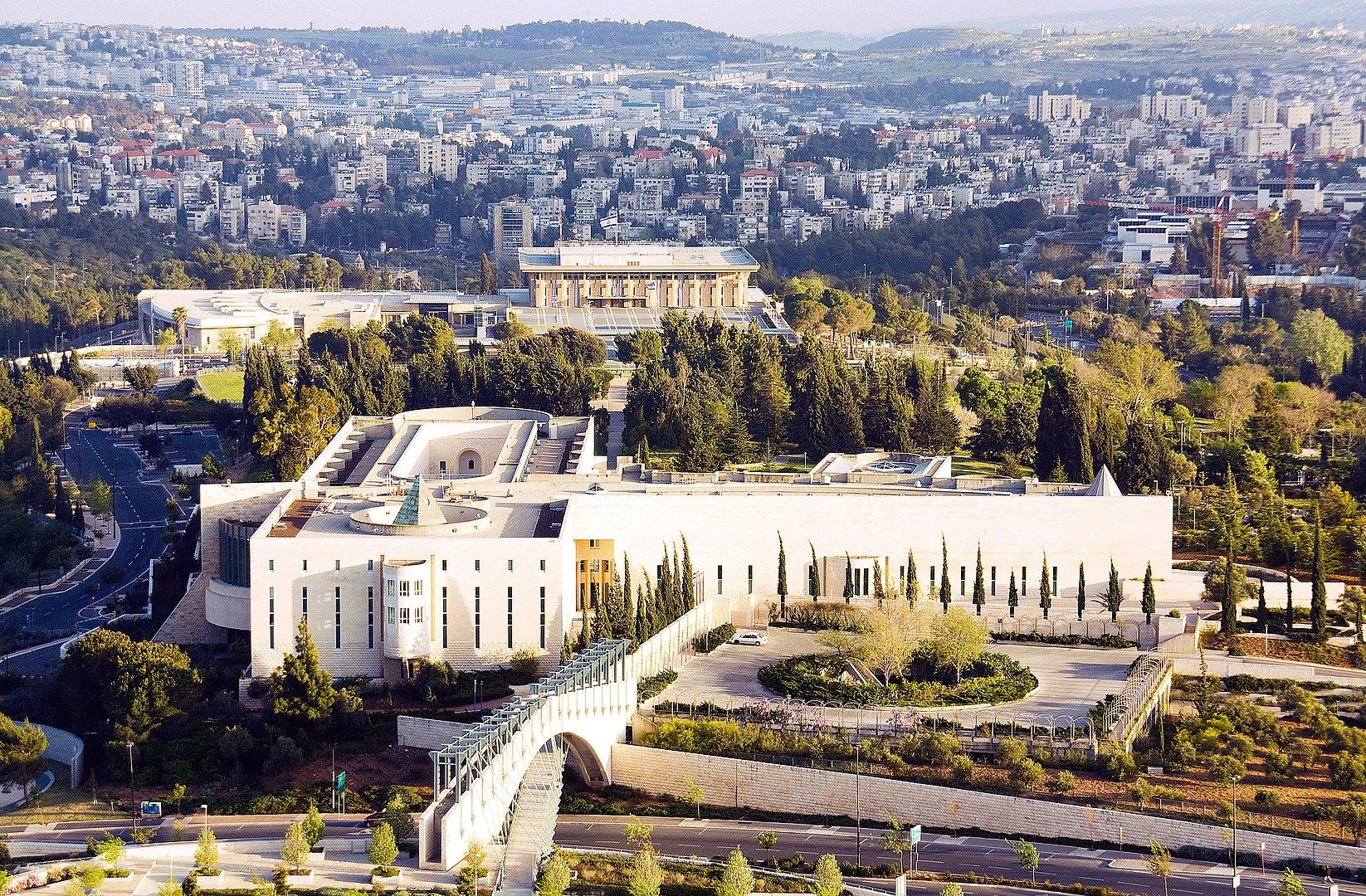
Supreme Court of Israel. (Photo By israeltourism/Wikimedia Commons, CC BY 2.0)
In the midst of Israel’s fierce war against Hamas in Gaza, the country’s highest court on New Year’s Day drew attention back to a previous conflict within the country. In a narrowly divided decision, the justices struck down a significant part of the contentious judicial reform passed in July 2023 by the government of Prime Minister Benjamin Netanyahu.
That reform would have taken away from the Supreme Court the ability to review and limit the government’s actions. Netanyahu and his cabinet – the most religious and politically conservative in Israel’s history – claimed the court had become too powerful, vetoing government policies. Opponents of the legislation said it was an attack on democracy, aimed at neutering the judicial system so that government had nearly unfettered power.
Demonstrations against the reform began in January 2023 and grew over several months into massive expressions of opposition featuring hundreds of thousands of protesters in the streets. The public opposition grew so large and emphatic, attracting figures previously uninvolved in politics – such as members of the military and 18 former Supreme Court justices – that it was seen as unprecedented in Israel’s history.
The Conversation followed the path of the legislation in Israel’s parliament, as well as the demonstrations that accompanied its debate and passage. Here are three stories from our archives that can help readers understand what was at stake.
1. Unchecked majority power
In an early analysis of the Netanyahu cabinet’s legislative moves, Boaz Atzili, a scholar of international relations at American University School of International Service, wrote that there were a number of ways Israel’s democratic institutions, customs and practices were endangered by the new government. Among those threats were the government’s hostility to freedom of speech, dissent, equal rights – especially for the LGBTQ community – and “the new government’s intention to de facto annex the West Bank.”
“Perhaps the most important front in the battle is the Israeli Supreme Court,” wrote Atzili. “The courts are the only institution that can check the power of the ruling parties and uphold the country’s Basic Laws, which provide rights in the absence of a formal constitution. But the new government wants to erase this separation of power and explicitly aims at weakening the courts. … This would, in effect, remove all barriers placed upon the power of the majority.”
2. Perception isn’t reality
As the protests grew in Israel, we interviewed political scientist and Israel expert Dov Waxman, the director of UCLA’s Y&S Nazarian Center for Israel Studies, about the proposals to limit the independence and power of the judiciary. He said that there was a perception that the Supreme Court had overstepped boundaries.
“Since the 1990s, Israel’s high court has become very involved in Israeli politics, something it did not do in the 1950s, 1960s and 1970s,” Waxman said. “It has intervened, overridden and disqualified many government decisions and laws. So the perception, particularly by those on the right, that this is an activist court, that it has been too active, is reasonable.”
But, Waxman said, “This perception among the right that the court has really restrained Israeli governments isn’t actually accurate. I think many people would accept that there could be an argument for some kind of judicial reform, at least passing a law to clarify the role and powers of the Supreme Court. But what’s being presented in this reform is actually a revolutionary attempt to essentially take away the independence and power of the Supreme Court.”
3. Secular power vs. settlers and the Orthodox
Behind the judicial reform effort by Netanyahu’s government was the move to wrest state power away from the longtime liberal, secular interests that had long dominated Israel’s politics.
“A country once known for left-leaning politics now has a right-wing government dominated by Jewish religious nationalists who spearheaded the efforts to curb judicial checks on executive power,” wrote David Mednicoff, a scholar of Judaic and Near Eastern studies at UMass Amherst.
“This reform appeals to important sectors of Netanyahu’s supporters who see the Supreme Court’s power as an inappropriate secular check on Israel’s increasingly pro-settler and pro-Orthodox government,” Mednicoff wrote.
At the center of this battle, wrote Mednicoff, is the man who has played a leading role in Israeli politics since the 1990s, Benjamin Netanyahu. He did this in part by allying himself increasingly with the country’s settler population, many of them Orthodox Jews.
“Today’s Israel is marked by growing splits between secular, urbanized citizens near the Mediterranean coast and Orthodox and other settlers in or near the West Bank. The two groups have different visions for Israel’s future, with the latter citizens pushing the country in a more theocratic direction.”
“This divisive battle over Israel’s nature owes a great deal to Benjamin Netanyahu’s leadership,” wrote Mednicoff.
This story is a roundup of articles from The Conversation’s archives.
Naomi Schalit, Senior Editor, Politics + Democracy, The Conversation
This article is republished from The Conversation under a Creative Commons license. Read the original article.




















