Headline
Why David Cameron’s past and present relations with China could be Rishi Sunak’s first big political headache of 2024

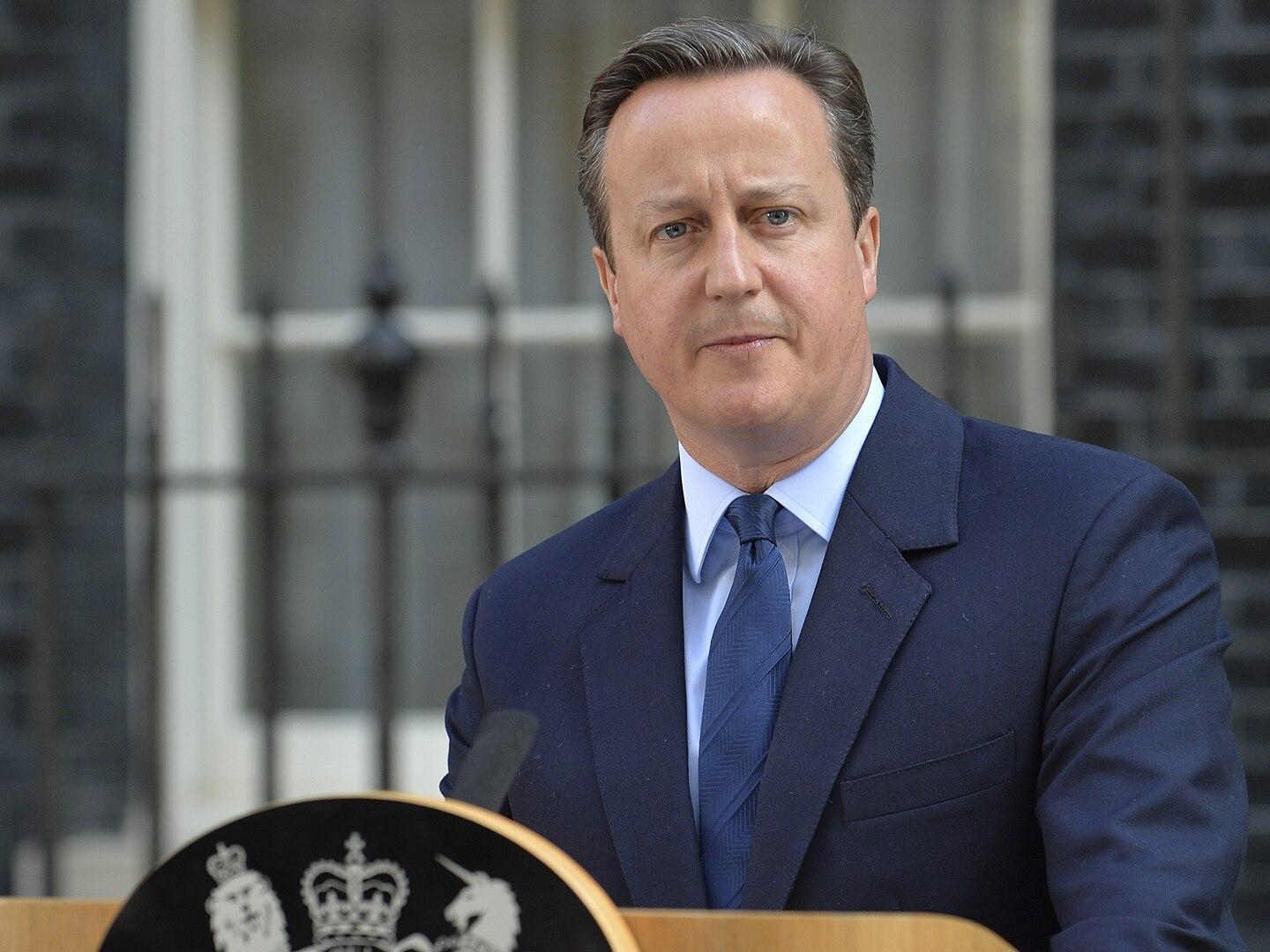
FILE: Cameron announcing his resignation as Prime Minister following the UK vote to leave EU membership. (Photo By Tom Evans/Wikimedia Commons, OGL 3)
Almost immediately after being appointed as foreign secretary, David Cameron’s ties with China generated difficult headlines for Rishi Sunak’s government.
Cameron’s warmth towards China during his own time as prime minister prompted Luke de Pulford, the director of the Inter-Parliamentary Alliance on China, to argue that Sunak had scored an own goal in appointing him.
Cameron’s time in office has been described as a “golden era” for UK-China relations. But now, in a very different political climate, de Pulford has accused the new foreign secretary of “shilling for the UK’s biggest security threat”. Catherine West, Labour’s shadow minister for Asia and the Pacific, has also said Cameron has questions to answer over what role he has played since leaving office in a Chinese infrastructure project in Sri Lanka.
Cameron’s position on China during his tenure as prime minister evolved from ambivalence to active embrace. Looking back, 2015-16 in particular was an active period in UK-China relations. A state visit by President Xi Jinping in 2015 not only provided Cameron with a chance to take him to his local pub but gave a clear signal of just how valued China was as a partner for the UK.
The implications of this for the UK now, in an era of considerably cooled relations, will be complex for the government and others to navigate. As foreign secretary, Cameron is in a position of considerable formal power when it comes to foreign policy, yet his party takes a very different view on China than it did during his time in office.
Sunak has leant into that position, for example, by removing China’s role in the Sizewell C nuclear power station, which is to be constructed in Suffolk.
The ups and downs of UK-China relations
When the Conservative-Liberal Democrat coalition came to power in 2010, its opening offer on foreign policy, the strategic defence and security review, and national security strategy, did not spend all that much time dwelling on China. The policies merely noted China’s continuing economic rise and argued that the UK should engage with it to resolve common problems.
China was bundled into a broad, rather vague category of “rising powers” that the UK would aim to engage with more closely. It was important, but not so important as to warrant its own category.
This “bundling in” may also go some way to explain the first seminal moment of Cameron’s relationship with China – his 2012 meeting with the Dalai Lama in London.
By hosting the Tibetan leader, Cameron triggered great upset in Beijing, which placed relations with the UK in a “deep freeze” for nearly 18 months. Cameron would ultimately relent, shifting his position on Tibet to more closely align with Beijing’s. He publicly rejected the idea of Tibetan independence and acknowledged China’s sovereignty.
Warming up
By November 2013, relations between China and the UK had opened up again and a rapid convergence between the two countries was in evidence. This peaked in the autumn of 2015 when Xi made his state visit to the UK.
At a joint press conference, Cameron declared that China and the UK shared strong economic, diplomatic, and “people-to-people” links. He advocated for deeper cooperation on areas such as health, climate change and extremism and opened formal ties with China on infrastructure spending. He declared that the UK and China “share an interest in a stable and ordered rule” in international affairs.
Within a month, the Cameron government had published an updated strategic defence review, which was much more expansive than the 2010 document had been on UK-China relations. It declared that it was the government’s “ambition for the UK to be China’s leading partner in the West”.
This would be achieved through a close economic relationship in particular, but also deeper diplomatic and security ties between the two countries.
Cooling down
Ultimately, this developing relationship would be derailed by the EU referendum of June 2016, and Cameron’s exit from office. Subsequent governments led by Theresa May and Boris Johnson were focused on handling Brexit, but were also seemingly more sceptical of relations with China than Cameron had been.
Several issues, including the question of democracy in Hong Kong, human rights abuses in Xinjiang, and Chinese espionage activity in the UK, have caused Conservative MPs to increasingly embrace a hawkish perspective on China. While Liz Truss was more clearly China-sceptic than Sunak, none of the prime ministers who have followed Cameron in office have been close to his level of dovishness on the topic.
The risks to the UK government, then, are twofold. Cameron’s ties with China have the potential to aggravate tensions with backbench MPs who are already restive. His party is currently divided over any number of other issues and primed to fall out over any number of others. The possibility of a dispute over the new foreign secretary’s position on China adding further inflaming tensions in the Conservative party are high.
Meanwhile, a noticeable gap in intentions between senior members of the government risks sending confusing signals to China. This is a problem for slower burning issues such as the debt burden being incurred by countries that have accepted Chinese investment via the belt and road initiative.
Cameron’s own advocacy for projects in countries like Sri Lanka, now dealing with the legacy of the initiative, may muddle messages. There is also the possibility of confusing messaging if a major crisis erupts – over the upcoming Taiwanese election, for example.
Beijing may now expect a softer approach where none is on offer. Cameron may appear to signal a less assertive response to a crisis where it was not intended. Miscalculation is always a risk in international crises and if Beijing perceives its western backers as internally divided, it may seek to capitalise for its own geopolitical gain.
Together, then, the legacy of Cameron’s relationship with China in office poses significant risks for both the Conservative Party, and for UK-China relations. Navigating these risks will be a challenge for all concerned.
For his part, greater clarity from Cameron on what he thinks UK-China relations should look like may provide some breathing space – but that may also simply serve to highlight these divisions. Ultimately, it will be up to Cameron’s current boss, Rishi Sunak, to try and resolve these tensions – ideally, before a major crisis breaks.
Timothy Oliver, Lecturer in British Politics and Public Policy, University of Manchester
This article is republished from The Conversation under a Creative Commons license. Read the original article.