News
Will the world see more wars or unrest in 2024? Here are 5 hotspots to watch

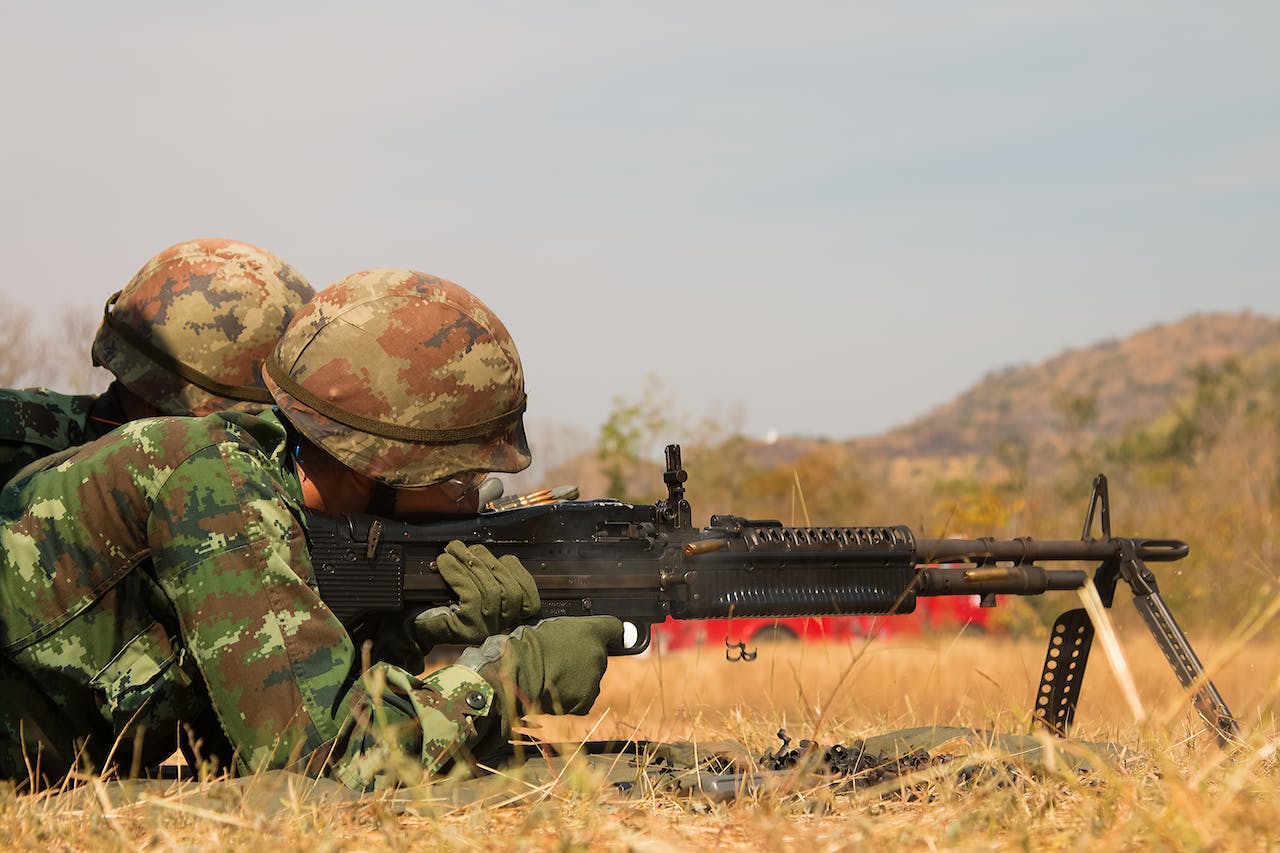
The tenacity of the resistance of these minority groups, paired with the refusal of the military to compromise, suggests the country’s civil war may worsen considerably in 2024 and regain international attention. (Pexels Photo)
Sadly, 2023 has been a violent one on the global stage. War broke out between Israel and Hamas in Gaza, leading to the deaths of thousands of Palestinians and hundreds of Israelis, including many children on both sides. And the bitter war between Russia and Ukraine continued with no end in sight.
As a result of the focus on these two conflicts, other countries have dropped off the radar for many people. Some of these nations have been dealing with simmering unrest, however, which could erupt in 2024 and seize the global spotlight.
So, where should we be watching in the coming year? Here are five places where I believe civil conflicts or unrest could worsen and potentially lead to violence.
Myanmar
Myanmar descended into chaos in 2021 when a military coup overthrew the democratically elected government led by Aung San Suu Kyi and sparked widespread civil protests that eventually morphed into an armed resistance.
The country, home to 135 ethnic groups, has rarely known peace. For years before the coup, there was a ongoing, low-grade civil conflict between the military and several minority ethnic groups who have long sought control over natural resources in their regions and independence from the state.
This exploded after the coup as ethnic militia groups joined forces with pro-democracy fighters from the Bamar majority protesting the junta.
Their resistance escalated in late 2023 with a coordinated northern offensive dealing the military its most significant losses in many years.
Insurgents won control of towns and villages on the northeastern border with China, including control over key trade routes. This led to renewed fighting in western Rakhine state, as well as in other areas.
The tenacity of the resistance of these minority groups, paired with the refusal of the military to compromise, suggests the country’s civil war may worsen considerably in 2024 and regain international attention.
Mali
In Mali, a nation in the turbulent Sahel region of Africa, tensions escalated throughout 2023 and now threaten to erupt into full-scale civil war.
Mali has long battled insurgent activity. In 2012, Mali’s government fell in a coup and Tuareg rebels, backed by Islamist militants, seized power in the north.
A United Nations peacekeeping mission was established in 2013 to bring stability to Mali. Then, in 2015, key rebel groups signed a peace agreement with the Mali government.
After two more coups in 2020 and 2021, military officers consolidated their power and said they would restore the state’s full territorial control over all of Mali. The regime insisted the UN peacekeeping mission withdraw from the country, which it did in June 2023. Subsequently, violence broke out between the military and rebel forces over future use of the UN bases.
In November, the military, reportedly backed by Russia’s Wagner Group, took control of the strategic northern town of Kidal which had been held by Tuareg forces since 2012. This undermines the fragile peace that has held since 2015.
It is unlikely the military will regain complete control over all rebel-held areas in the north. At the same time, insurgents are emboldened. With the 2015 peace agreement now all but dead, we can expect increased volatility in 2024.
Lebanon
In 2019, widespread civil protest broke out in Lebanon against leaders who were perceived not to be addressing the day-to-day needs of the population.
The situation continued to deteriorate, with a reshuffled government, escalating economic crisis and a massive port explosion that exposed corrupt practices.
The International Monetary Fund criticised Lebanon in September for a lack of economic reform. The Lebanese government has also failed to reach agreement on appointing a president, a post that has been vacant for more than a year.
This risks undermining the fragile power-sharing arrangement in Lebanon in which the key political posts of prime minister, speaker and president are allocated to a Sunni-Muslim, Shia-Muslim and Christian Maronite, respectively.
Most recently, the war between Israel and Hamas has threatened to spill over to Lebanon, home to the Hezbollah militant group, which claims to have an army of 100,000 fighters. Importantly, this jeopardises tourism as a key hope for Lebanon’s economic recovery.
These factors may precipitate a more serious economic and political collapse in 2024.
Pakistan
Since Pakistan’s independence in 1947, the military has played an interventionist role in politics. Though Pakistani leaders are popularly elected, military officials have at times removed them from power.
In 2022, Pakistani Prime Minister Imran Khan fell out of favour with Pakistan’s militant leaders. He was subsequently ousted from power in a parliament vote and later arrested on charges that his supporters claim are politically motivated.
Violent demonstrations broke out nationwide after his arrest – a display of anger against the military that was once unthinkable.
Pakistan also faces spillover from instability in neighbouring Afghanistan and increased terror attacks. These security challenges have been compounded by a struggling economy and ongoing costs from the devastating 2022 floods.
Pakistan is expected to hold parliamentary elections in February 2024, after which the current military caretaker government is expected to transfer power back to civilian rule. Many are watching the military closely. If this transfer of power does not take place, or there are delays, civil unrest may result.
Sri Lanka
Sri Lanka faced a debilitating economic crisis in 2022 that led to critical fuel, food and medical shortages. Civil protests caused then-President Gotabaya Rajapaksa to flee the country. He was quickly replaced by current President Ranil Wickremesingh.
Stability returned in 2023 as Sri Lanka began implementing economic reforms as part of a bailout agreement with the International Monetary Fund. However, widespread dissatisfaction with political elites and the underlying drivers of the country’s economic hardship have not been addressed.
Elections are also due in Sri Lanka by late 2024. While Wickremesingh, the incumbent, is likely to run for a second term, he has low trust with the public. He is viewed as too close to corrupt political elites.
This dissatisfaction could lead to renewed protests – particularly if the economy stumbles again – in a repeat of the situation that led to Rajapaksa’s ousting in 2022.
Jessica Genauer, Senior Lecturer in International Relations, Flinders University
This article is republished from The Conversation under a Creative Commons license. Read the original article.