
News
Straw bale hung from London’s Millennium Bridge to comply with ancient law – just part of the River Thames’ long, legal history

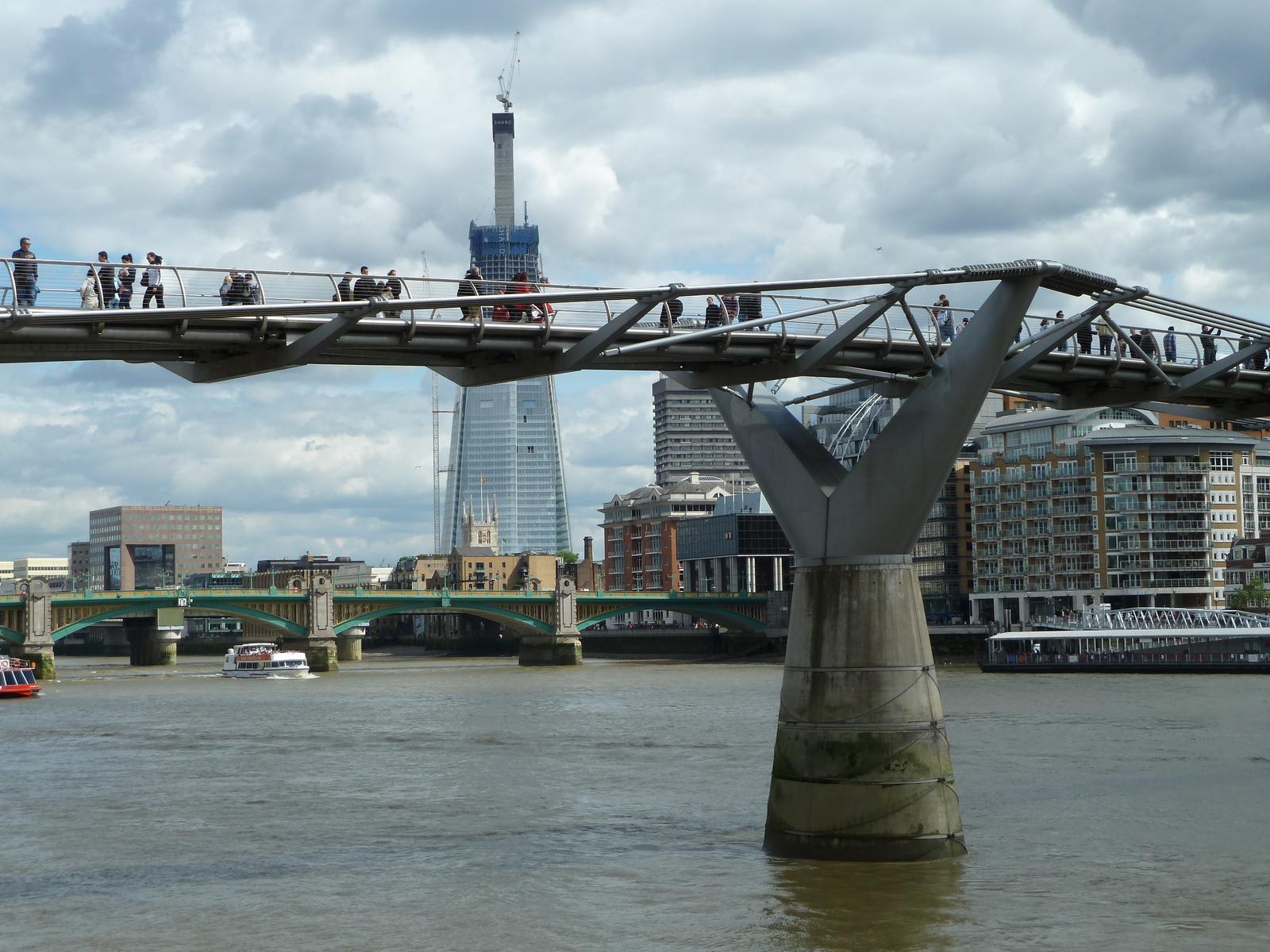
For centuries, London Bridge was the last bridge crossing the Thames before the sea. The High Court of Admiralty held authority over the bustling wharfs and quays downriver. (File photo by Gyula Péter, CC BY 3.0)
Maintenance workers on London’s Millenium Bridge – which spans the River Thames – have hung a bale of straw from the bridge’s undercarriage.
An ancient byelaw requires that a bridge’s owner warn passing ships of any reduction in headroom beneath the bridge with a white light at night and, during the day, a straw bale, “large enough to be conspicuous”, suspended from its span.
The City Bridge Foundation, which has, in its own words “been bridging London for a long time”, duly complied, sourcing a bale from an Essex farmer. This practical provision is just one survivor of the river’s long history as a distinct jurisdiction with its own laws and customs.
For centuries, London Bridge was the last bridge crossing the Thames before the sea. The High Court of Admiralty held authority over the bustling wharfs and quays downriver.
The business brought before the court reveals just how crowded the Thames was. Cases often dealt with collisions between ships and damage or loss to cargoes incurred during transfer from larger seagoing vessels to the lighters and boats ferrying them ashore.
In one particularly unusual case that came before the High Court of Admiralty in 1643, a pet “Munkye or baboone” broke out of a ship’s cabin and leapt and skipped across six neighbouring vessels. Reaching the seventh, named Good Successe, it entered the “Cookeroome” and bit an 18-year-old sailor on the shoulder. The boy promptly sued the animal’s owner for loss of earnings.
That sort of incident was rare. Research and archival records show that the river was, nonetheless, a dangerous place to work.
During the 17th century, the High Court of Admiralty acted as coroner for those who drowned downriver of London Bridge. Both naval and commercial ships carried cannons and gunpowder, so fires and explosions sometimes occurred.
The rule of law was not universally respected in the docklands. When admiralty officials came to arrest a sailor, it was not unheard of for their crewmates to fight back and help the suspect to escape.
Another important institution was the Trinity House of Deptford. Established by royal charter in 1514, it is still in existence today (although its premises moved to Tower Hill during the seventeenth century).
Originally a guild of shipmasters and merchants, the Trinity House regulated matters like licenses for river pilots (pilotages) and providing ballast (ballastage) to outgoing ships on the river. It also assisted the government in naval and maritime affairs, including through examinations and certificates for navigators.
The Trinity House held its own guild court, the charter of which lays out the authority it had to “make, ordain, and constitute reasonable Laws, Constitutions, Orders, and Ordinances [which] shall bind all the said Guild, Fraternity, or Brotherhood, and all other Seamen and Mariners of the said River of Thames”.
One set of Trinity House “by-Laws and Orders”, from 1661, ordered sailors not to “Swear, Curse, or Blaspheme, be Obstinate and Stubborn, tell a Lye, absent himself from Prayers, [or] be Drunk”. Anyone who contravened this order was liable to a fine, which the Trinity House put towards charity to poor members.
A major thoroughfare
According to John Stow’s Survey of London, published in 1598, some 2,000 boats worked by 3,000 “poor men” ferried passengers around. These activities were regulated by the Company of Watermen, founded in 1555, who transported people.
From 1700, they were joined by the Thames Lightermen, whose job it was to offload ships and get the goods to shore via smaller vessels.
This guild, like the Trinity House, organised its own apprenticeships and court. It governed the conduct of its members, especially to prevent danger to passengers.
The Company of Watermen also tried to protect its members’ interests. It vociferously objected to proposals for any new bridge across the river, which it saw as a threat to members’ trade. So too, when London’s playhouses moved from Southwark to the City in the early 1600s, thereby reducing the river traffic in theatregoers.
Curator and researcher Hannah Stockton has shown how the Thames remained busy into the 18th century and beyond. It was considered a “common highway” under the law of highway robbery. Such crimes were taken more seriously than other robberies, because they interfered with the freedom to travel.
During the 19th and 20th centuries, the docks, shipping and bridges over the river all multiplied. The prosperity and expanded population this brought to London came with challenges.
In 1798-1800, the Thames River Police was formed. Still going today, as the Marine Policing Unit within the Metropolitan Police (and still based at the same site in Wapping), it is possibly the oldest police force in Britain whose remit extends beyond the boundaries of a single borough or city.
The Port of London Act of 1908 led to the establishment of the Port of London Authority in 1909. This provided a single organisation to oversee river traffic and docks. It merged the private police forces that had previously been managed by individual dock companies.
Today the Port of London Authority manages river traffic and navigational safety, among other things. Presumably it will have advised all Thames pilots to watch out for a bale of straw dangling from a bridge, just as their predecessors would have done in generations past.
Richard Blakemore, Associate Professor in Social and Maritime History, University of Reading
This article is republished from The Conversation under a Creative Commons license. Read the original article.




















