
News
China’s WeChat is all-encompassing but low-key − a Chinese media scholar explains the Taoist philosophy behind the everything app’s design

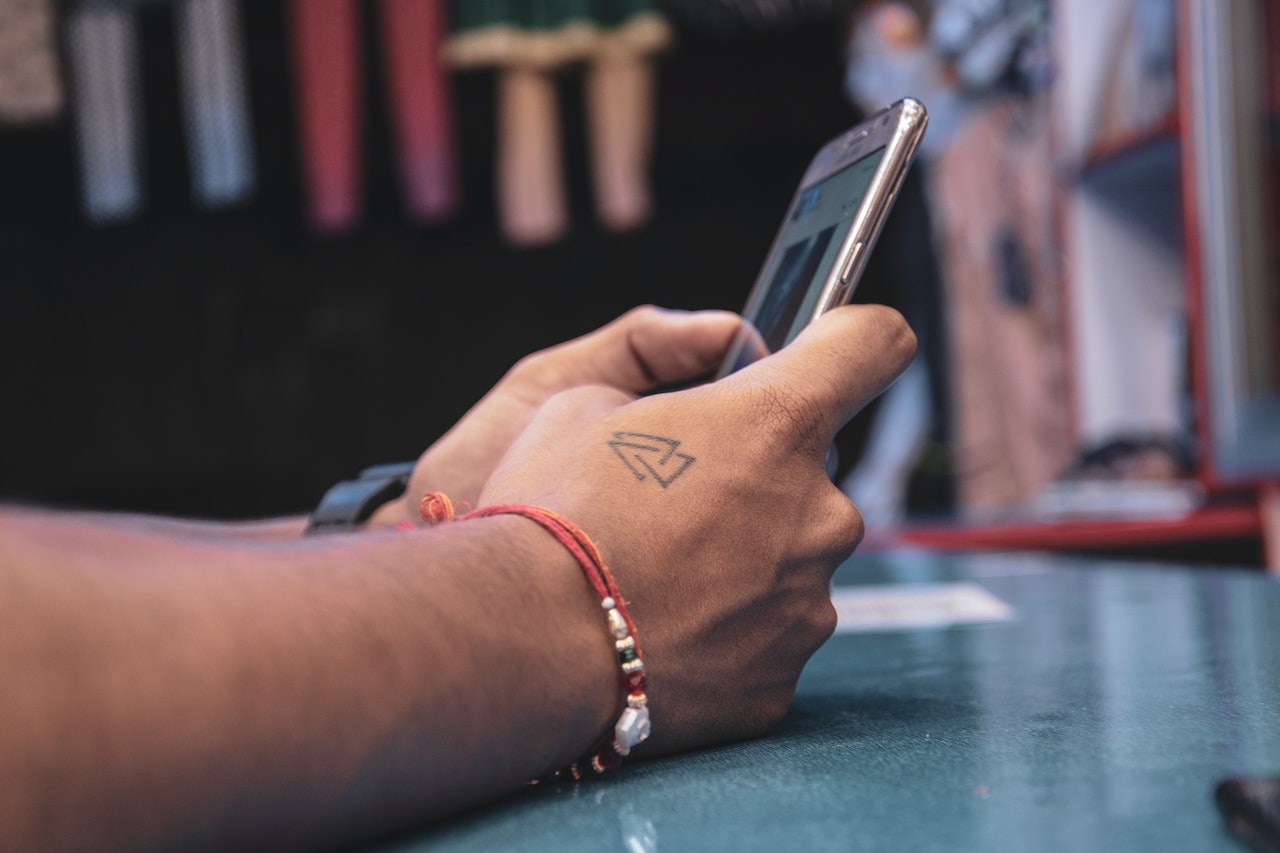
What’s it like to use WeChat? How has WeChat become “everything” in China? Would it be possible to replicate the app’s success in the U.S.? (Pexels Photo)
Elon Musk’s vision of Twitter, now rebranded as X, as an
“everything app” is no secret. When the X logo replaced Twitter’s blue bird, the internet buzzed with heated discussions about just what it would mean for X to be an everything app.
Musk promoted his super app project by referring to the Chinese all-in-one app WeChat. But for many American users unfamiliar with WeChat, a train of questions followed. What’s it like to use WeChat? How has WeChat become “everything” in China? Would it be possible to replicate the app’s success in the U.S.?
I’m a Chinese digital media scholar, and I’ve used WeChat since 2012. But, in contrast to Musk’s enthusiasm, I don’t think WeChat is something to write home about. I believe it’s ordinary rather than special, lacking distinctive features compared with the other popular apps I studied for my current book project about Chinese touchscreen media.
WeChat’s inconspicuousness on my phone screen is no accident. Although WeChat is an everything app in the sense of being a digital hub for over a billion users, the app’s design is intentionally grounded in a more nuanced and philosophical meaning of the word “everything” than you might expect.
WeChat is an all-inclusive media ecosystem
Launched in 2011, WeChat has become an all-in-one app that offers services covering most aspects of everyday life, from instant messaging and mobile payments to photo- and video-sharing social networking. It has become a staple of daily activities for 1.3 billion Chinese mobile users.
WeChat is also the app that China-bound travelers can download if they want to install only one app. WeChat can help you fill out customs declaration forms, call a taxi, pay for your hotel room and order food. Without WeChat, a traveler in China would be like a fish out of water, since everything in China now runs through smartphone screens and mobile payment platforms.
In this sense, WeChat is indeed an everything app. Its “everythingness” refers to its near omnipresence and omnipotence in everyday life. The app creates an all-encompassing and ever-expanding media ecosystem that influences users’ daily activities. It forms a gigantic digital hub that, as German philosopher and media theorist Peter Sloterdijk once described, “has drawn inwards everything that was once on the outside.”
This “everythingness” leaves little room for rival companies to achieve similar dominance and turns every tap or swipe on a user’s smartphone into something a big tech company can profit from. This dream of an internet empire is perhaps what is so enticing for tech leaders like Musk.
A counterintuitive design philosophy
Despite WeChat’s status as an everything app, it’s one of the least notable and attractive apps on my smartphone. WeChat rarely changes its logo to celebrate holidays or sends admin notifications to users. The app forms a relatively closed social space, since WeChat users can see only what their contacts post, unlike apps like Weibo or TikTok, where celebrities amass millions of followers.

Screen capture by Jianqing Chen
But the lack of flashy, attention-grabbing features is actually one of WeChat’s intentional design philosophies, as WeChat’s founder and chief developer Allen Xiaolong Zhang made clear in his annual public speeches in 2019 and 2020. Zhang emphasized that one of WeChat’s design principles is to “get users out of the app as fast as possible,” meaning to reduce the amount of time users spend in WeChat.
This might seem paradoxical – if WeChat is trying to get its users to leave the app as fast as possible, how can it maintain its internet empire? Typically an app’s popularity is assessed based on how long users spend in the app, and users’ attention is the scarce resource various digital platforms fight for.
But Zhang claims that in order to sustain users’ daily engagement with the app in the long run, it’s important to let them leave the app as fast as possible. A low demand for time and effort is key to bringing users back into the app without exhausting them.
A Taoist message behind WeChat’s design
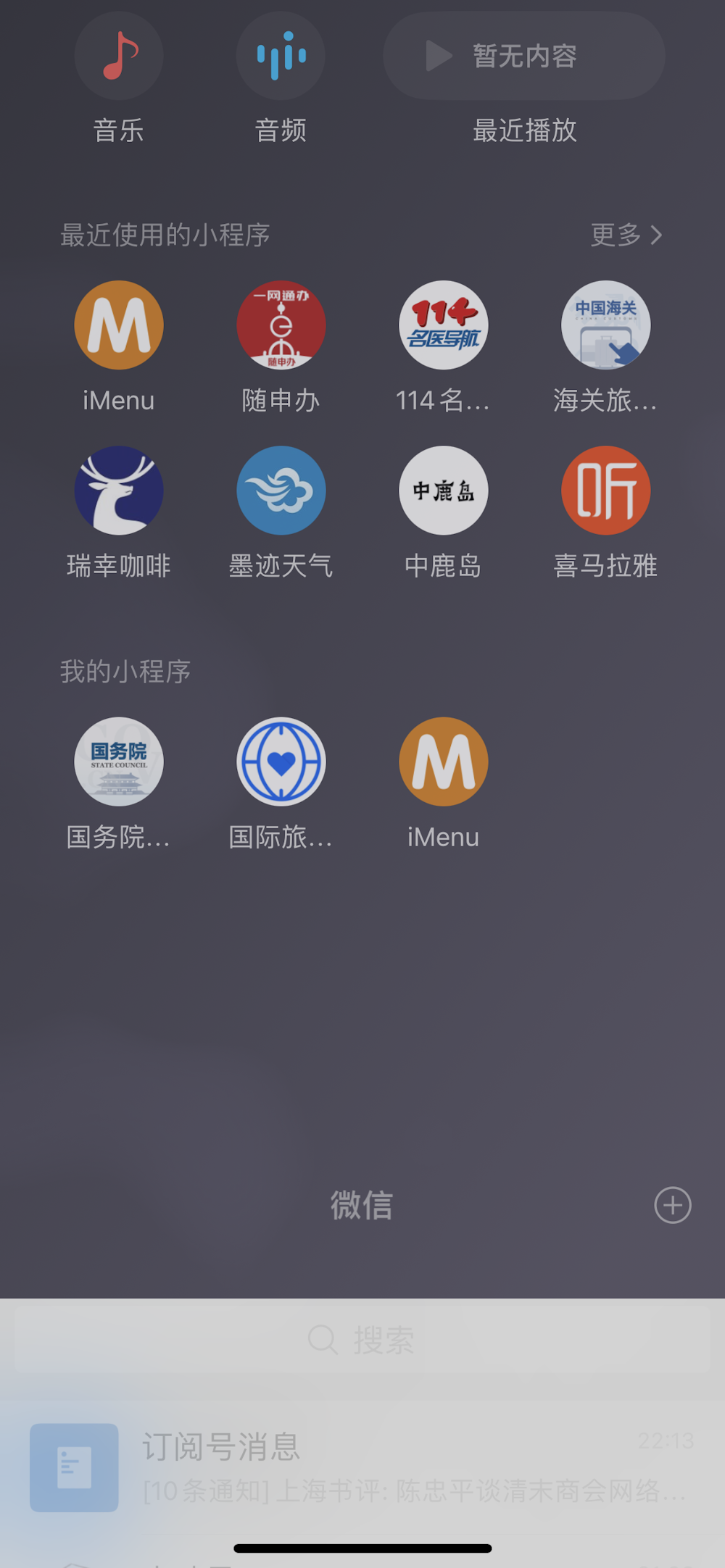
The design of WeChat miniprograms makes Zhang’s idea clear. Miniprograms are embedded into WeChat as third-party developed sub-applications, and they provide users with easy access to a large range of services – like hailing a taxi, ordering food, buying train tickets and playing games – without leaving WeChat. Users can simply search in the app or scan a QR code to open a miniprogram, skipping the cumbersome processes of installing and uninstalling new apps.
Screen capture by Jianqing Chen, CC BY-ND
Miniprograms are stored in a hidden panel at the top of the screen. They can be opened by swiping down the screen. These miniprograms appear to be ephemeral, diffusive and almost atmospheric. They give users the feeling that WeChat has disappeared or merged into the environment.
WeChat is what media scholars call “elemental”: inconspicuous and nonintrusive, yet pervasive and as fundamental as the natural elements, just like air, water and clouds.
This environment of pervasiveness and unobtrusiveness resonates with the ancient Chinese Taoist philosophy that understands nothing (wu 无, or “not-being”) as that which forms the basis of all things (wanwu 万物 or “ten thousand things”). As Tao Te Ching states, “Dao begets One (or nothingness), One begets Two (yin and yang), Two begets Three (Heaven, Earth and Man; or yin, yang and breath qi), Three begets all things.” For Taoist thinkers, not-being determines how all things within the cosmos come into being, evolve and disappear.
Although the depth of these sagely texts is unfathomable, the Taoist thoughts from the past help people appreciate the interplay of everything and nothing. This perspective adds another layer of meaning to “everything” and opens up alternative visions of what an everything app can be.
Perhaps WeChat’s interpretation of the word “everything” – as simultaneously pervasive and inconspicuous – is the secret to its success over the past 10 years. I believe many tech leaders could benefit from a more sophisticated understanding of “everything” when envisioning the everything app, and not just equate “everything” simply with big and comprehensive.
Jianqing Chen, Assistant Professor of East Asian Languages and Cultures and of Film and Media Studies, Arts & Sciences at Washington University in St. Louis
This article is republished from The Conversation under a Creative Commons license. Read the original article.




















